
Nvidia CEO reinstatement triggers sharp rally, but technicals and Fed fears signal fragile recovery
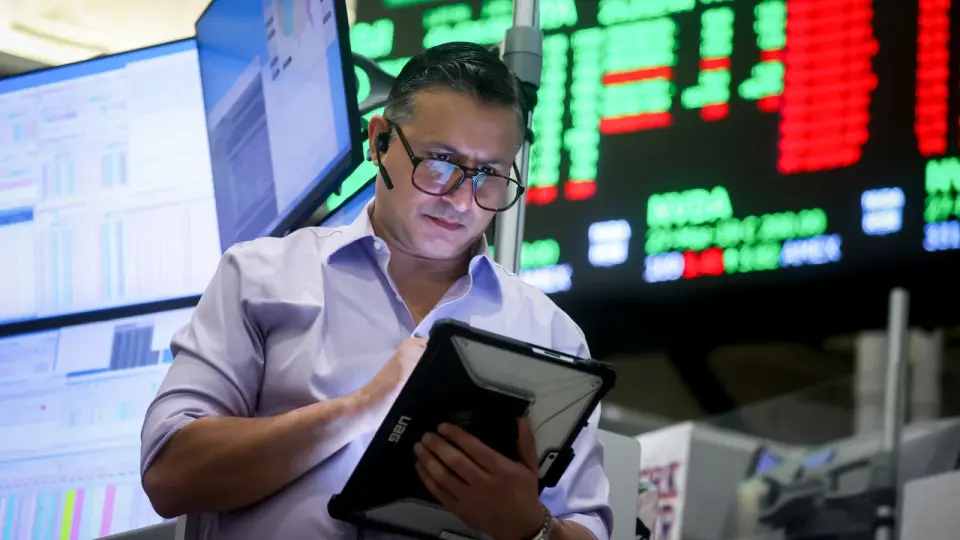
The S&P 500 surged 4.7% on Monday after President Trump pressured Nvidia’s board to reinstate CEO Jensen Huang, lifting the index to just below 7,300. However, the rally stalled at a key technical resistance level, and pre-market trading on Tuesday showed profit-taking as traders reassessed the move. While the rebound relieved extreme oversold conditions, analysts remain divided on whether this marks a durable bottom or a temporary bounce within a broader correction.
Key points
- Nvidia shares jumped 31% on Monday, accounting for more than a third of the S&P 500’s total gain, following Huang’s reinstatement.
- The S&P 500 closed 0.75% below its intraday high of nearly 7,300, a level that coincides with the index’s summer low and previous trading range floor.
- Pre-market trading on Tuesday saw US stock futures fall, with Nvidia shares dropping over 4% and AI peers like Anthropic declining, signaling immediate profit-taking.
- Traders now assign a 95% probability to a 25-basis-point Federal Reserve rate hike in December, raising concerns that tighter monetary policy could offset the equity rally.
- The 33-trading-day correction is among the fastest on record, but its timing overlaps with the start of bear markets in 2007 and 2022, complicating the recovery narrative.
Background
This volatility follows a period of intense AI-sector speculation and a recent market correction that pushed major indices into bear territory. Earlier in November, Nvidia shares had fallen 14% at the open after Huang resigned amid reports of personal misconduct and national security concerns, though the stock recovered to close down 4%. The current instability contrasts with previous market resets, such as the 2018 fourth-quarter decline, which occurred despite strong earnings growth. The market has also seen a shift toward defensive and quality stocks, which failed to prevent the recent washout.
How outlets are covering it
CNBC’s Mike Santoli argues the rally is likely a temporary snapback rather than a market bottom, noting that the S&P 500 failed to break above key resistance levels and that such sharp one-day gains often occur within bear markets. He highlights the risk that a revived AI trade could trigger a more hawkish Federal Reserve response. In contrast, Continuum Economics’s Ben Levett questions whether Huang’s return fully resolves the AI financing cycle, suggesting the market’s instability may be exacerbated by extreme positioning in currencies like the Australian dollar. Seeking Alpha’s Amrita Roy offers a cautiously bullish view, stating that AI fundamentals remain robust with rising GPU rental prices and cloud revenues, but warns that a durable bottom requires buying beyond initial short covering and that the S&P 500 has not yet reclaimed its 200-day moving average.
Why it matters
The outcome of this rally will determine whether the AI-driven market correction is a temporary dip or the start of a broader downturn. If the Federal Reserve raises rates in response to renewed economic activity, it could pressure equity valuations and reverse the recent gains. Conversely, a sustained recovery could validate the resilience of AI infrastructure spending and shift market sentiment toward a broader 2027 rally.
What to watch
Investors will closely watch Wednesday’s PCE inflation data and the November consumer confidence report for signs of economic momentum. The market will also monitor whether the S&P 500 can sustain its gains above the 20-day moving average or if it faces a retest of recent lows. Additionally, the December Federal Reserve meeting and potential rate hike decisions will be critical in determining the direction of long-term real yields and equity valuations.
- Does the Nvidia-led rip mark the market bottom? Maybe not CNBC
- FOREX Dollar slips as Nvidia-fueled AI rally fades Reuters
- Asia FX Talk MUFG Research
- Beware, The AI Trade May Not Have Bottomed Yet (NYSEARCA:SPY) Seeking Alpha
- FX Daily Strategy: Europe, Nov 24 Continuum Economics
Want the full story? Read the original reporting
Read on CNBC