
Consumer Confidence Plunges to 2014 Lows as Rising Rates and Oil Prices Weigh on Markets
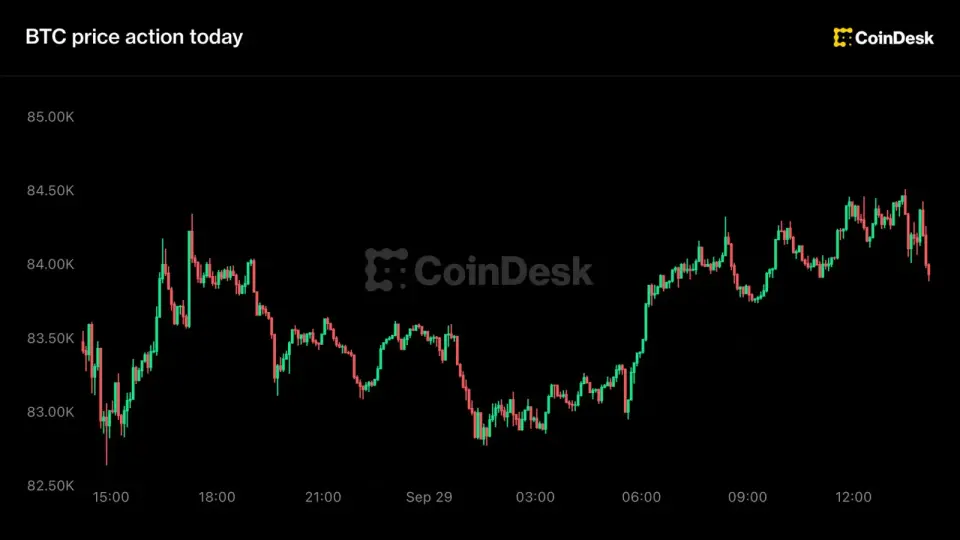
The Conference Board’s Consumer Confidence Index fell to 81.9 in September, its lowest level since April 2014, as rising interest rates and fuel costs eroded optimism. Bitcoin retreated to approximately $83,200, while the 10-year Treasury yield climbed to 5.27%, its highest since 2007. Job openings dropped to 7.08 million, signaling early labor market weakness.
Key points
- The Conference Board Consumer Confidence Index dropped 6.7 points to 81.9, missing forecasts of 89.0 and marking the weakest reading since 2014.
- The 10-year U.S. Treasury yield reached 5.27%, a level not seen since 2007, while the 30-year yield hit 5.60%, its highest since 2004.
- Bitcoin traded near $83,200, down from a session high, as futures open interest fell to a year-to-date low of 628,000 BTC.
- August job openings declined to 7.08 million, below the 7.23 million forecast, with the Present Situation Index falling 7.9 points to 109.3.
- WTI crude oil prices dropped over 3% to near $90 per barrel after the U.S. offered 40 million barrels from the Strategic Petroleum Reserve.
Background
This decline follows a period of rising mortgage rates, which hovered near 7% in mid-September, and a recent Federal Reserve rate hike that pushed the benchmark rate to 3.75%-4.00%. Bitcoin had previously stalled near $86,000 in late September amid similar yield pressures and altcoin rotation.
How outlets are covering it
CoinDesk emphasizes the direct correlation between surging bond yields and Bitcoin’s retreat, noting that futures open interest has hit a year-to-date low. CNBC highlights the psychological shift, noting that for the first time in the survey’s four-year history, more respondents rated their personal finances as 'bad' than 'good.' ABC News frames the data as a political risk, warning that stagnant wages and elevated prices could hurt Republicans in the upcoming midterm elections. While CoinDesk and CNBC focus on the immediate financial fallout, ABC News connects the economic anxiety to broader political consequences.
Why it matters
The sharp drop in consumer confidence, combined with rising yields and weakening labor data, signals a potential shift toward economic contraction. This environment pressures risk assets like Bitcoin and could force the Federal Reserve to pause its tightening cycle, as suggested by New York Fed President John Williams, who indicated no urgency for an October rate hike.
What to watch
Investors will watch the September Nonfarm Payrolls report on Friday, with forecasts predicting 129,000 jobs added and a steady 4.1% unemployment rate. The market will also monitor whether the 10-year Treasury yield stabilizes or continues to rise, which could trigger further volatility in crypto and equity markets.
- Live updates: Bitcoin turns lower as rates rise, consumer confidence plunges CoinDesk
- Consumer optimism slides to lowest since 2014 as fears escalate over rising prices and jobs CNBC
- Americans growing more pessimistic about the economy as prices for gas, other items remain elevated ABC News - Breaking News, Latest News and Videos
- U.S. Consumer Confidence Fell in September Amid Elevated Oil Prices, Inflation Worries, Conference Board Says WSJ
- US Consumer Confidence Plunges to Lowest Level Since 2014 Bloomberg
Want the full story? Read the original reporting
Read on CoinDesk