
Market Jitters Signal Potential AI Bubble Burst
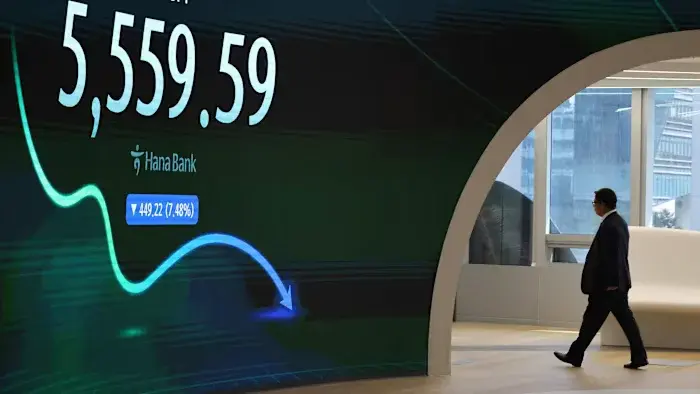
Recent market volatility serves as a warning sign for a potential AI bubble burst, with investors shifting toward safe assets like government bonds and non-tech stocks. While AI adoption is rapid and revenue is high, concerns over over-leverage, circular funding, and unsustainable valuations suggest a significant correction may be imminent.
Key points
- South Korea’s chip-heavy stock market fell 8% in a single day, triggering a broader market wobble.
- US government bonds rose, and the dollar weakened, indicating a flight to safety and potential retreat from US assets.
- Non-tech stocks, such as those in the UK’s FTSE 100, outperformed tech-heavy indices during the volatility.
- Credit default swaps on data center issuers spiked, signaling heightened concerns about debt defaults.
- AI adoption is rapid, with 30% of Americans using AI within four years of ChatGPT’s release, but valuations remain high.
Background
The AI boom has been characterized by massive investment, with tech spending on new plants and equipment reaching 6.3% of GDP, surpassing historical peaks. Previous tech bubbles, such as the dot-com era, saw similar patterns of over-investment and eventual correction. The current AI ecosystem is heavily concentrated, with the top ten S&P 500 stocks accounting for nearly 40% of the index. This concentration, combined with high leverage and circular funding between hyperscalers and AI labs, raises systemic risks.
How outlets are covering it
The Financial Times emphasizes the 'vibes' driving the market wobble, noting that while fundamental risks like leverage and concentration have existed for months, recent events have triggered a shift in investor sentiment. Seeking Alpha highlights the debate between Michael Burry’s skepticism and quant fundamentals, suggesting that while AI companies are generating revenue, the market may be overvalued. Foreign Affairs argues that the AI boom follows a historical pattern of tech bubbles, where rapid adoption and high valuations precede a crash. It notes that while AI is transformative, the current market dynamics—such as over-ownership and over-leverage—mirror previous bubbles. The three sources agree on the risks but differ in emphasis: FT focuses on immediate market signals, Seeking Alpha on valuation debates, and Foreign Affairs on historical parallels and global economic impacts.
Why it matters
A potential AI bubble burst could have severe repercussions for global financial markets, pensions, and savings. The concentration of wealth in AI stocks and the reliance on AI for economic growth mean that a correction could trigger a broader economic slowdown. Investors and policymakers are increasingly concerned about systemic risks, and the recent market wobble serves as a cautionary tale for the fragility of the current AI-driven boom.
What to watch
Investors are likely to continue shifting toward safe assets, such as government bonds and non-tech stocks, as a hedge against potential AI market corrections. Central banks and financial institutions may issue further warnings about systemic risks. The next few months will be critical in determining whether the AI bubble bursts or if the market can sustain current valuations. Monitoring credit default swaps, bond yields, and tech stock performance will be key indicators of market sentiment.
- The dress rehearsal for an AI reckoning Financial Times
- Wall St Week Ahead As AI rally wobbles, stock market's spotlight turns to earnings Reuters
- Top AI Stocks: Michael Burry Vs. Quant Fundamentals Seeking Alpha
- The Global AI Bust: What Will Survive When the Boom Ends Foreign Affairs
- Pricey AI Stocks Face an Earnings Test After Valuations Slide Barron's
Want the full story? Read the original reporting
Read on Financial Times