
S&P 500 near record high masks a bear market for nearly half its stocks
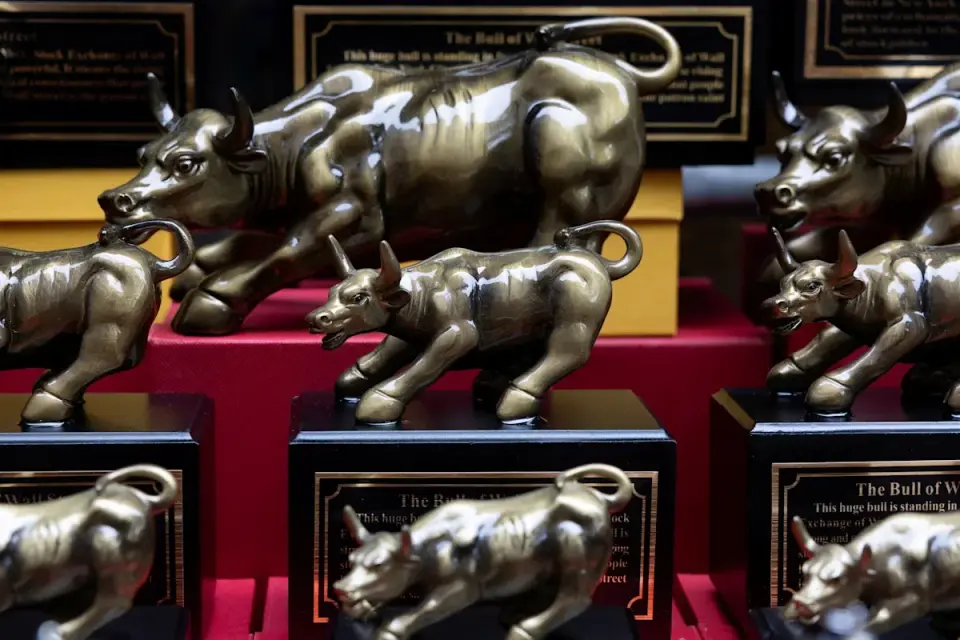
The S&P 500 is trading within 2% of its all-time high, yet nearly half of its component stocks are in bear-market territory. This extreme divergence, driven by a narrow group of AI leaders, has created a 'divided' market that analysts view as both a warning sign and a potential setup for a broader rally.
Key points
- The S&P 500 index has risen 15% over the past year, but 44% of its constituent stocks are down at least 20% from their 52-week highs, technically placing them in bear-market territory.
- Market breadth has deteriorated to levels not seen since the dot-com era, with fewer than 25% of index stocks trading above their 50-day moving averages and fewer than 45% above their 200-day moving averages.
- The rally is being sustained by a narrow group of high-flying artificial intelligence names, which has masked underlying weakness in the broader market and created a 'yawning gap' between winners and losers.
- Some analysts, including those at Barron's, argue that this divided market structure, while appearing scary, could be the setup for a serious rally as capital rotates from overvalued AI leaders to undervalued laggards.
- The divergence is occurring despite macroeconomic headwinds, including a bond market selloff with the 10-year Treasury yield reaching 5.11% and stabilizing oil prices, which have created mixed sentiment in specific sectors.
Background
This extreme market divergence follows a period of heightened volatility in late September 2026, where falling oil prices and rising bond yields created mixed sentiment. The current situation is a continuation of the trend noted on October 1, where S&P 500 breadth hit dot-com lows, masking broad market weakness behind a mega-cap rally. The bond market selloff, with the 10-year yield hitting a 2007 high, has pressured global equities, but the AI-driven rally has kept the index near record highs.
How outlets are covering it
MarketWatch and Barron's both highlight the extreme divergence between the S&P 500's index performance and the poor performance of its constituent stocks. However, they frame the situation differently. MarketWatch emphasizes the 'bad breadth' and the fact that nearly half the index is in a bear market, presenting it as a warning sign of underlying weakness. Barron's, in contrast, frames the 'divided' market as an opportunity, suggesting that the 'yawning gap' between high-fliers and laggards could be the setup for a serious rally as capital rotates. Yahoo Finance's data on trending stocks like TSM, NU, and MELI reflects the narrow, high-flying nature of the current rally, while the broader market shows signs of stress.
Why it matters
This extreme divergence signals a fragile market structure. While the index appears strong, the underlying weakness in nearly half of its stocks suggests that the rally is not broad-based and could be vulnerable to a sharp correction if the AI leaders stumble. For investors, this highlights the importance of looking beyond index-level performance and considering market breadth when making investment decisions. It also suggests that opportunities may exist in undervalued sectors and stocks that have been left behind by the AI-driven rally.
What to watch
Investors should monitor market breadth indicators, such as the percentage of stocks above their 50-day and 200-day moving averages, to gauge the health of the broader market. A rotation of capital from AI leaders to laggards could signal a broadening of the rally, while a continued narrowing of breadth could indicate a potential correction. The upcoming Trump-Xi summit and Federal Reserve decisions will also be key catalysts for market direction.
- 'The market has had every reason to sell off' — and it hasn't Yahoo Finance
- A Scary Stock Market Divided Has Opened Up. Where It Goes Next. barrons.com
- S&P 500 alarm bells are starting to go off Yahoo Finance
- One Trade, Two Markets, One Hidden Correction (NYSEARCA:RSP) Seeking Alpha
- You might be shocked by how many stocks are in a bear market right now MarketWatch
Want the full story? Read the original reporting
Read on Yahoo Finance