
FCC Eliminates 39% Broadcast Ownership Cap in 2-1 Vote
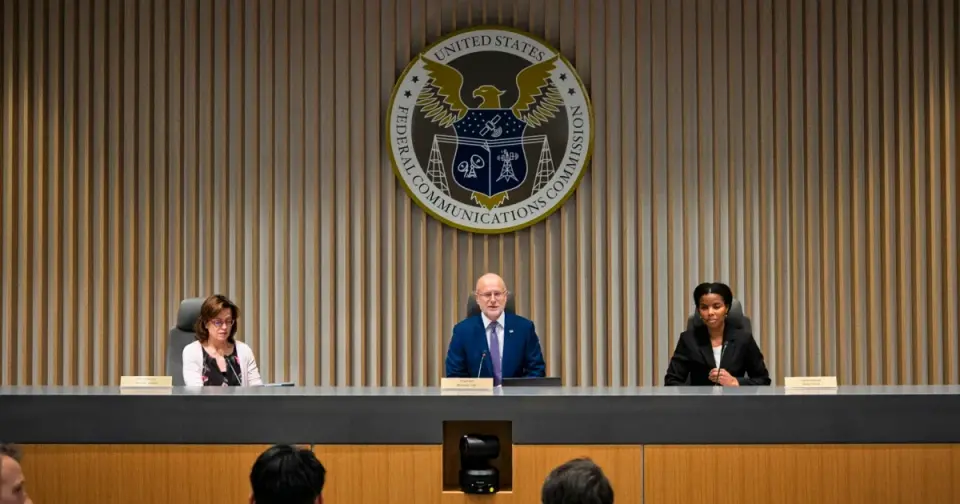
The Federal Communications Commission voted 2-1 to repeal the 39% national cap on broadcast television ownership, replacing it with a case-by-case review system. This decision, led by Chairman Brendan Carr, aims to allow larger station groups like Nexstar to expand, though it faces immediate legal challenges and criticism from Democrats and consumer advocates who argue the move exceeds the agency's statutory authority and threatens local journalism.
Key points
- The FCC voted 2-1 to eliminate the 39% limit on the share of U.S. television households a single company can reach, a rule in place since 2004.
- The new framework replaces the fixed cap with a case-by-case approach for evaluating mergers and acquisitions.
- FCC Chairman Brendan Carr argued the old rule was outdated and prevented local broadcasters from competing effectively against streaming services.
- The decision benefits Nexstar Media Group, which is seeking to acquire Tegna in a $6.2 billion deal that would reach over 60% of households.
- Democratic Commissioner Anna M. Gomez called the vote 'unlawful on its face,' arguing it favors national conglomerates over local stations.
- Critics, including Free Press, contend that only Congress can change the cap, as it was codified in a 2004 appropriations law.
Background
This vote concludes a months-long regulatory push that began in mid-2026, when the FCC announced plans to repeal the 39% cap. Previous coverage highlighted the scheduled August 6 vote and ongoing debates regarding the agency's authority to override congressional mandates. The move follows a March decision by Carr to grant a standalone exemption for the Nexstar-Tegna merger, which is currently on hold due to an antitrust lawsuit filed by eight state attorneys general.
How outlets are covering it
NBC News and Politico both report the 2-1 vote but frame the implications differently. NBC News emphasizes the potential for corporate consolidation and highlights the legal pushback from Democrats and consumer advocates, noting that the combined Nexstar-Tegna entity would reach 60% of households. Politico focuses on the statutory conflict, noting that while Carr argues the 2004 law did not prohibit future reconsideration, detractors warn the agency is treading past its statutory limits. Both sources agree that the decision is likely to face court challenges, but NBC News provides more detail on the specific arguments from Nexstar regarding the competitive landscape of streaming services, while Politico emphasizes the historical context of the 2004 appropriations law.
Why it matters
The removal of the 39% cap could accelerate media consolidation, potentially leading to layoffs and reduced viewpoint diversity. It may also allow large national companies to dictate content on local stations, undermining local journalism. The legal battle over the FCC's authority to change a congressionally mandated rule could set a precedent for future regulatory changes in the media industry.
What to watch
Expect immediate legal challenges from Democrats and consumer advocacy groups. The outcome of the Nexstar-Tegna merger will likely hinge on how courts interpret the FCC's new case-by-case approach versus the 2004 congressional mandate. Further FCC decisions on other pending mergers may follow this precedent.
- Federal Communications Commission scraps limit on broadcast TV ownership NBC News
- FCC Removes Cap on Local TV Ownership Bloomberg.com
- FCC Votes to Repeal National TV Ownership Limit WSJ
- FCC expected to get rid of ownership caps for local TV Colorado Public Radio
- FCC plows ahead with scrapping TV ownership cap Politico
Want the full story? Read the original reporting
Read on NBC News