
2026 Midterms: Voter Rejection of Data Centers Drives Democratic Gains and Tech Stock Plunge
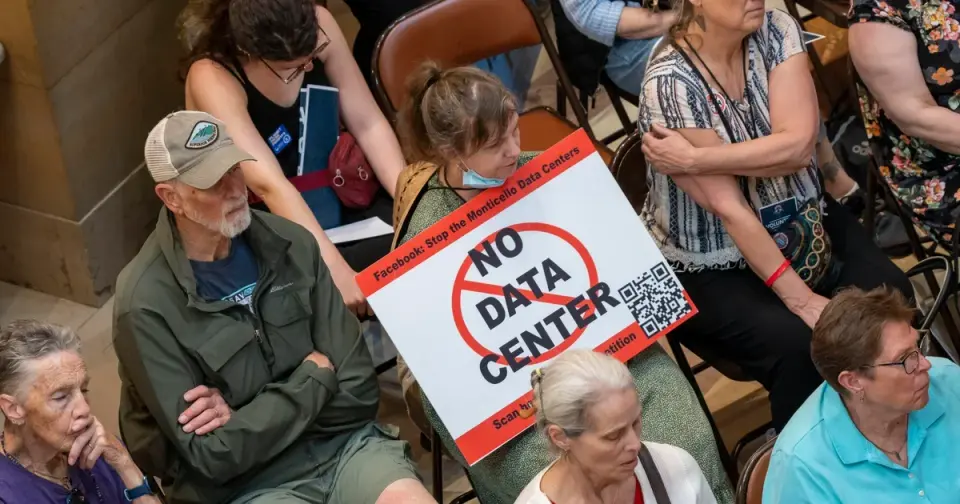
The 2026 U.S. midterm elections resulted in a significant Democratic victory, driven largely by widespread voter opposition to artificial intelligence infrastructure. Exit polls indicate that data centers were a decisive issue for over half of voters, with majorities in battleground states rejecting new construction. This sentiment contributed to Democratic wins in key states like Texas and Ohio, leading to calls for national moratoriums and causing a sharp decline in semiconductor stocks.
Key points
- CBS News exit polls found that data centers were a major factor for over 50% of voters, with majorities in all Senate battlegrounds opposing new construction in their communities.
- Democrats won the governorship and a Senate seat in Texas, a state projected to hold 25% of new U.S. data center capacity by 2030, putting billions in planned investments at risk.
- Tech stocks suffered significant losses following the election, with the iShares Semiconductor ETF falling nearly 9% and Nvidia dropping 8% as investors feared regulatory crackdowns.
- Democratic leaders, including Sen. Bernie Sanders and Gov.-elect Gina Hinojosa, called for immediate national and state-level moratoriums on data center approvals to protect communities and the environment.
- Opposition to data centers was bipartisan in sentiment but partisan in voting behavior; while most Republicans opposed local data centers, they predominantly voted for Republican candidates, whereas most data-center opponents backed Democrats.
Background
Prior to the election, multiple polls indicated growing American anxiety over AI and data centers. A late October ABC/Post/Ipsos poll showed 66% of Americans opposed new data centers, while a Wall Street Journal poll found 63% supported pausing AI development. Voters increasingly linked Republican tax policies to tech industry benefits, creating a political environment where anti-tech sentiment became a central campaign theme for Democrats.
How outlets are covering it
CBS News emphasized the direct link between data center opposition and Democratic electoral success, noting that while Republicans also opposed local data centers, they still voted for their party. Fox News focused on the economic risks, citing Alpha Compute CEO Brittany Kaiser’s warning that political shifts could push billions in investment overseas to Canada, Europe, or Mexico. The Atlantic framed the results as a broad rejection of Silicon Valley, highlighting local bans and the victory of candidates who criticized tech executives. CNBC highlighted the immediate market reaction, noting that chip stocks led the decline as Democrats signaled a push for stricter regulations and moratoriums.
Why it matters
The election results signal a potential shift in U.S. energy and technology policy, with new Democratic leadership in key states likely to impose restrictions on AI infrastructure. This could disrupt global tech supply chains, alter investment flows, and force a re-evaluation of the economic benefits versus environmental and community costs of data center expansion.
What to watch
Incoming Democratic governors and senators are expected to implement moratoriums or stricter zoning laws for data centers. Tech companies may accelerate investments in countries with more favorable regulatory environments. The U.S. Congress may face pressure to pass federal legislation regulating AI infrastructure, while investors will monitor for further volatility in semiconductor and energy sectors.
- Data centers were not winners in the 2026 elections, CBS News exit polls find CBS News
- One industry faces multi-trillion-dollar reckoning after historic midterm election reshuffle Fox News
- Silicon Valley’s Very Bad Night The Atlantic
- Top Democrats call to rein in AI buildout after midterms sweep: 'National data center moratorium now' CNBC
- How data center developers are pivoting after midterm rebuke USA Today
Want the full story? Read the original reporting
Read on CBS News