
Kalshi Issues First Lifetime Ban to George Santos for State of the Union Bet Manipulation
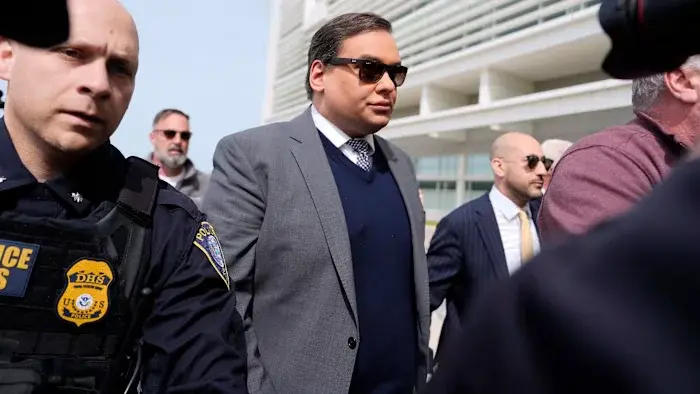
Prediction market operator Kalshi has permanently banned former U.S. Representative George Santos and fined him $71,356 for manipulating contracts on his attendance at the State of the Union. Santos profited approximately $17,800 by placing bets and making public statements to influence prices, a move the platform deemed a violation of its rules. This marks the first lifetime ban in Kalshi’s history, following a prior settlement with the Commodity Futures Trading Commission (CFTC) that fined Santos $17,500 and imposed a three-year trading ban. Santos, who was expelled from Congress for fraud and later had his prison sentence commuted by President Trump, responded to the ban by challenging the platform’s longevity on social media.
Key points
- Kalshi imposed its first-ever lifetime ban on George Santos, citing his lack of cooperation with their compliance investigation.
- Santos was fined $71,356 by Kalshi and previously paid a $17,500 fine to the CFTC for insider trading related to the State of the Union.
- Santos profited approximately $17,800 by betting on his own attendance and using social media posts to manipulate contract prices.
- The CFTC had previously banned Santos from prediction markets for three years, but Kalshi’s permanent ban is a separate, stricter disciplinary action.
- Santos responded to the ban on X, mocking the platform and questioning its future in the face of state-level gambling regulations.
Background
This incident follows a series of high-profile manipulations on prediction markets, including a case involving a U.S. soldier who profited over $400,000 using classified information and a settlement involving Trump’s teleprompter operator. Kalshi and rival Polymarket have faced increased scrutiny from state officials who argue these platforms constitute gambling, while Kalshi maintains its contracts are financial derivatives subject to federal oversight. Santos’s case is part of a broader trend of regulatory crackdowns as prediction markets attract retail investors and political figures.
How outlets are covering it
The Financial Times and The Washington Post emphasize the severity of Kalshi’s lifetime ban, highlighting it as a first for the platform and a response to Santos’s non-cooperation. The BBC focuses on the financial penalties and the broader context of prediction market scrutiny, noting that Kalshi acted independently without waiting for external enforcement. CNN provides a comparative perspective, noting that Kalshi also suspended Republican candidate Laurie Buckhout for betting on her own campaign, but with a less severe three-year suspension, underscoring the distinction between Santos’s case and other violations. All sources agree on the core facts of the manipulation and the financial penalties, but differ in emphasis on the regulatory and political implications.
Why it matters
The case underscores the growing regulatory and compliance challenges facing prediction markets as they become more mainstream. It highlights the tension between federal and state oversight, with Kalshi arguing for federal regulation while state officials push for gambling oversight. The lifetime ban signals a stricter stance by platforms against insider trading, particularly when political figures are involved, and may influence future regulatory frameworks for these markets.
What to watch
Kalshi may face further legal challenges from state officials seeking to regulate prediction markets as gambling. Santos could appeal the ban or the CFTC settlement, though his public response suggests he may not. The CFTC and other regulators may continue to pursue high-profile cases of insider trading on prediction markets, potentially leading to stricter enforcement and compliance requirements for platforms like Kalshi and Polymarket.
- George Santos banned from prediction platform Kalshi for manipulation Financial Times
- Ex-Congressman George Santos Receives Kalshi’s First-Ever Lifetime Ban WSJ
- Ex-congressman George Santos banned from betting platform for life BBC
- George Santos becomes first person to get lifetime ban from Kalshi CNN
- Kalshi bans former GOP congressman George Santos for life The Washington Post
Want the full story? Read the original reporting
Read on Financial Times