
Mathematicians Face Existential Crisis as AI Solves Century-Old Problems
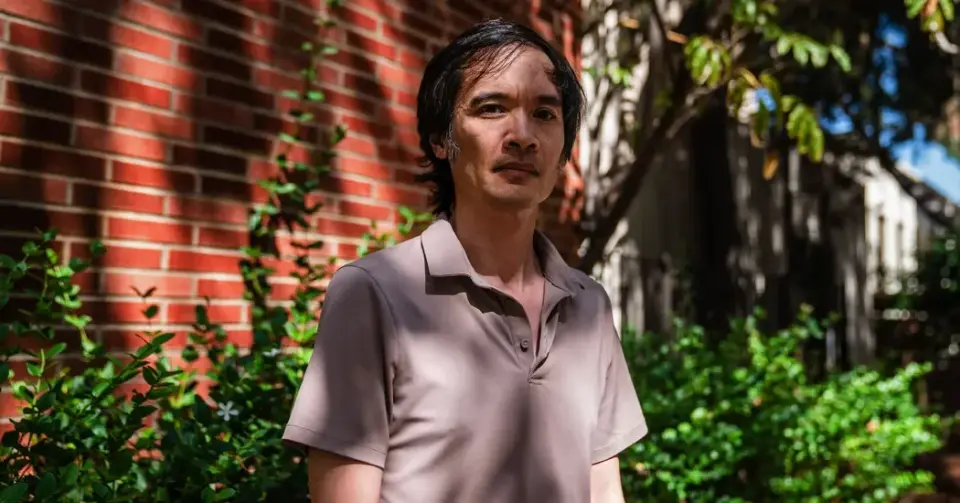
Terence Tao, a Fields Medalist, describes the current state of mathematics as a 'war footing' after OpenAI released over 700 AI-generated proofs, including a solution to the Navier-Stokes problem. While some experts view this as a validation of AI's potential, others fear the destruction of human-led research and the loss of collaborative academic culture.
Key points
- OpenAI released over 700 mathematical manuscripts in October 2026, including a solution to the Navier-Stokes problem, a Millennium Prize problem unsolved for nearly a century.
- Terence Tao, a prominent mathematician, stated he is on a 'war footing' and has become an unofficial spokesman for the field, expressing anger over the disruption of young researchers' careers.
- Scientific American reports that OpenAI's Navier-Stokes proof does not follow the 'Spanish program' method as initially claimed, but rather a distinct approach using 10,000 AI agents.
- Critics, including NYU professor Tristan Buckmaster, argue that the mass release of AI proofs has wiped out entire early-career research programs and undermines the collaborative nature of mathematics.
- A draft report from a group of mathematicians at Harvard concluded that 'deep uncertainty' will persist in the coming years regarding the future of PhD education and mathematical research.
Background
This crisis follows a series of AI breakthroughs in science, including OpenAI's earlier announcement of solving the Navier-Stokes problem in September 2026. The academic community has already expressed concerns about AI outpacing human researchers and the trust crisis in scientific publishing, as noted in previous coverage from October 2026.
How outlets are covering it
The New York Times emphasizes the emotional and professional toll on mathematicians like Terence Tao, who feels 'used' by OpenAI and fears the loss of intellectual adventure. Scientific American provides a technical analysis, clarifying that OpenAI's proof method differs from what was initially claimed, highlighting the 'black box' nature of AI reasoning. Business Insider focuses on the impact on early-career researchers and the potential shift in academic norms, with some experts like Alex Kontorovich viewing the crisis as an opportunity to revalue mathematical training. Science News raises concerns about the loss of human collaboration and the potential for AI to absorb unpublished ideas, threatening the open culture of mathematics.
Why it matters
The rapid advancement of AI in solving complex mathematical problems challenges the fundamental structure of academic research, including hiring, promotions, and the value of human-led discovery. This could lead to a shift in how mathematical knowledge is produced and validated, potentially marginalizing human researchers and altering the collaborative nature of the field.
What to watch
Mathematicians are working to verify and understand the AI-generated proofs, with some using Lean code to simplify the arguments. OpenAI has promised to improve the presentation of its results and fund workshops to help researchers understand AI-generated work. The academic community is likely to continue debating the ethics and implications of AI in research, with potential changes in how mathematical training and prizes are structured.
- ‘I’m on a War Footing’: Terry Tao and the Crisis in Math The New York Times
- OpenAI’s blockbuster Navier-Stokes proof isn’t what we thought it was Scientific American
- I Know Why the Mathematicians Weep https://www.derekthompson.org/
- Can math stay human in the age of AI? Science News
- A mathematician says OpenAI wiped out entire research programs in one day Business Insider
Want the full story? Read the original reporting
Read on The New York Times