
Stoke Space Secures $1B to Accelerate Nova Rocket and Larger Block 2 Variant
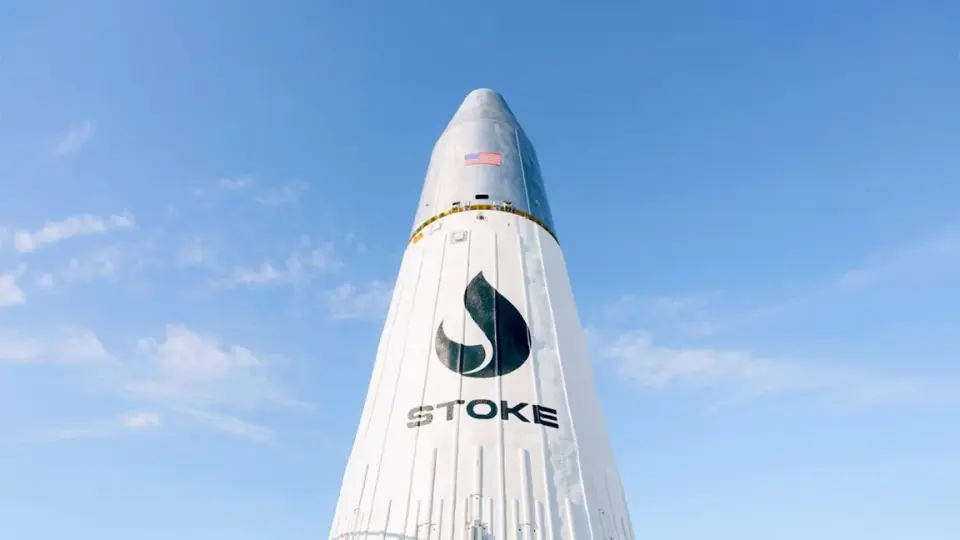
Stoke Space has raised $1 billion in a Series E round, bringing its total funding to $2.3 billion. The capital will accelerate the development of a larger 'Block 2' rocket and support the early 2027 debut of the smaller 'Pathfinder' version, aiming to address growing demand for launch capacity.
Key points
- Stoke Space raised $1 billion in a Series E round co-led by Point72 Ventures and Spark Capital, bringing total capital raised to $2.3 billion.
- The company plans to launch its initial 'Nova Pathfinder' rocket in early 2027, capable of lifting 3 metric tons to low-Earth orbit in a fully reusable configuration.
- Funding will accelerate development of 'Nova Block 2,' a larger vehicle with a 15-foot diameter and 15 metric tons lift capacity, targeted for a 2029 debut.
- Stoke Space is expanding its test facility in Moses Lake, Washington, from 75 to 550 acres to support simultaneous testing of both rocket variants.
- The first launch will carry a spacecraft for AstroForge, a California-based asteroid mining company, as part of a mission to the asteroid belt.
Background
Stoke Space, founded in 2020 by Andy Lapsa and Tom Feldman after they left Blue Origin, has been developing fully reusable launch vehicles. The company has been in advanced stages of assembly and testing its Nova rocket, with structural tests completed in summer 2026. The space industry is currently facing a significant mismatch between launch supply and demand, with satellite operators in 'panic mode' over availability.
How outlets are covering it
Ars Technica emphasizes the scale of the funding and the ambitious timeline for the larger Block 2 rocket, noting the company's bold effort to build a small, fully reusable vehicle. SpaceNews highlights the business and policy aspects, focusing on the company's progress toward its first flight and the strategic importance of the funding. GeekWire provides a detailed technical breakdown of the Nova Pathfinder and Block 2 designs, including the active-cooling system for upper-stage reusability and the expansion of the Moses Lake test facility. All sources agree on the $1 billion raise and the early 2027 launch target for Pathfinder, but GeekWire provides more specific details on the engine configurations and the AstroForge mission.
Why it matters
Stoke Space's funding and development progress could significantly impact the launch market by providing a fully reusable alternative to partially reusable rockets like SpaceX's Falcon 9. The company's ability to scale up to the larger Block 2 rocket could help address the growing demand for launch capacity, particularly for satellite constellations. The success of Stoke Space's fully reusable design could also influence the broader industry's approach to rocket reusability and cost reduction.
What to watch
Stoke Space will ship the Nova Pathfinder first stage to Cape Canaveral for additional testing and a static fire test, followed by mating with the upper stage. The company aims for an early 2027 launch, with the first mission carrying a spacecraft for AstroForge. Development of the larger Block 2 rocket will continue, with a target debut in 2029.
- With another huge infusion of cash, Stoke Space goes even bigger Ars Technica
- Stoke Space plans more powerful rocket, raises $1 billion Reuters
- Stoke Space raises $1 billion and unveils larger launch vehicle SpaceNews
- Stoke Space raises $1B to expand its footprint and upsize its fully reusable Nova rocket GeekWire
- Stoke Space raises another billion to rival SpaceX at re-flying rockets TechCrunch
Want the full story? Read the original reporting
Read on Ars Technica