
SpaceX Starship 40 Begins Multi-Month Voyage to Texas After Indian Ocean Recovery
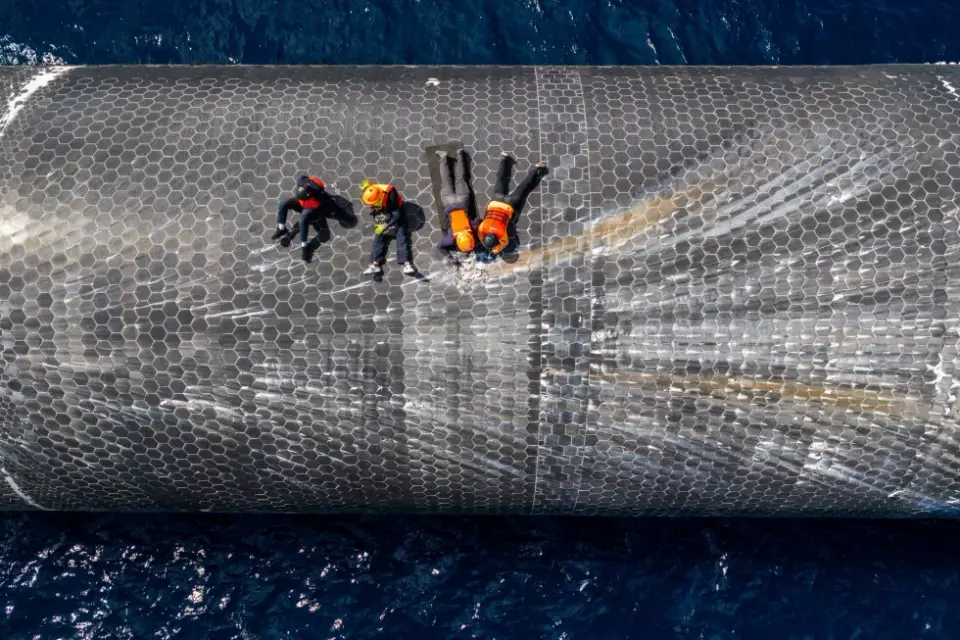
SpaceX has successfully retrieved its Starship 40 upper stage from the Indian Ocean and loaded it onto a semi-submersible vessel for transport to Texas. The 52-meter vehicle, which splashed down on July 24 after Flight 13, spent 24 days at sea before being towed to Christmas Island. Engineers completed inspections off the coast, collecting heat shield data, and the vessel has now departed for a multi-month journey to Starbase.
Key points
- SpaceX recovered Starship 40 from the Indian Ocean after it drifted for 24 days following its July 24 splashdown.
- The vehicle was towed to Christmas Island, Australia, where engineers conducted inspections and collected heat shield tile samples.
- Starship 40 was loaded onto the semi-submersible vessel Forte, which departed Christmas Island on Friday to begin the return trip to Texas.
- The voyage to Starbase is expected to take several weeks, covering approximately 20,000 kilometers.
- This is the first SpaceX upper stage to survive a space flight intact, providing critical data for future reusability efforts.
Background
Starship 40 launched on July 24 as part of Flight 13, deploying 20 Starlink satellites before splashing down in the Indian Ocean. The vehicle drifted for 24 days before being towed to Christmas Island, located about 1,500 kilometers off Western Australia's northern coast. Previous coverage noted concerns about heat shield durability and the logistical challenges of recovering the vehicle from open ocean.
How outlets are covering it
AP News and BASENOR emphasize the technical success of the recovery and the data collected for future vehicle improvements. ABC News highlights the logistical complexity and cost, noting that the semi-submersible vessel Forte is a heavy-duty operation typically used in oil and gas industries. ABC also points out the local impact on Christmas Island, where the rocket became a community attraction, with locals offering 'rocket trips' and a bar naming a cocktail 'Rocket Fuel.' Space.com focuses on the visual spectacle of the loading operation. University of Sydney Professor Stefan Williams notes the significant cost of such retrieval operations, while astronomer Matt Woods emphasizes how SpaceX's reusability efforts are making space exploration more affordable.
Why it matters
The successful recovery of Starship 40 marks a critical step in SpaceX's goal of developing reusable rockets. The data collected from this flight will inform improvements to heat shields and other components, potentially reducing launch costs and enabling more frequent missions. The multi-month voyage back to Texas underscores the logistical challenges of ocean recovery but demonstrates SpaceX's commitment to reusing hardware rather than discarding it.
What to watch
Starship 40 will arrive at Starbase in Texas in several weeks, where it will undergo detailed analysis. Engineers will use the data collected during the ocean recovery to improve future Starship designs, particularly focusing on heat shield durability and rapid reuse capabilities. SpaceX aims to launch, catch, and reuse its rockets in future missions, building on the success of this recovery operation.
- SpaceX recovers Starship from the Indian Ocean a month after launch and is shipping it back to Texas AP News
- Starship is coming home! SpaceX loads floating spacecraft onto huge ship in the Indian Ocean (photos) Space
- Elon Musk's rocket heads home to US after Christmas Island sojourn ABC News & Headlines – Australian Broadcasting Corporation
- Starship 40 Recovered from Indian Ocean, Heading Home BASENOR - Tesla Accessories
- SpaceX recovers Starship from the Indian Ocean a month after launch The Independent
Want the full story? Read the original reporting
Read on AP News