
SpaceX loads intact Starship 40 onto semi-submersible for months-long voyage to Texas
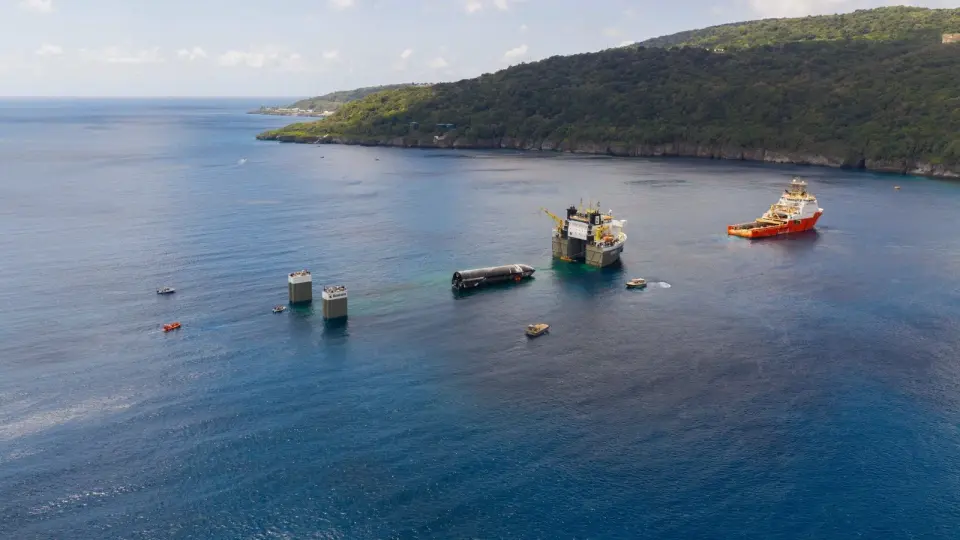
SpaceX has loaded the 52-meter upper stage of its 13th Starship test flight onto a semi-submersible vessel off Christmas Island. The vehicle, which survived its July 24 splashdown in the Indian Ocean intact, will now travel to Starbase in Texas for analysis. The journey is expected to take several months, marking a significant step toward SpaceX's goal of reusing its massive rocket stages.
Key points
- SpaceX loaded Starship 40 onto the semi-submersible vessel Forte on August 27, 2026, after engineers completed in-water inspections off Christmas Island.
- The upper stage, which splashed down in the Indian Ocean on July 24 following Flight 13, is the first Starship upper stage to survive a spaceflight and splashdown intact.
- The vehicle will travel approximately 20,000 kilometers to Starbase in South Texas, a journey expected to take several months.
- SpaceX collected heatshield tile samples and reentry data during the recovery, which has already identified improvements for future vehicles.
- The recovery operation utilized local stevedores in Christmas Island and required the semi-submersible's deck to submerge to lift the rocket from the water.
Background
This recovery follows a series of challenges documented in our archive, including rough seas that initially stalled salvage efforts in August 2026 and concerns about the vehicle's durability. Previous coverage noted that the upper stage had been drifting in the Indian Ocean for over a month before being towed to Christmas Island for retrieval.
How outlets are covering it
Space.com and AP News emphasize the logistical achievement of the recovery and the intact condition of the vehicle, highlighting the unprecedented nature of the splashdown. ABC News provides local context from Christmas Island, noting the community's engagement with the event and the high costs associated with using large semi-submersible vessels, as noted by University of Sydney Professor Stefan Williams. BASENOR focuses on the technical implications, specifically the collection of heatshield data and the open question of how much of the hardware will be reusable after the ocean recovery. While all sources agree on the timeline and location, ABC News uniquely highlights the economic burden of the retrieval operation, whereas Space.com and AP News focus more on the engineering success.
Why it matters
The successful recovery of Starship 40 is a critical milestone for SpaceX's goal of developing a fully reusable rocket system. The intact upper stage provides valuable data on heatshield performance and reentry dynamics, which will inform future designs and potentially reduce the cost of space access. The ability to recover and reuse such a large vehicle could significantly lower the price of launching satellites and other payloads, as noted by astronomer Matt Woods in ABC News.
What to watch
SpaceX will transport Starship 40 to Starbase in Texas for detailed analysis. The company plans to implement the identified improvements on future vehicles. The long voyage is expected to take several months, after which the vehicle may be assessed for potential reflight or used to inform the design of subsequent Starship iterations.
- Starship is coming home! SpaceX loads floating spacecraft onto huge ship in the Indian Ocean (photos) Space
- SpaceX recovers Starship from the Indian Ocean a month after launch and is shipping it back to Texas AP News
- Elon Musk's rocket heads home to US after Christmas Island sojourn ABC News & Headlines – Australian Broadcasting Corporation
- Starship 40 Recovered from Indian Ocean, Heading Home BASENOR - Tesla Accessories
- SpaceX recovers Starship from the Indian Ocean a month after launch The Independent
Want the full story? Read the original reporting
Read on Space