
US Chip Curbs Trigger Supply and Credit Freeze for Southeast Asian Data Centers
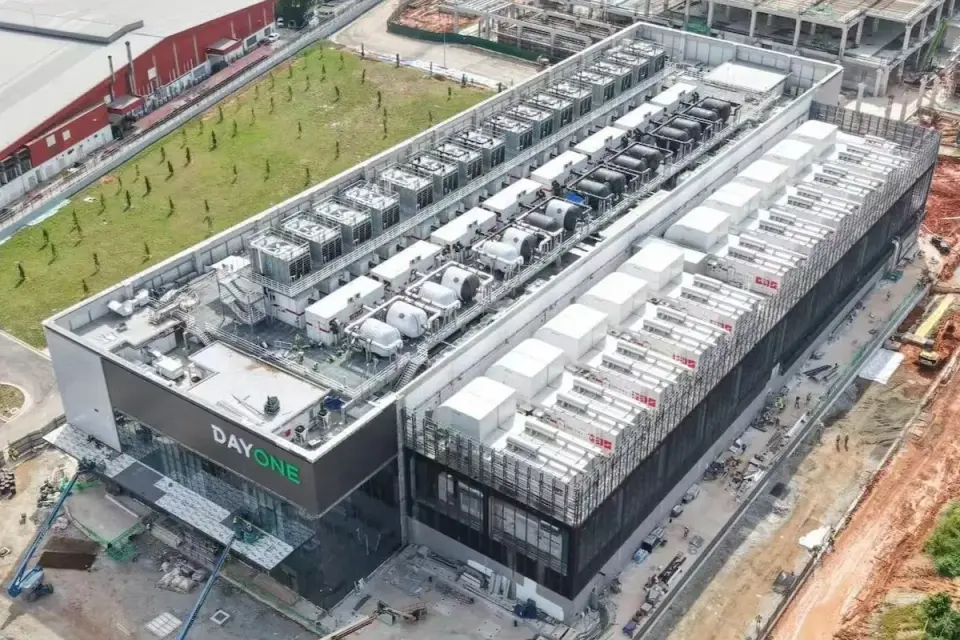
New US export rules have triggered a dual freeze on hardware shipments and financing for Southeast Asian data centers, threatening to strand billions in infrastructure. While Wall Street celebrates Nvidia’s leadership stability, regional operators face a compliance vacuum and capital withdrawal as lenders and suppliers halt support for projects linked to Chinese tech giants.
Key points
- Nvidia has instructed partners like Dell and Supermicro to halt server shipments to buyers in Malaysia, Singapore, Thailand, and Indonesia, according to the Financial Times.
- Global banks have frozen billions in loans for data centers tied to ByteDance, Alibaba, and Tencent, per Bloomberg, while specific facilities in Malaysia and Thailand have seen financing stalled.
- The US Commerce Department’s Bureau of Industry and Security (BIS) enacted interim rules on Nov. 19, 2026, closing loopholes for remote cloud access by Chinese firms, with a 90-day compliance deadline ahead of Dec. 1 enforcement.
- Neither Nvidia, BIS, nor the affected suppliers have publicly confirmed the shipment halt, creating a compliance vacuum where companies are freezing operations to avoid extraterritorial legal risks.
- The rules exempt US-headquartered end-users, potentially disadvantaging local Southeast Asian cloud providers who must navigate strict Know-Your-Customer and licensing hurdles.
Background
This crisis follows months of tightening US export controls aimed at preventing Chinese firms from accessing advanced AI chips via Southeast Asian data centers. Earlier in November, the US Commerce Department issued rules requiring licenses for chip sales to the region, disrupting regional investment booms. The situation is compounded by the recent reinstatement of Nvidia CEO Jensen Huang, who faces congressional testimony on Dec. 1, 2026, regarding national security concerns. While the Justice Department has stated there is no evidence of unlawful conduct by Huang, the heightened scrutiny has made hardware suppliers cautious about compliance risks.
How outlets are covering it
Asia Times frames the situation as a structural paralysis and a 'coordinated pincer movement' that exposes the fatal flaw in Southeast Asia’s assumption of neutrality, arguing that Washington is weaponizing compliance departments to dictate regional digital development. CNBC focuses on the immediate commercial impact, noting that chip sellers are actively seeking new buyers to offload GPUs originally intended for data centers with Chinese renters, highlighting the supply chain disruption rather than the broader geopolitical implications. Both sources agree on the severity of the freeze but differ in emphasis: Asia Times highlights the long-term risk of stranded assets and diplomatic leverage, while CNBC focuses on the immediate market mechanics and the 'loophole' closure.
Why it matters
The freeze threatens to turn billions of dollars in physical infrastructure into stranded assets, as half-built server farms face carrying costs and regulatory penalties without operational revenue. It also highlights the growing extraterritorial reach of US export controls, which can dictate the pace of digital development in emerging economies without directly sanctioning them. For Southeast Asian governments, this creates a diplomatic dilemma between Washington’s hardware vetoes and Beijing’s demand for non-discriminatory digital commerce, potentially undermining regional integration efforts like the upgraded China-ASEAN Free Trade Area.
What to watch
The 90-day compliance window ends around late February 2027, after which BIS is expected to enforce stricter licensing requirements. Jensen Huang is scheduled to face congressional testimony on Dec. 1, 2026, which may further influence the regulatory landscape. Until BIS provides clear guidance on licensing and auditing multi-layered cloud tenants, regional operators will likely continue to face capital freezes and supply chain disruptions, with potential forced consolidation of half-built facilities.
- Southeast Asia’s AI data center bets turning into stranded assets Asia Times
- Nvidia Tells Partners to Pause Shipments to Southeast Asia WSJ
- Billions in Data Center Deals Grind to Halt After AI Chip Curbs Bloomberg.com
- Nvidia Halts Sales to Southeast Asia as U.S. Tightens China Restrictions The New York Times
- Nvidia chip buyers told to rule out Chinese renters to purchase GPUs, sources say CNBC
Want the full story? Read the original reporting
Read on Asia Times