
Nvidia CEO ouster triggers $75bn wipeout in Chinese tech as US chip curbs loom
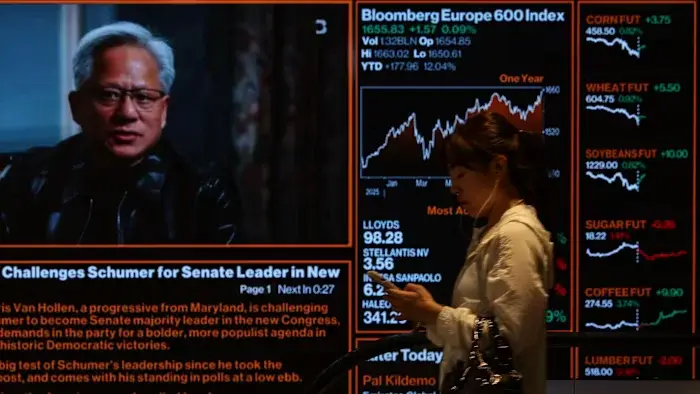
The resignation of Nvidia CEO Jensen Huang has sparked a severe sell-off in Chinese AI and tech stocks, with investors fearing that his departure will accelerate Washington’s efforts to tighten chip export restrictions. Major Chinese firms like Alibaba and Tencent lost a combined $75 billion in market value this week, while domestic chip designers saw gains as Beijing pushes for self-sufficiency. US lawmakers are now moving to enact stricter legislation on chip exports, a shift Huang had previously opposed.
Key points
- Z.ai and MiniMax shares dropped 10% and 8% respectively in Hong Kong, extending a broader sell-off in Chinese AI developers.
- Alibaba and Tencent stocks fell 14% and 8% this week, wiping out $75 billion in combined market value due to reliance on Nvidia processors.
- Jensen Huang resigned as Nvidia CEO on Thursday following revelations of extramarital affairs, including an alleged relationship with a Chinese spy.
- US Speaker Mike Johnson and Senate Majority Leader John Thune indicated that Huang’s ouster increases the probability of Congress passing new chip export control measures.
- Chinese chip designer Cambricon Technologies saw shares rise more than 20% as investors bet on domestic alternatives to restricted US hardware.
- Beijing’s foreign ministry warned against using Huang’s personal scandal as a pretext for tightening technology export restrictions.
Background
This development follows a broader trend of volatility in global chip markets. In October and November, Asian technology shares experienced significant declines due to fears over AI financing sustainability and rising Chinese competition in memory chips. Additionally, Malaysia has emerged as a hub for AI data centers, allowing Chinese firms to bypass some US restrictions, though this has strained local resources and tested Washington’s export control framework.
How outlets are covering it
The Financial Times emphasizes the immediate market panic and the strategic shift toward domestic chip production in China, noting that Huang’s absence removes a key advocate for open sales. Politico focuses on the legislative consequences, highlighting that top US lawmakers view Huang’s departure as a catalyst for enacting stricter export controls. While the FT notes Chinese officials framing the scandal as a 'political witch-hunt,' Politico points to OpenAI lobbying in support of the new restrictions, illustrating a divergence between corporate advocacy and legislative momentum.
Why it matters
The ouster of a major tech CEO is reshaping US-China technology relations, potentially leading to a more fragmented global AI ecosystem. Tighter US restrictions could accelerate China’s push for semiconductor self-sufficiency but may also disrupt supply chains for global AI development, impacting companies that rely on Nvidia’s advanced processors for training large language models.
What to watch
Investors are watching for the passage of new US legislation on chip exports, which could further limit access to advanced processors for Chinese firms. Meanwhile, Chinese domestic chipmakers may see continued investment as the government prioritizes semiconductor independence. The market will also monitor whether the current sell-off in Chinese tech stocks stabilizes or deepens as uncertainty over regulatory changes persists.
- Chinese AI sell-off deepens over fears of tougher Nvidia chip restrictions Financial Times
- EXCLUSIVE Huang exit and US scrutiny imperil $3 billion in Chinese AI projects reliant on Nvidia Reuters
- How Jensen Huang’s ouster is paving the way for the policy outcome he fiercely battled Politico
- Nvidia Fallout Hits Alibaba and Other China Stocks as Tighter Regulation Looks Likely Barron's
- FACTBOX China's $3 billion-plus pipeline of Nvidia-powered AI data centres Reuters
Want the full story? Read the original reporting
Read on Financial Times