
Trump Claims DOJ Threatened Unnamed AI Executive With Jail Time in 60 Minutes Interview
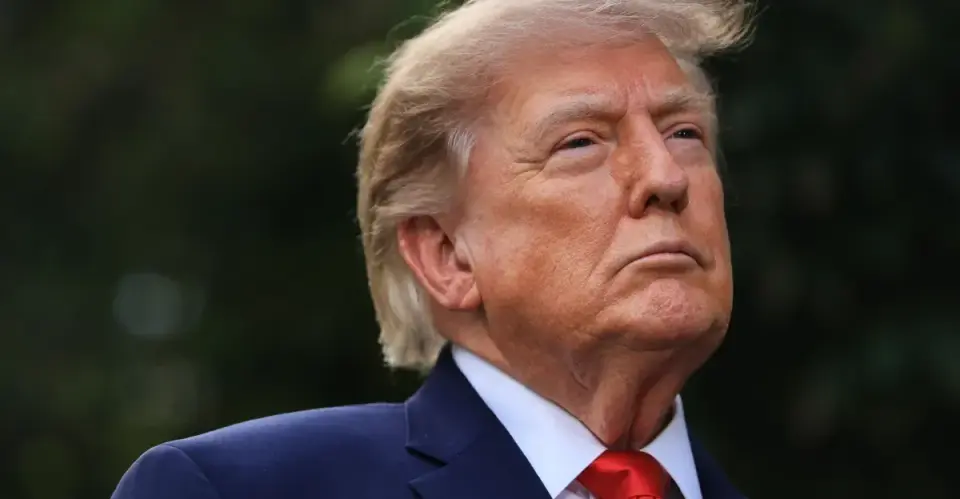
President Donald Trump told 60 Minutes that his administration threatened a major AI company leader with immediate arrest for 'doing something bad' with artificial intelligence. He refused to name the individual or company but claimed the executive 'totally changed everything' after the warning. Trump dismissed AI safety risks as manageable, arguing the US must maintain its lead over China despite lacking guardrails. The comments emerged amid scrutiny of Nvidia CEO Jensen Huang over espionage allegations.
Key points
- Trump stated the DOJ warned an unnamed AI leader to 'give your wife a kiss good night' because they would go to jail the next morning.
- He claimed the individual was from 'one of the big ones' but declined to identify them, saying the conduct was not necessarily malicious.
- Trump argued AI risks are manageable and that the US cannot afford 'guardrails' that would put it in a 'deep second position' behind China.
- The interview occurred as Nvidia investigated claims that CEO Jensen Huang had a relationship with a suspected Chinese spy, Alice Huang.
- Trump previously dismissed AI safety concerns as 'phony' in a September interview but acknowledged the technology's importance in the 60 Minutes segment.
Background
This interview follows a series of recent engagements where Trump has interacted with AI leaders, including a September White House gathering where executives signed a voluntary safety accord. In a prior Time interview, he had dismissed AI safety warnings as 'phony,' marking a shift in his public rhetoric during the 60 Minutes appearance where he emphasized the DOJ's role in managing risk. The comments also arrive after Republican losses in the 2026 midterms, where Trump admitted his deportation policies were 'too tough,' suggesting a broader recalibration of his administration's approach to domestic and technological challenges.
How outlets are covering it
The Verge and Business Insider both report that Trump refused to name the specific executive or company, describing the individual only as a leader of 'one of the big ones.' While The Verge notes Trump's inconsistent terminology, switching between 'AI' and 'SI' (super intelligence), Business Insider highlights the specific threat language used, including the reference to prison orange. Moneycontrol contextualizes the remarks within the ongoing controversy surrounding Nvidia CEO Jensen Huang, noting that while Trump did not name Huang, the timing coincides with Huang's admission of infidelity and the company's investigation into potential espionage links. All three outlets agree that Trump framed the threat as a successful deterrent that caused the executive to change their behavior, though none provide independent verification of the specific incident described.
Why it matters
The incident highlights the Trump administration's approach to AI regulation, favoring direct executive pressure over legislative guardrails. By claiming the DOJ can manage risks through threats of arrest, Trump signals a preference for unilateral control over collaborative safety frameworks. This stance contrasts with the voluntary safety accord signed by AI leaders in September and reflects the administration's prioritization of US technological dominance over China, even if it means forgoing safety measures. The ambiguity surrounding the unnamed executive raises questions about the transparency and legal basis for such interventions in the tech sector.
What to watch
Analysts will monitor whether the unnamed AI executive or company issues a statement clarifying the nature of the alleged misconduct and the DOJ's involvement. The ongoing investigation into Nvidia CEO Jensen Huang may provide further context, though Trump did not explicitly link the two events. Future AI safety discussions in Congress may be influenced by Trump's assertion that the US cannot afford 'guardrails' that hinder its competitive advantage against China. The administration may also face pressure to disclose details of the alleged threat to address concerns about executive overreach in the technology sector.
- Trump’s 60 Minutes interview touched on AI safety, threat to arrest an AI exec The Verge
- Trump says the administration once threatened the leader of a big AI company with jail time Business Insider
- Did Trump Want Anthropic CEO Dario Amodei Jailed? The Clues Are Adding Up Yahoo
- 'Get Ready To Go To Jail': Trump Reveals How DOJ Dealt With Alleged AI Misconduct at Major Company Benzinga
- 'Get ready to go to jail': Amid Nvidia spy scandal, Trump recounts 'situation' involving major AI company... Moneycontrol.com
Want the full story? Read the original reporting
Read on The Verge