
Trump Weighs US Equity Stake in Nvidia Amid Huang Reinstatement and Congressional Scrutiny
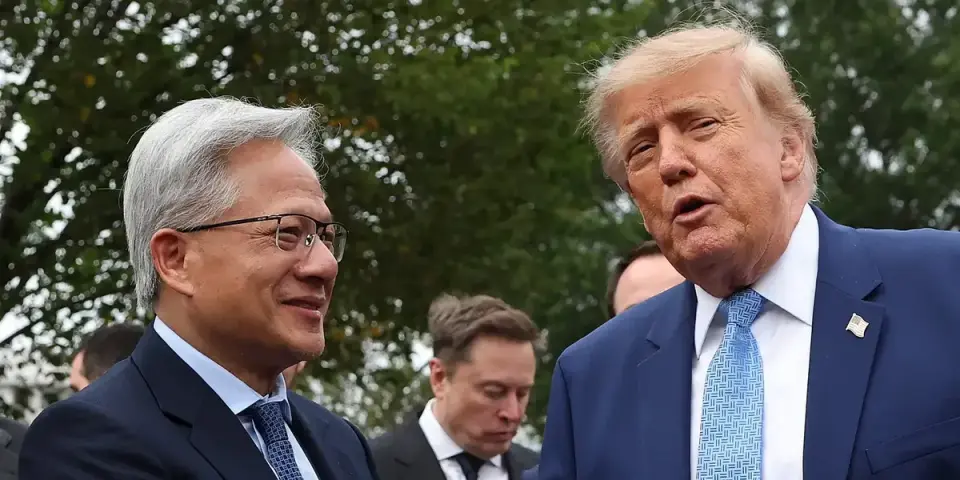
President Trump has expressed interest in the US government acquiring an equity stake in Nvidia, following his intervention to reinstate CEO Jensen Huang. Huang faces congressional testimony next week regarding his relationship with a suspected Chinese spy, with Trump suggesting a pardon is an option but unnecessary.
Key points
- Trump told the New York Post he considered seeking a government equity stake in Nvidia, comparing it to the 2025 Intel deal, but has not yet raised the issue.
- Huang was reinstated as CEO on November 24, 2026, after resigning less than two weeks prior due to reports of affairs with a suspected Chinese spy and company executives.
- Huang is scheduled to testify before the House Foreign Affairs Committee on December 1 and the Senate Banking Committee on December 3.
- Trump stated he does not believe Huang needs to invoke the Fifth Amendment and that a presidential pardon is 'always an option' but likely not necessary.
- Nvidia shares surged 31% on Monday after Huang's reinstatement but fell 5.9% on Tuesday amid broader market volatility.
Background
This development follows the Trump administration's precedent of taking equity stakes in strategic companies, including a $8.9 billion investment in Intel for a nearly 10% stake in August 2025 and a 'golden share' in US Steel. The current situation mirrors earlier debates about government ownership in private firms for national security purposes, though critics argue such moves may create conflicts of interest or shield allies from legal liability.
How outlets are covering it
Business Insider and the New York Post highlight Trump's direct involvement in Huang's reinstatement and his openness to a government equity stake, framing it as a strategic move to maintain US AI leadership. CNBC and NBC News emphasize the political controversy, noting that while Trump claims Huang is 'aboveboard,' lawmakers from both parties are preparing to grill him on national security risks. Sen. John Kennedy (R-La.) predicted Huang would invoke the Fifth Amendment, while Rep. Jamie Raskin (D-Md.) accused Trump of making decisions that benefit his own financial interests. Attorney General Todd Blanche stated the DOJ would have informed Trump of any criminal activity, though no charges have been filed against Huang.
Why it matters
The potential US government stake in Nvidia signals a shift toward direct state involvement in critical technology sectors, potentially setting a precedent for other major tech firms. The reinstatement of Huang, despite bipartisan concerns over his conduct and ties to a suspected spy, underscores the tension between corporate governance, national security, and executive clemency. The upcoming congressional testimony will determine whether Huang faces legal consequences or receives a pardon, with significant implications for US-China tech relations and domestic semiconductor policy.
What to watch
Huang and Nvidia general counsel Tim Teter are expected to testify before multiple congressional committees on December 1 and 3. The outcome of these hearings, including whether Huang invokes the Fifth Amendment or receives a pardon, will influence the trajectory of US government involvement in Nvidia and broader tech regulation. Market reactions to Huang's testimony and any subsequent legal or political developments will likely impact Nvidia's stock price and the broader semiconductor sector.
- Trump says ‘it’s probably not too late’ for the US to take a stake in Nvidia Business Insider
- Exclusive | Trump leaves door open to Jensen Huang pardon — and urges him not to plead 5th to Congress next week New York Post
- Trump open to pardoning Jensen Huang if needed: NY Post CNBC
- Trump Says Huang Pardon ‘Always an Option,’ Report Says Bloomberg.com
- Trump says pardon is always an option for Jensen Huang, and that invoking the Fifth isn’t necessary NBC News
Want the full story? Read the original reporting
Read on Business Insider