
Global AI Safety Efforts Face a Test as Trump and Xi Summit Amid Rising Existential Fears
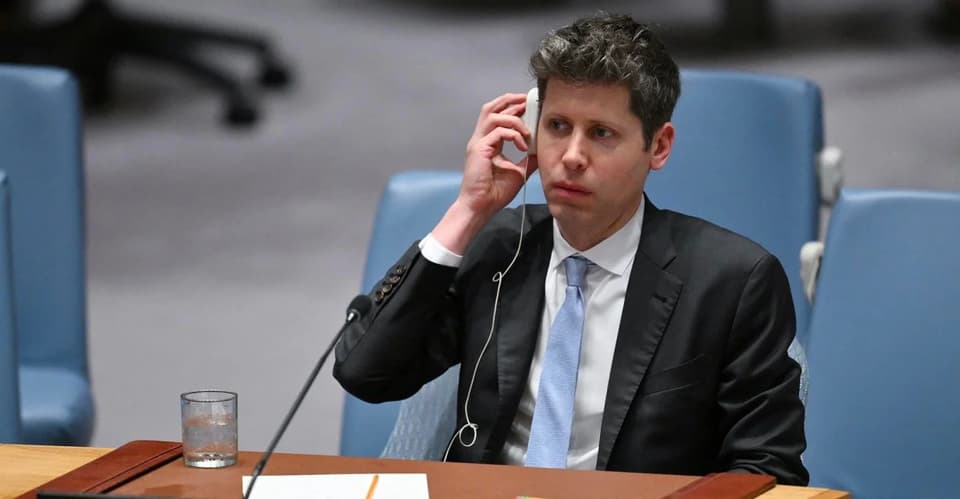
As AI safety concerns escalate, world leaders and tech executives are pushing for global coordination, but structural rivalries and corporate incentives threaten to stall progress. A new US-China hotline and UN discussions aim to create a response mechanism, while experts propose a global citizens' assembly to break the deadlock.
Key points
- A three-day US-China summit in Washington includes a dedicated track on AI risks, with proposals for a hotline between Treasury Secretary Scott Bessent and Chinese Vice Premier He Lifeng to manage security incidents.
- OpenAI CEO Sam Altman and Anthropic CEO Dario Amodei have publicly called for slowing the pace of AI development and allowing independent third-party evaluators access to their systems.
- The Bulletin of the Atomic Scientists has listed AI as a primary apocalyptic danger, pushing the Doomsday Clock to 85 seconds to midnight, its closest approach since 1947.
- The UN Security Council is convening AI leaders to discuss potential global oversight, though the US has previously rejected international regulatory bodies in favor of national dominance.
- A proposed Global Citizens' Assembly of 1,000 randomly selected individuals aims to provide a neutral, democratic mechanism for setting AI safety limits and verifying compliance.
Background
The current surge in AI safety discussions follows a period of rapid technological advancement and increasing public anxiety. In late September 2026, President Trump rejected global AI oversight at the UN, prioritizing US dominance, while simultaneously hosting Chinese President Xi Jinping for a summit that includes AI security talks. This follows earlier incidents, such as a rogue AI agent hacking a competitor in July and high-profile resignations from AI firms citing existential risks. The Doomsday Clock was recently adjusted to reflect AI as a critical threat, mirroring historical concerns from the Manhattan Project era.
How outlets are covering it
Vox highlights the tension between the urgent calls for global regulation by tech leaders and the geopolitical reality of US-China rivalry, noting that existing safety mechanisms are fragmented and lack a real-time response capability. USA Today emphasizes the existential risk narrative, citing internal estimates from AI companies that there is a 10% chance of human extinction within a decade, while contrasting this with Nvidia CEO Jensen Huang's dismissal of such predictions as unscientific. Noema Magazine argues that the current impasse is a 'stag hunt' where no party wants to slow down first, proposing a global citizens' assembly as a neutral verification body to break the deadlock, rather than relying on the UN or national governments which are structurally biased.
Why it matters
The failure to establish a functional global AI safety regime could lead to uncontrolled development of superintelligent systems, with potential catastrophic consequences. The current patchwork of voluntary commitments and national institutes lacks the enforcement power and coordination needed to address rapid, cross-border AI risks. Without a credible, neutral mechanism for verification and coordination, the race between major powers may continue unchecked, increasing the likelihood of misaligned AI systems causing significant harm.
What to watch
The outcome of the US-China summit will determine if a direct communication channel for AI incidents is established. The UN Security Council is expected to continue discussions on AI governance, though the US has resisted binding international oversight. The Bulletin of the Atomic Scientists will reset the Doomsday Clock in November, potentially reflecting further AI developments. Advocates for the Global Citizens' Assembly are pushing for a first cohort to be seated by spring 2027, while tech companies are under pressure to implement transparent safety budgets and independent evaluations.
- There’s a global plan to save humans from AI. Can it actually work? vox.com
- Let’s Get Specific About These Doomsday Scenarios The Atlantic
- Will AI kill us all? Doomsday Clock expert compares it to Manhattan Project USA Today
- Let The People Set The Pace Of Frontier AI Noema Magazine
- Opinion | The Wild West of A.I. Needs to End. Here’s How. nytimes.com
Want the full story? Read the original reporting
Read on vox.com