
GM Unveils AI-Driven Strategy to Halve Development Time and Launch Eyes-Off Autonomy
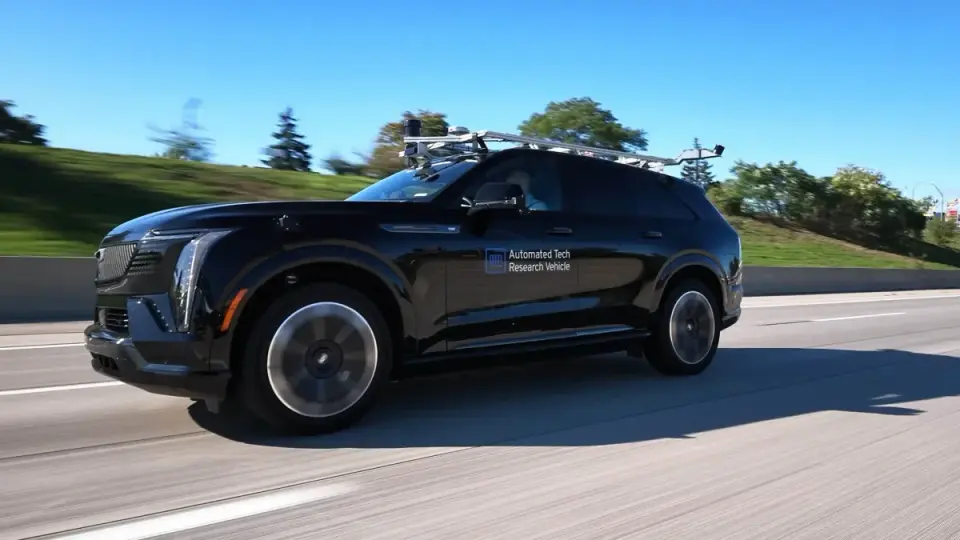
General Motors announced a comprehensive technological overhaul at its GM Forward event in New York, centering on a new centralized electrical architecture, AI-accelerated development, and a revamped OnStar ecosystem. The company aims to cut vehicle development time from four to five years to roughly two years by leveraging decades of historical data. Key hardware updates include a single central computer replacing dozens of ECUs, offering 40 times more computing power and 30% less wiring. Software updates include a new AI assistant and a unified mobile app, while 'eyes-off' autonomous driving is targeted for 2028. Next-generation EVs will feature lithium manganese rich batteries with 33% higher energy density.
Key points
- GM is implementing a new centralized electrical architecture that reduces ECUs from 80-100 to one central computer, increasing computing power by 40 times and reducing wiring by 30%.
- The company aims to halve vehicle development time to two years using AI, citing efficiencies in aerodynamics and structural analysis, such as reducing testing time from 60 hours to 60 seconds.
- A new OnStar AI assistant will launch in 2027 Cadillac Lyriqs, replacing Google's Gemini with a proprietary system deeply integrated into vehicle subsystems.
- GM is consolidating its mobile apps into a single OnStar platform for all brands, featuring AI-driven scheduling and vehicle tracking for families.
- Eyes-off autonomous driving is scheduled for 2028, starting with the Cadillac Escalade IQ, allowing drivers to divert attention from the road.
- Next-generation EVs will use lithium manganese rich batteries with 33% more energy density than LFP batteries, alongside motors with 40% fewer parts.
Background
GM has previously targeted a 2028 launch for eyes-off Super Cruise, using simulators to test driver behavior. The current announcement expands this vision to a broader lineup and integrates it with new AI and hardware platforms.
How outlets are covering it
The Drive emphasizes the strategic advantage of GM's historical data trove over smaller competitors, noting that while the tech is impressive, execution remains a historical challenge for the automaker. CNBC highlights the competitive pressure from Chinese automakers, who develop vehicles twice as fast, and notes GM's commitment to EVs despite market challenges. WIRED focuses on the societal implications of autonomous errand-running, with GM acknowledging potential increases in road traffic but arguing that urban sprawl is a gradual process. All sources agree on the core technical specs but differ in emphasis: The Drive on data advantage, CNBC on global competition, and WIRED on urban impact.
Why it matters
GM's shift to a centralized architecture and AI-driven development signals a major pivot toward software-defined vehicles, aiming to close the gap with Tesla and Chinese rivals. The consolidation of OnStar and the introduction of eyes-off autonomy could redefine the ownership experience and safety standards in the automotive industry.
What to watch
GM expects to launch the OnStar AI assistant in 2027 and eyes-off autonomy in 2028. Development of next-generation EVs is expected to begin in 2028, with potential market availability around 2030. The new central computer will expand to full-size trucks and SUVs beyond the Cadillac Escalade IQ.
- GM Just Laid Out Its Entire Future. It Runs on AI, Eyes-Off Driving, and One Central Computer The Drive
- GM Tech Day: Autonomous Driving, More Helpful OnStar, Faster Product Development Car and Driver
- GM aims to develop vehicles in as little as two years with AI, software push CNBC
- GM Wants Your Car to Do Your Chores WIRED
- GM Aims to Bring ‘Eyes-Off’ Driving to AI-Powered Cars Within 2 Years The New York Times
Want the full story? Read the original reporting
Read on The Drive