
Nvidia, Meta, and Google Standardize Open AI Factory Designs at 2026 OCP Summit
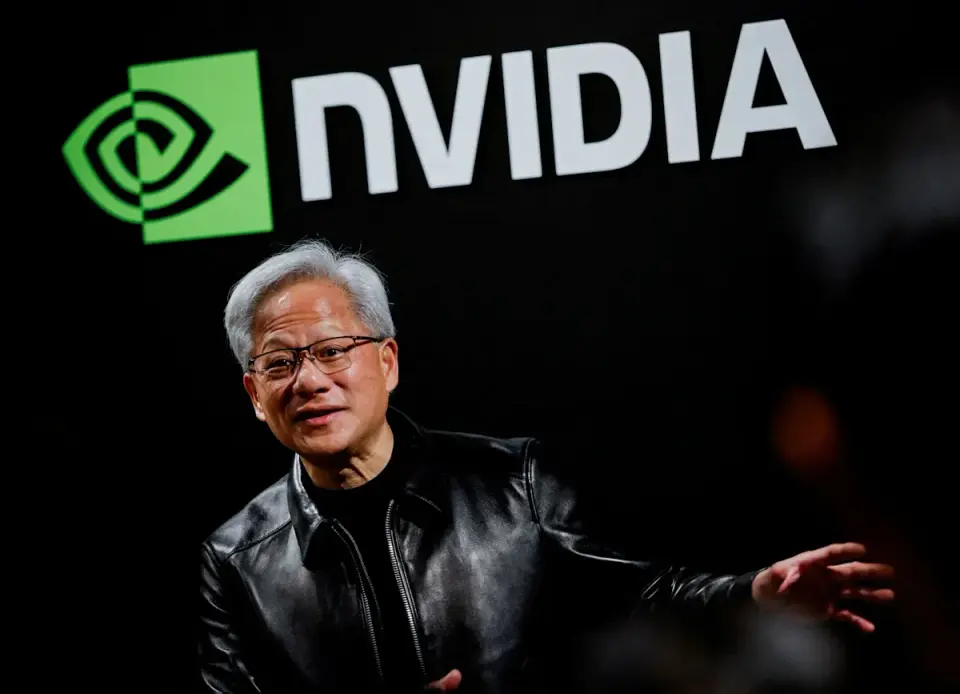
Nvidia, Meta, and Google have jointly advanced open standards for AI data center design at the 2026 OCP Global Summit in San Jose. The collaboration focuses on the Vera Rubin platform, featuring cable-free liquid-cooled racks and high-density power distribution. These open specifications aim to accelerate the deployment of agentic AI by improving serviceability and energy efficiency across the industry.
Key points
- Nvidia contributed its Vera Rubin rack designs to the Open Compute Project (OCP), removing cables, hoses, and fans in favor of fully liquid-cooled, modular trays to speed up assembly.
- Meta adopted Nvidia’s Spectrum-6 Ethernet ASIC, enabling 102.4 Tb/s networking with hardware-based failover in under 3 milliseconds, significantly faster than software-based alternatives.
- Google and Nvidia announced support for Falcon Transport on future ConnectX-10 SuperNICs and BlueField DPUs, enhancing network reliability for AI workloads.
- Nvidia and Cisco introduced the Ultra-Dense Small Form Factor Pluggable (USFP) standard, the first module supporting 400Gb/s-based networking fabrics.
- Visionbay unveiled an 800V DC AI factory design for the Vera Rubin era, addressing rising power density challenges in high-performance computing.
Background
This development follows recent competitive moves by AMD, which unveiled the Helion rack blueprint and 256-core EPYC Venice processors to challenge Nvidia’s dominance in enterprise AI infrastructure. While AMD targets CPU-heavy architectures for agentic AI, Nvidia’s OCP contributions emphasize a unified, co-designed ecosystem involving multiple hyperscalers to standardize next-generation AI factory deployments.
How outlets are covering it
Wccftech highlights the technical shift toward cable-free, liquid-cooled designs that reduce assembly time and increase power density, noting Nvidia’s expansion of the MGX ecosystem to nearly 100 partners. PR Newswire emphasizes the readiness of manufacturing partners like Wistron and Wiwynn to deploy these new platforms, focusing on the scalability of the Vera Rubin NVL72 system. The Des Moines Register underscores the role of digital twins and co-designed infrastructure in accelerating AI factory planning and deployment. While all sources agree on the significance of open standards, Wccftech focuses on the technical specifications and performance gains, whereas PR Newswire highlights the manufacturing and supply chain readiness.
Why it matters
The establishment of open standards for AI factory design reduces dependency on proprietary solutions, potentially lowering costs and accelerating deployment for enterprises. The focus on liquid cooling and high-density power distribution addresses critical bottlenecks in scaling AI infrastructure, which is essential for supporting the growing demand for agentic AI and large-scale model training.
What to watch
The next steps include the widespread adoption of the USFP standard and Spectrum-6 networking by other hyperscalers. Manufacturers like Wistron and QCT will begin deploying the Vera Rubin platforms in the coming months, with a focus on validating the performance gains in real-world agentic AI workloads. The industry will also monitor the impact of the 800V DC architecture on data center power efficiency.
- Nvidia, AMD, Google, and Meta team up on global blueprint for data center design Yahoo Finance
- QCT Accelerates AI Factory and Distributed AI Deployments with Co-designed Infrastructure at the 2026 OCP Global Summit The Des Moines Register
- NVIDIA Hands Its Vera Rubin Rack Designs To OCP, Stripping Compute Trays Of Every Cable, Hose, And Fan Wccftech
- Wistron Showcases at 2026 OCP Global Summit PR Newswire
- ASUS Unveils XA P2N-E2 Powered by NVIDIA Vera CPU for Agentic AI Workloads at OCP 2026 PA Media
Want the full story? Read the original reporting
Read on Yahoo Finance