
Nvidia’s $530 Billion AI Web Faces Scrutiny After Huang’s Resignation
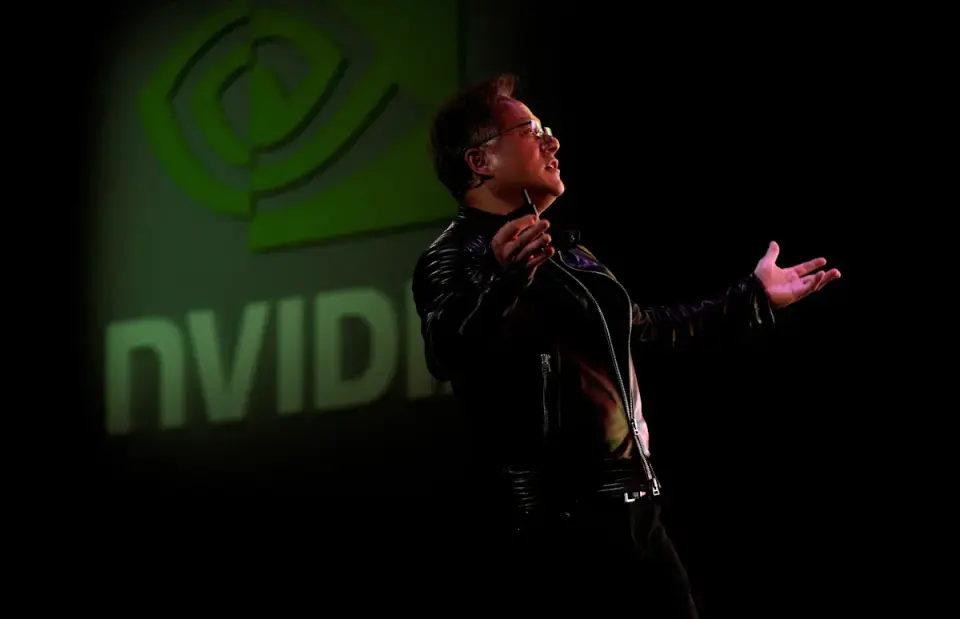
Jensen Huang resigned as Nvidia CEO on Thursday following reports of two affairs, one involving an alleged Chinese spy. CFO Colette Kress is now interim CEO. Nvidia stock fell to a one-year low, briefly dropping $2 trillion below its October peak. The move exposes the fragility of Nvidia’s $530 billion in financial commitments, which include backstops for AI firms like CoreWeave and OpenAI. While rivals like AMD held steady, cloud companies relying on Nvidia chips saw sharp declines. Regulators and analysts are monitoring whether these circular financing arrangements could trigger broader financial instability, though Nvidia’s massive cash reserves provide a buffer.
Key points
- Jensen Huang resigned as CEO and board member of Nvidia effective Thursday, citing personal reasons related to two alleged affairs, one involving a woman suspected of spying for China.
- CFO Colette Kress has been named interim CEO. Nvidia plans to report earnings on Tuesday, with analysts expecting revenue to more than double this fiscal year.
- Nvidia’s stock fell 33% from its October 6 peak, hitting a one-year low. The company’s market cap dropped by $2 trillion briefly.
- Nvidia has approximately $530 billion in commitments and guarantees, including $105 billion in backstops for OpenAI’s Ohio data center and $65 billion for cloud capacity from CoreWeave.
- The resignation has intensified scrutiny of 'circular financing,' where Nvidia invests in companies that then buy its chips. Critics argue this creates systemic risk if the AI boom slows.
- Rivals like AMD and Broadcom held steady, while neoclouds like CoreWeave and Nebius saw significant drops, suggesting the market views the risk as specific to Nvidia’s network.
Background
Nvidia has been described as the 'central bank of AI' due to its extensive financial support for the industry. In September, Huang announced investments in European AI startups, reinforcing his role as a key patron. In October, concerns arose over Alice Huang, a businesswoman alleged to be a Chinese spy, and her ties to Nvidia. Earlier in the year, Nvidia authorized a record $235 billion share buyback, signaling confidence in AI-driven growth. The current crisis follows a period of rapid expansion in AI infrastructure, with companies like CoreWeave and OpenAI heavily dependent on Nvidia’s chips and financial backing.
How outlets are covering it
Yahoo Finance emphasizes the immediate market impact and the 'circular relationships' that Huang orchestrated, noting that Nvidia’s commitments include $530 billion in guarantees. CNBC focuses on systemic risk, with former regulators like Sheila Bair arguing that Nvidia is not 'too big to fail' in a traditional banking sense but could still cause seismic economic damage if its network collapses. Hunterbrook provides a detailed breakdown of Nvidia’s financial commitments, highlighting $279 billion in supplier commitments and $164.5 billion in backstops, and warns that the 'circular economy' could become a 'circular firing squad' if confidence cracks. Michael Burry, cited in our archive, argues that Huang’s departure will disrupt these financing structures, leading to renegotiated terms and slower growth. While some analysts see the risk as contained due to Nvidia’s $99 billion cash reserve, others, like Jason Wu of the IMF, warn that the interconnectedness of AI firms could lead to reinforcing effects across the economy.
Why it matters
Nvidia’s resignation of its founder and CEO exposes the fragility of the AI industry’s financial structure. The company’s $530 billion in commitments, which include backstops for major AI firms, could trigger a cascade of defaults if the AI boom slows. This could affect not just tech companies but also banks and the broader financial system, as hyperscalers now account for a significant portion of bond issuance. The event also highlights the risks of 'circular financing,' where companies invest in each other to boost demand, creating a system that is vulnerable to a loss of confidence. As regulators and investors monitor the situation, the outcome could determine the future stability of the AI industry and the broader economy.
What to watch
Nvidia will report earnings on Tuesday, with interim CEO Colette Kress expected to address the company’s financial commitments and guidance. Investors will watch for signs of stress in the AI sector, particularly among neoclouds like CoreWeave, which have seen rising credit-default spreads. Regulators, including the Federal Reserve and IMF, will continue to monitor the AI sector for potential systemic risks. The market will also watch for any shifts in Nvidia’s strategy, as Kress decides how many new deals to sign. The long-term impact will depend on whether the AI boom continues to grow, or if the resignation triggers a broader repricing of AI assets.
- The Bank of Nvidia just lost its banker — here’s where the AI trade is exposed Yahoo Finance
- Analysis: Jensen Huang’s exit tests Nvidia’s role as the ‘central bank of AI’ CNBC
- Nvidia’s Crisis Reverberates Across Its Circular Financing Empire WSJ
- Barclays’ Lafargue Says Nvidia Turmoil Doesn’t Derail AI Trade Bloomberg.com
- The Comprehensive Guide to the Bank of Nvidia Hunterbrook
Want the full story? Read the original reporting
Read on Yahoo Finance