
Samson Sky CEO calls Tesla Roadster a stunt, not a flying car
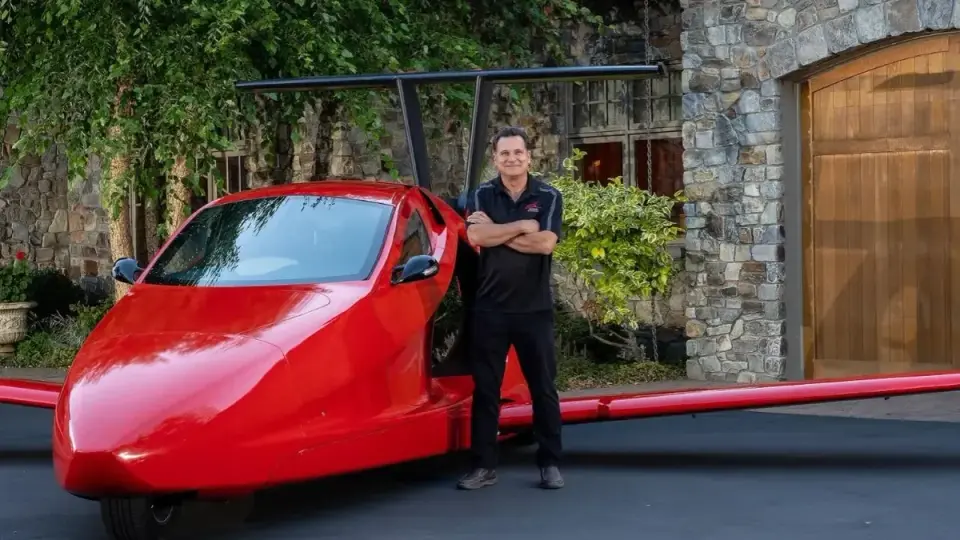
Sam Bousfield, CEO of Samson Sky, stated that he was 'very relieved' by Elon Musk’s recent Tesla Roadster demonstration, viewing it as a spectacle rather than a practical flying vehicle. Bousfield emphasized that his company’s Switchblade is designed for regional transportation, not short-lived stunts. The Switchblade is a three-wheeled roadable aircraft that can transform from a car into a fixed-wing plane in minutes. It is designed to reach 160 mph in the air and cover regional distances of 186 to 497 miles. Samson Sky aims to begin production within 18 months, focusing on practical utility for business and leisure travel rather than the hover capabilities demonstrated by Tesla.
Key points
- Sam Bousfield described the Tesla Roadster reveal as a 'wow factor' stunt, not a functional flying car.
- The Switchblade is a three-wheeled vehicle that drives on roads and flies from conventional airports.
- The vehicle can transform from car to aircraft in approximately three minutes using a button press.
- Samson Sky targets production within 18 months, following 18 years of development.
- The Switchblade is designed for regional journeys of 186 to 497 miles at speeds up to 160 mph.
Background
In October 2026, Elon Musk unveiled the Tesla Roadster at a SpaceX facility in Texas, featuring cold-gas thrusters that allow brief flight. The vehicle, which accelerates from 0 to 60 mph in under one second, is not expected to enter production until 2028. The Federal Aviation Administration stated that the Roadster does not meet the definition of an aircraft and is outside its jurisdiction. This event sparked renewed public interest in flying vehicles, prompting responses from established manufacturers like Samson Sky.
How outlets are covering it
Supercar Blondie highlights Bousfield’s relief that the Tesla Roadster was a stunt, emphasizing the Switchblade’s practicality for regional travel. Aerospace Global News provides deeper insight into the regulatory and insurance challenges facing flying cars, noting that Bousfield views regulation as the greatest barrier to commercialization. Both sources agree that the Switchblade is designed for practical use, but Aerospace Global News details the specific regulatory strategies, such as using the FAA’s Experimental Amateur-Built category and the need for dual insurance policies for flight and road use.
Why it matters
The distinction between spectacle and practicality is crucial for the future of flying cars. While Tesla’s Roadster generated attention, it did not address the regulatory and practical challenges of everyday use. Samson Sky’s approach, focusing on regional transportation and existing airport infrastructure, may offer a more viable path to commercializing flying vehicles. The success of the Switchblade could determine whether flying cars become a practical mode of transport or remain a niche novelty.
What to watch
Samson Sky aims to begin production of the Switchblade within 18 months. The company is currently navigating regulatory approvals and insurance requirements. Bousfield expects that flying cars will gradually enter everyday use, similar to the early adoption of electric cars. The company is also exploring hybrid-electric propulsion to address battery weight issues and improve performance.
- Flying car CEO says his vehicle can do something Elon Musk's Tesla Roadster can't Supercar Blondie
- Elon Musk and the battle of the flying cars The Times
- Tesla’s flying Roadster revives interest in flying cars, says Samson Sky CEO Aerospace Global News
- A car with a mesh-like body emerged from its place. It flew over a parked Tesla's first generation r.. 매일경제
Want the full story? Read the original reporting
Read on Supercar Blondie