
SpaceX captures Starship upper stage in historic first, despite booster failure
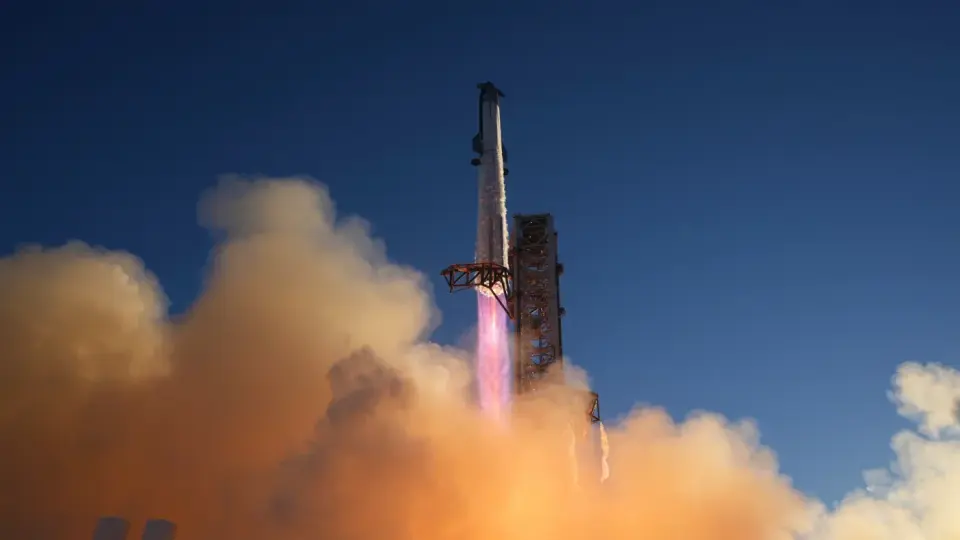
SpaceX achieved the first-ever mid-air capture of its Starship upper stage at its Texas facility on November 14, 2026. The 22-hour mission involved 14 orbits and the deployment of 26 Starlink satellites, though the Super Heavy booster failed to land and exploded in the Gulf of Mexico. The success validates the vehicle's full reusability, a critical milestone for NASA's Artemis lunar program and SpaceX's Mars ambitions.
Key points
- SpaceX successfully caught the Starship upper stage with mechanical arms at Starbase, Texas, marking the first time the vehicle was recovered from orbit.
- The mission, the 15th full-scale test flight, lasted 22 hours and included 14 orbits around Earth, significantly exceeding previous orbital attempts.
- The Super Heavy booster failed to land, exploding in the Gulf of Mexico after its engines shut down prematurely, preventing a 'double catch.'
- The spacecraft deployed 26 Starlink satellites, including three equipped with cameras to monitor the heat shield during reentry.
- NASA Administrator Jared Isaacman praised the catch as 'almost magic,' highlighting its importance for the Artemis III moon landing mission targeted for 2028.
Background
This event follows SpaceX's 14th test flight in September 2026, where the company first attempted an orbital trajectory but faced engine issues. Prior to this, Starship had only completed suborbital 'passively safe' flights. The company had previously successfully recovered the Super Heavy booster three times, validating that specific recovery technique. The current success is a precursor to future missions from Kennedy Space Center and the Artemis III lunar landing, which involves complex in-orbit propellant transfers that have never been tested before.
How outlets are covering it
NPR and Al Jazeera emphasized the historic nature of the upper-stage catch as a demonstration of full reusability, while noting the booster failure as a setback. CNN focused on the technical risks of orbital reentry and the decision-making process during the flight, highlighting the 'make-or-break' nature of the mission. Fox Business highlighted the broader implications for launch costs and included reactions from political figures like Pete Hegseth and biographer Walter Isaacson. All sources agreed on the success of the upper-stage recovery but differed in emphasis, with some focusing on the engineering challenges of the booster failure and others on the strategic importance for NASA's lunar program.
Why it matters
The successful capture of the Starship upper stage is a critical step toward making the vehicle fully reusable, which is essential for reducing launch costs and enabling frequent missions to the Moon and Mars. It validates SpaceX's technology for NASA's Artemis program, which relies on Starship for lunar landings. The success also demonstrates the feasibility of complex orbital maneuvers and reentry, paving the way for future missions that require in-orbit propellant transfers and long-duration flights.
What to watch
SpaceX plans to begin launching Starships from Florida's Kennedy Space Center within the next few months. The next major milestone is the Artemis III mission, targeted for as soon as 2028, which will involve docking with Starship and Blue Origin's Blue Moon lander. SpaceX also aims to demonstrate in-orbit cryogenic propellant transfers in early 2027, a necessary step for lunar missions. Engineers are investigating the cause of the booster failure to ensure future missions achieve a 'double catch.'
- SpaceX successfully catches Starship and makes history NPR
- Live updates: SpaceX Starship soars in orbit, still aiming for ship catch in unprecedented test flight CNN
- SpaceX makes history as Starship spacecraft caught by launch tower for first time Fox Business
- SpaceX’s Starship captured by launchpad arms in dramatic first Al Jazeera
- With Starship catch, SpaceX still shows it can dazzle the world Ars Technica
Want the full story? Read the original reporting
Read on NPR