
SpaceX and Nvidia Launch Orbital AI Compute Partnership
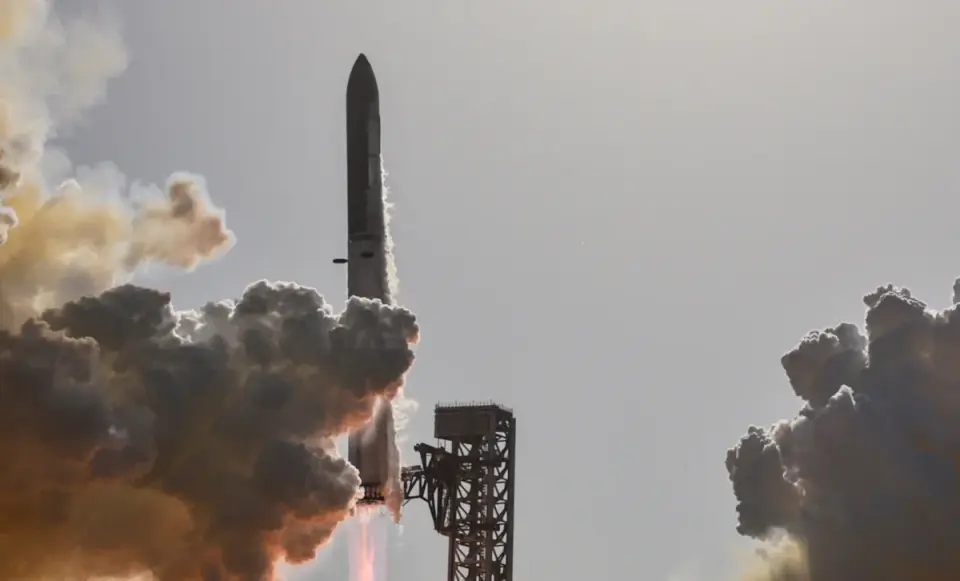
SpaceX and Nvidia announced a partnership to develop the Starmind AI1 satellite, which will use Nvidia's Vera CPUs and Rubin GPUs to perform AI computing in low Earth orbit. The initiative aims to create a distributed orbital supercomputer, with prototype testing scheduled for early 2027. The announcement drove SpaceX shares up 9.43% and Nvidia shares up 3%, coinciding with SpaceX's first public quarterly earnings report.
Key points
- SpaceX and Nvidia are jointly developing the Starmind AI1 satellite compute payload, utilizing Nvidia's Vera CPUs and Rubin GPUs for datacenter-class processing in space.
- Elon Musk stated that SpaceX will exclusively use Nvidia GPUs, citing them as the best available hardware for this application.
- The Starmind AI1 prototype is scheduled for testing in early 2027, with mass production expected to follow later that year if development stays on schedule.
- SpaceX has applied to the FCC for permission to deploy up to one million orbital data center satellites, aiming to create a petabit-scale optical communications network using laser links.
- Nvidia's Space-1 Vera Rubin module is reported to deliver up to 25 times the AI processing performance of an H100 GPU, with commercial shipments expected later in 2026.
Background
This development follows SpaceX's recent IPO, where the stock traded roughly 22% below its $135 offering price, reflecting investor caution regarding long-term payoff timelines. Additionally, Nvidia had recently fallen behind Apple as the world's most valuable company in late July 2026, a shift attributed to AI spending costs and memory chip shortages. The current partnership represents a strategic move to expand Nvidia's space computing ecosystem, which previously included six launch partners but excluded SpaceX until this announcement.
How outlets are covering it
Yahoo Finance highlighted the immediate market reaction, noting that Nvidia shares rose approximately 3% and SpaceX shares climbed nearly 9% following the announcement. Interesting Engineering emphasized the technical specifications, detailing the use of Vera CPUs and Rubin GPUs and the potential for a million-satellite constellation. While Yahoo focused on the financial impact and stock performance, Interesting Engineering provided deeper insight into the engineering advantages of orbital computing, such as steady solar energy and hardware flexibility. Both sources agreed on the exclusivity of the Nvidia partnership but differed in emphasis, with Yahoo focusing on market sentiment and Interesting Engineering on the technical infrastructure and FCC regulatory status.
Why it matters
The partnership signals a shift in AI infrastructure strategy, moving beyond terrestrial data centers to orbital platforms. This could significantly expand computing capacity and reduce dependency on Earth's electrical grid. The success of the Starmind program may redefine the scale of AI deployment, potentially impacting global tech supply chains and regulatory frameworks for space-based infrastructure.
What to watch
Prototype testing for the Starmind AI1 satellite is scheduled for early 2027. SpaceX will release its first quarterly earnings report as a public company, with investors closely monitoring Starlink's financial performance and AI spending plans. The FCC is expected to make a final decision on the broader satellite deployment application, which could determine the feasibility of the million-satellite constellation.
- Nvidia stock rises, as Musk says SpaceX will exclusively use company's chips Yahoo Finance
- AMD Shares Fall 8% as Elon Musk Commits to Nvidia Chips for SpaceX WSJ
- Why Nvidia Stock Is the Big Winner From SpaceX Earnings Barron's
- Nvidia to build Starmind AI1 satellite compute payload for SpaceX Interesting Engineering
- SpaceX is 'exclusive' to Nvidia, Musk says MarketWatch
Want the full story? Read the original reporting
Read on Yahoo Finance