
SpaceX Targets November for First Dual-Stage Starship Catch Amid AI Pivot
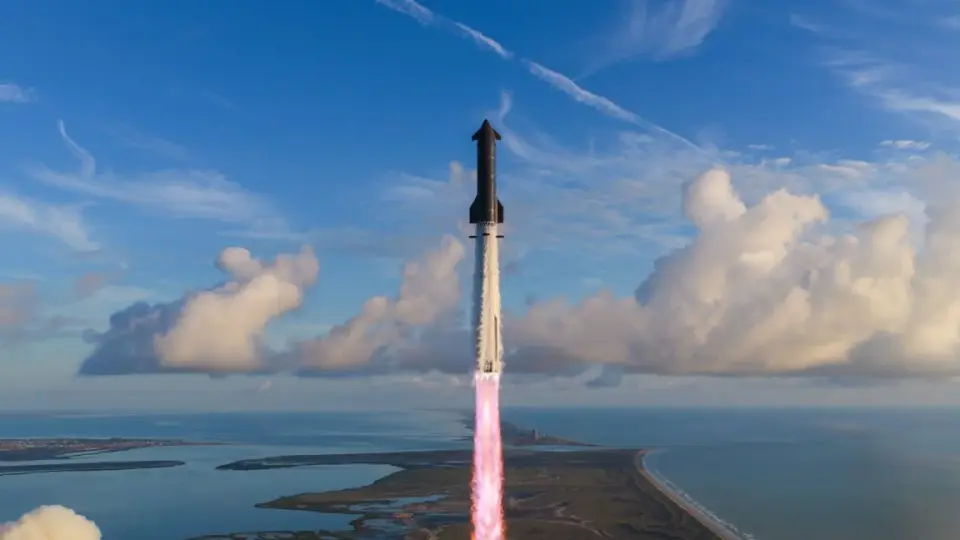
SpaceX plans to attempt the first-ever simultaneous catch of both Starship stages during its 15th test flight in November. The move aims to accelerate launch cadence to twice weekly by 2027, supporting a new focus on orbital AI data centers rather than Mars colonization.
Key points
- SpaceX targets November for Flight 15, aiming to catch both the Super Heavy booster and Starship upper stage at Starbase, Texas.
- Elon Musk stated success is 'more likely than not' but acknowledged hardware risks, while Gwynne Shotwell confirmed FAA engagement for the new license.
- The company plans to refuel Starship in orbit early in 2027 to support NASA’s Artemis lunar missions, a milestone never achieved before.
- Musk projects a weekly launch cadence in early 2027, scaling to twice weekly by year's end, contingent on achieving full vehicle reusability.
- SpaceX’s strategic focus has shifted from Mars exploration to deploying up to 10 GW of ground-based compute and 'Starmind' orbital data centers.
Background
Recent archive entries indicate SpaceX has been formalizing its catch-tower design to enable rapid reuse, moving away from leg-landing systems. Earlier reports also highlighted the company's pivot toward an orbital AI network, with plans for up to one million satellites to support compute infrastructure. This current development represents the next step in that transition, prioritizing high-frequency launch capabilities over deep-space exploration.
How outlets are covering it
Ars Technica emphasizes the regulatory hurdles, noting that the return-to-launch-site trajectory crosses northern Mexico, requiring FAA approval. Space.com and SpaceNews confirm the dual-catch attempt but focus less on the regulatory specifics. Teslarati highlights the broader corporate context, noting that the Starship progress coincides with the formation of special committees to evaluate a potential Tesla-SpaceX merger, driven by shared interests in AI and chip design. While Ars Technica frames the catch as a technical milestone for reuse, Teslarati frames it within the context of a potential corporate consolidation to support 'super intelligence' goals.
Why it matters
Achieving a dual-stage catch is critical for SpaceX to reach its ambitious launch cadence targets, which are necessary to deploy its AI infrastructure. Success would validate the company's shift from a space exploration firm to a data and compute provider, potentially reshaping the commercial space industry and influencing the outcome of the proposed Tesla-SpaceX merger.
What to watch
SpaceX will seek FAA approval for the Flight 15 license, which must include provisions for the tower catch. If successful, the company plans to attempt a Starship upper stage refuel in early 2027. Additionally, the special committees for the Tesla-SpaceX merger will continue their evaluation, with any potential deal requiring shareholder approval, a high hurdle given past voting failures.
- SpaceX to attempt Starship catch on next flight, with eye on rapid cadence increase Ars Technica
- SpaceX will attempt 1st-ever double Starship rocket catch on next test launch, Elon Musk says Space
- SpaceX plans Starship upper stage catch on next launch SpaceNews
- Morgan Stanley: SpaceX's (SPCX.US) Q3 earnings are merely an "appetizer"; the 15th Starship flight and the "physical intelligence economy" are the true catalysts for the stock price. Moomoo
- SpaceX showcases exactly how it plans to catch Starship next month Teslarati
Want the full story? Read the original reporting
Read on Ars Technica