
Tesla Roadster 2 Debuts with SpaceX Thrusters, Promising Flight and Sub-Second Acceleration
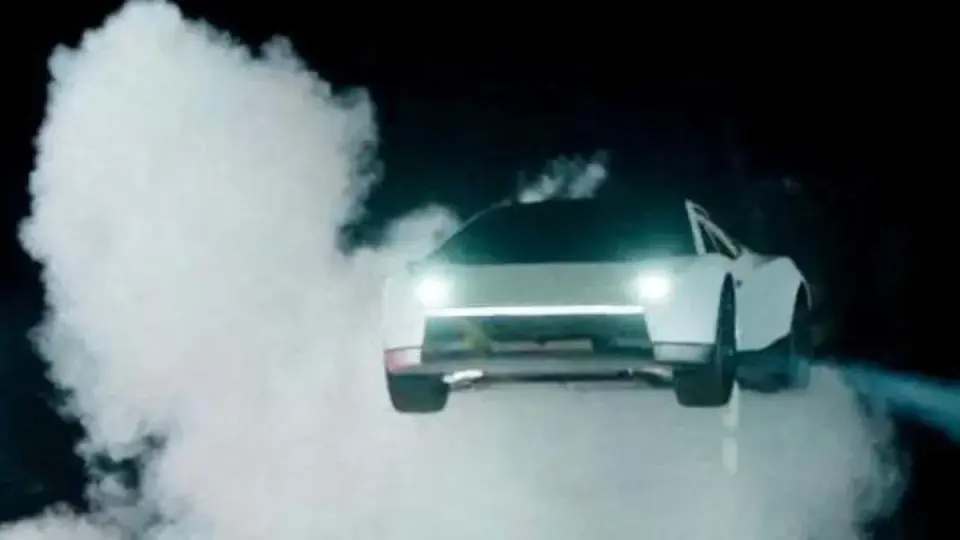
Tesla unveiled its second-generation Roadster on October 15, 2026, at a SpaceX facility in McGregor, Texas. The vehicle features cold-gas thrusters enabling brief flight and aerial stunts, with a claimed 0.81-second 0-60 mph acceleration. Production is targeted for 2028, with reservation deposits ranging from $50,000 to $250,000. The car is described as the last manually driven Tesla model.
Key points
- The Roadster 2 uses SpaceX-developed cold-gas thrusters and underbody fans for flight and ground-effect aerodynamics.
- Tesla claims a 0.81-second 0-60 mph acceleration and a top speed of 383 mph, though range is reduced to 300 miles.
- Production is scheduled for 2028, with three versions: Performance (road-ready), Thrust (race-ready), and Rocket (air-ready, invite-only).
- Musk acknowledged the flying features are not legal on public roads and the car is not safety-optimized for flight.
- Reservation deposits range from $50,000 for the base model to $250,000 for the Thrust version.
Background
The Roadster 2 was first unveiled in 2017, with initial production promises for 2020. Tesla has repeatedly delayed the timeline while accepting reservations. Previous archive coverage from September 2026 indicated a planned October 1 reveal in Waco, Texas, which was later moved to October 15 in McGregor. The vehicle is positioned as Tesla's last manually driven model, reflecting a shift toward autonomous technology.
How outlets are covering it
WIRED emphasizes regulatory hurdles, noting FAA approval and aviation licensing requirements for flying vehicles. Ars Technica criticizes the use of 50-year-old stunt technology and questions the market for expensive EVs, contrasting Tesla's claims with competitors like the McMurtry Spéirling. NBC News focuses on the demonstration's spectacle and Musk's acknowledgment of legal limitations. All sources agree on the 2028 production target and the $50,000-$250,000 deposit range, but differ on the feasibility and practicality of the flying features.
Why it matters
The Roadster 2 represents a significant technological leap for Tesla, integrating SpaceX propulsion technology into a consumer vehicle. However, regulatory challenges and delayed production timelines raise questions about its commercial viability. The event also highlights Tesla's strategic pivot toward autonomous driving, with the Roadster 2 being the last manually driven model. For investors and consumers, the vehicle's success could influence Tesla's market position and the future of electric hypercars.
What to watch
Tesla will likely face regulatory scrutiny from the FAA and state authorities regarding the Roadster's flying capabilities. Production is expected to begin in 2028, with potential delays given Tesla's history of missed deadlines. The company may also explore partnerships with aviation authorities to develop legal frameworks for flying vehicles. In the interim, Tesla will continue to accept reservations and refine the vehicle's technology, while facing competition from other EV manufacturers and traditional hypercar brands.
- 'Something extraordinary': Tesla Roadster wows with compressed air thrusters for limited flight Yahoo Finance
- Tesla’s new Roadster makes a flying debut, hitting 60 MPH in under a second Fox Business
- A Tesla Flying Car? I Don’t Know, Man WIRED
- Tesla turns to 50-year-old stunt technology as it tries to Roadster again Ars Technica
- Elon Musk shows off ‘flying’ Tesla Roadster after years of delays NBC News
Want the full story? Read the original reporting
Read on Yahoo Finance