
Tesla Unveils Roadster with Cold-Gas Thrusters, Sparking Regulatory and Skepticism Debates
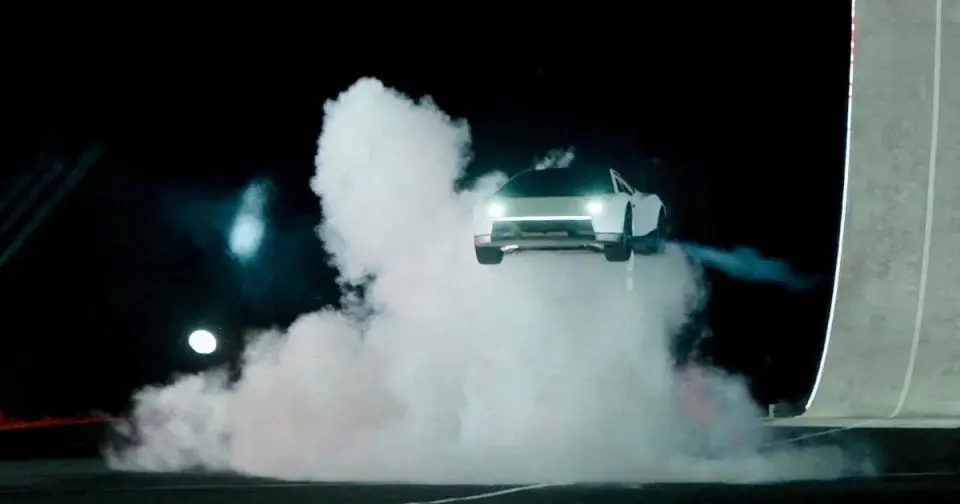
On October 15, 2026, Elon Musk unveiled the new Tesla Roadster at a SpaceX facility in Waco, Texas. The vehicle demonstrated flight capabilities using high-pressure gas thrusters and performed aerial flips. Musk stated production would begin in 2028, though the flying version is invitation-only and not approved for public roads. The event highlighted a collaboration between Tesla and SpaceX but faced regulatory uncertainty and skepticism regarding its practicality.
Key points
- Musk demonstrated the Roadster flying and flipping midair using ultra-high-pressure air tanks at a SpaceX site in Waco, Texas.
- The vehicle is not approved for public road use; the flying 'Rocket' model is invitation-only, while a non-flying version can be reserved for a $5,000 deposit.
- Production is targeted for 2028, with no price announced for the flying model.
- The Federal Aviation Administration stated the vehicle does not meet its definition of an aircraft, and the National Highway Traffic Safety Administration did not immediately respond to inquiries.
- Analysts noted the car will not significantly impact Tesla's revenue but may restore brand prestige ahead of the October 21 earnings report.
Background
This unveiling follows a nine-year delay since the original Roadster announcement. Previous archive coverage noted similar claims of sub-second acceleration and cold-gas thrusters, with reservation deposits ranging from $50,000 to $250,000 for various configurations. The current event marks the second-generation reveal, emphasizing a deeper integration between Tesla and SpaceX technologies.
How outlets are covering it
CBS News focused on the regulatory ambiguity, noting that the FAA does not classify the vehicle as an aircraft and that NHTSA oversight is unclear. Ars Technica criticized the use of 50-year-old stunt technology, comparing the performance claims to existing competitors like the McMurtry Spéirling and questioning the practicality of the 100,000 psi nitrogen jets. Car and Driver, while not fully detailed in the provided text, generally framed the event as a significant milestone for Tesla's engineering capabilities. Wall Street analyst Dan Ives viewed the launch as a brand halo booster rather than a revenue driver, highlighting the synergy between Tesla and SpaceX engineering platforms.
Why it matters
The event underscores the ongoing challenges in regulating emerging vehicle technologies and highlights the strategic alliance between Tesla and SpaceX. It also raises questions about the feasibility and market viability of hyper-performance electric vehicles, particularly in a competitive landscape where traditional hypercar buyers may prefer internal combustion engines for emotional and auditory reasons.
What to watch
Investors will watch Tesla's October 21 earnings report for any impact from the Roadster launch. Regulatory bodies may need to clarify oversight for such vehicles. Production of the non-flying model is expected to begin in 2028, with the flying version remaining invitation-only.
- With Tesla Roadster debut, Elon Musk shows "flying cars are real" CBS News
- Tesla’s new Roadster makes a flying debut, hitting 60 MPH in under a second Fox Business
- Tesla's new Roadster turns in air with SpaceX thrusters, won't land until 2028 Reuters
- Tesla turns to 50-year-old stunt technology as it tries to Roadster again Ars Technica
- This Time, Tesla’s Electrifying Roadster Feels Like the Real Deal and Nearly Production-Ready Car and Driver
Want the full story? Read the original reporting
Read on CBS News