
ULA Vulcan failure grounds Amazon’s Starlink rival, marking first total loss in 20 years
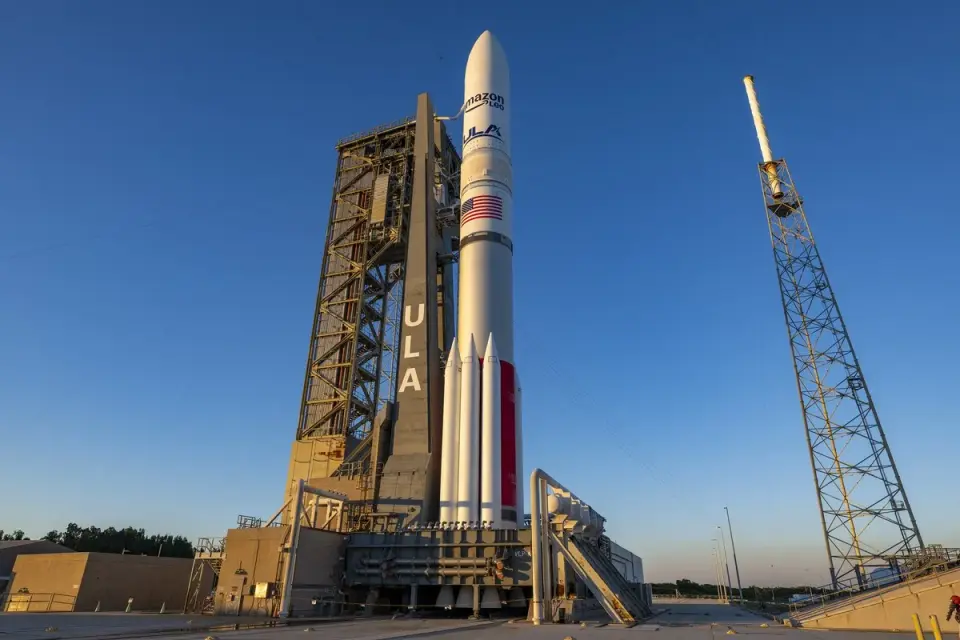
A United Launch Alliance Vulcan rocket failed approximately 10 minutes after liftoff on November 15, destroying 40 Amazon Leo satellites. This marks the first total mission failure for ULA since its 2006 founding and indefinitely grounds the rocket, delaying Amazon’s expansion of its Starlink competitor.
Key points
- The Vulcan rocket, carrying 40 Amazon Leo satellites, malfunctioned during the Centaur upper stage burn, failing to reach orbit.
- This is the first total mission failure for United Launch Alliance since 2006 and the first of 38 Vulcan launches contracted by Amazon.
- The failure follows a nine-month grounding of the Vulcan due to solid rocket booster issues, which were resolved with improved nozzle designs.
- Amazon Leo currently has 396 satellites in orbit, far below its target of 3,232, and must rely on alternative launch providers for near-term deployments.
- The incident may impact NASA’s Artemis program and US military launch schedules if the failure is linked to Blue Origin’s BE-4 engines.
Background
Amazon Leo, formerly Project Kuiper, aims to compete with SpaceX’s Starlink by deploying a constellation of 3,232 first-generation satellites. The company had previously launched 396 satellites on 14 missions since April 2025, primarily using the older Atlas 5 rocket. The Vulcan was intended to replace the Atlas 5 as the primary workhorse for Amazon’s launch program, with 38 missions contracted. The failure occurs amid broader challenges for Amazon’s launch partners, including Blue Origin’s New Glenn rocket, which has been grounded since a May explosion, and SpaceX’s Falcon 9, which is nearing retirement.
How outlets are covering it
GeekWire and Spaceflight Now emphasize the historical significance of the failure as ULA’s first total mission loss since 2006 and the impact on Amazon’s launch schedule. Ars Technica highlights the broader implications for the US space industry, including potential effects on NASA’s Artemis program and increased reliance on SpaceX for national security launches. All sources agree on the basic facts of the failure but differ in emphasis: GeekWire focuses on Amazon’s response and future plans, Spaceflight Now details the technical anomalies observed during the flight, and Ars Technica analyzes the competitive and strategic consequences for multiple stakeholders.
Why it matters
The failure disrupts Amazon’s ability to rapidly deploy its satellite internet network, potentially delaying commercial service and reducing its competitive edge against SpaceX. It also raises concerns about the reliability of alternative launch providers and may force the US military to rely more heavily on SpaceX, which is transitioning away from Falcon 9. Additionally, if the failure is linked to Blue Origin’s BE-4 engines, it could delay New Glenn’s return to flight and impact NASA’s Artemis program, which uses a version of ULA’s Centaur upper stage.
What to watch
ULA will investigate the cause of the failure and work with Amazon to determine corrective actions. Amazon will likely rely on Ariane 6, Falcon 9, and potentially New Glenn for future launches, though New Glenn remains grounded. The investigation may take months, delaying the next Vulcan launch and further impacting Amazon’s deployment schedule. NASA and the US Space Force will monitor the investigation for potential impacts on their own missions.
- Amazon loses 40 Leo satellites in ULA Vulcan launch failure — a new setback for its Starlink rival GeekWire
- Rocket from Boeing-Lockheed firm fails mid-flight, destroys payload of Amazon satellites Reuters
- ULA suffers first outright failure with loss of Vulcan rocket carrying 40 Amazon Leo satellites Spaceflight Now
- Amazon loses 40 Leo satellites as Boeing-Lockheed rocket fails DW.com
- Vulcan rocket fails during launch, dealing major blow to SpaceX competitors Ars Technica
Want the full story? Read the original reporting
Read on GeekWire