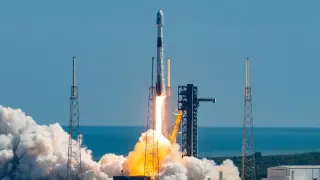
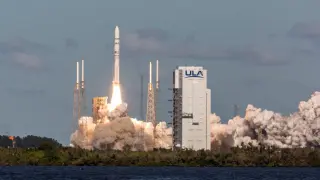
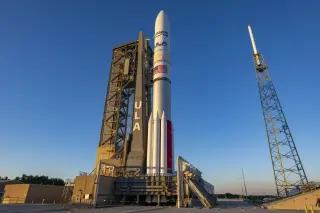
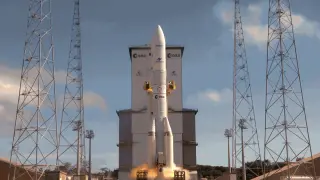
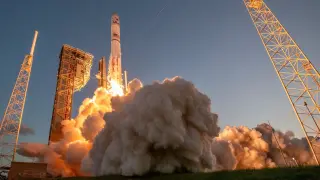
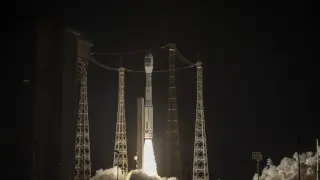
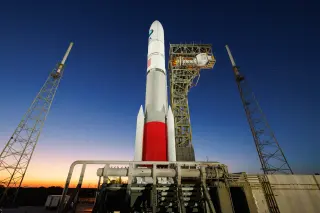
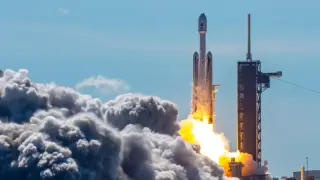
Amazon Leo successfully launched 36 satellites via Ariane 6 on November 24, 2026, reaching 432 in orbit. Following the loss of 40 satellites in a ULA Vulcan failure on November 15, Amazon is accelerating its use of SpaceX Falcon 9 rockets to maintain its build-out schedule.
United Launch Alliance (ULA) has identified inadequate fuel supply to the BE-4 engines as the preliminary cause of the Vulcan rocket’s failure on November 15, 2026. The crash, which destroyed 40 Amazon Leo satellites, marks the first total mission failure for ULA since 2006. While the investigation is ongoing, the finding exonerates the engines provided by Blue Origin, allowing that company to proceed with its New Glenn return-to-flight plans. ULA faces a prolonged grounding to resolve complex propellant management issues, impacting its status as a key competitor to SpaceX.
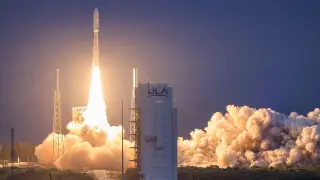
United Launch Alliance confirmed on Nov. 17 that its Vulcan Centaur rocket failed shortly after liftoff on Nov. 15, resulting in the loss of 40 Amazon Leo internet satellites. Although telemetry was lost at 10 minutes, ULA stated the issue began immediately after launch due to low first-stage booster performance. The Centaur V upper stage performed nominally but could not compensate for the deficit. This is the first total mission failure for ULA since 2006 and the third anomaly for the Vulcan rocket since its 2024 debut.
A United Launch Alliance Vulcan rocket failed approximately 10 minutes after liftoff on November 15, destroying 40 Amazon Leo satellites. This marks the first total mission failure for ULA since its 2006 founding and indefinitely grounds the rocket, delaying Amazon’s expansion of its Starlink competitor.
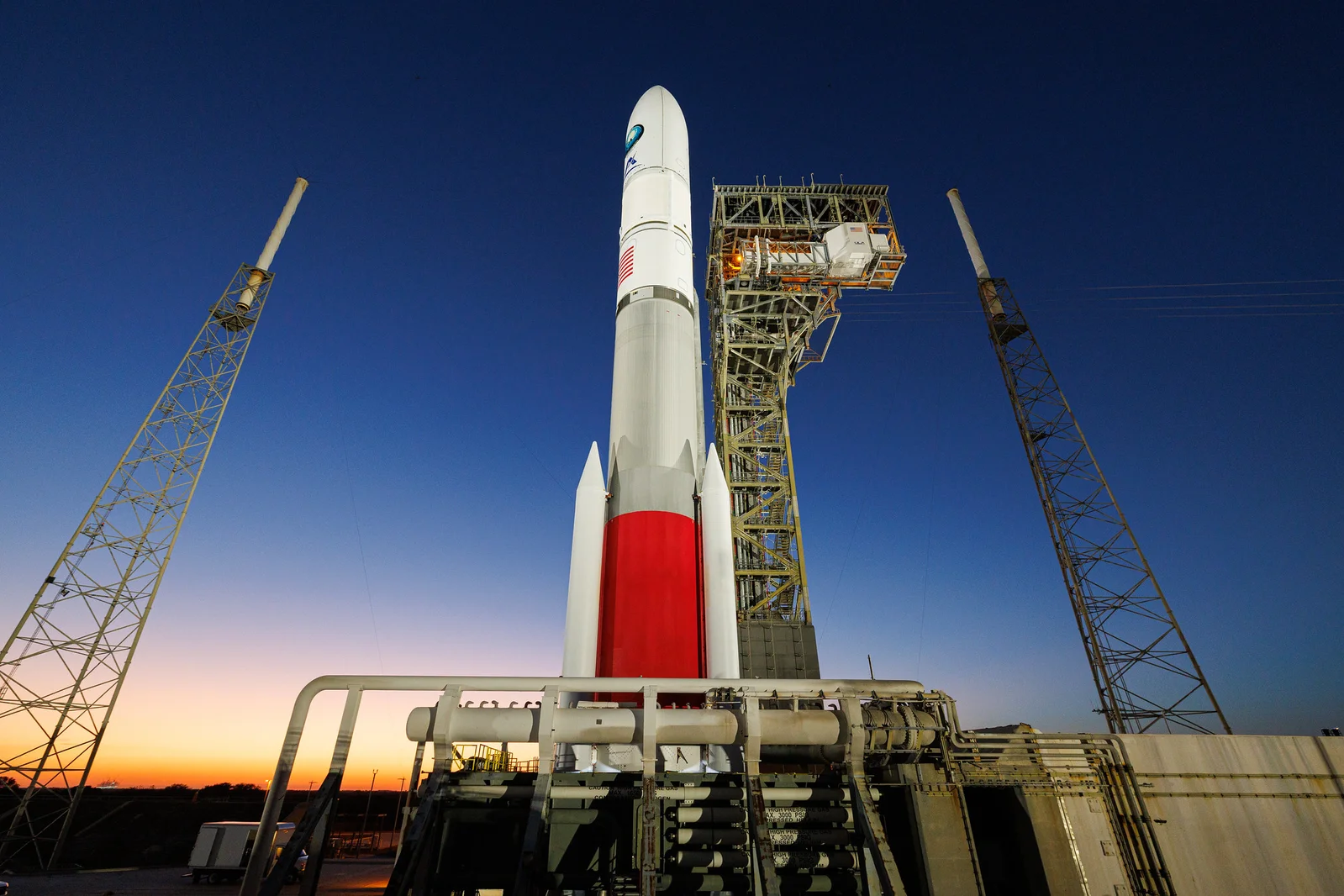
United Launch Alliance (ULA) is set to launch 40 Amazon Leo satellites on Sunday, November 15, marking the first flight of the Vulcan Centaur rocket in nine months. The mission, designated 'Vulcan Leo 1,' was delayed twice due to technical issues but is now scheduled for 12:11 p.m. ET from Cape Canaveral. This launch adds to Amazon's growing constellation of over 3,200 satellites, which aims to provide global internet access to the 2.6 billion people currently lacking reliable connectivity. Amazon Leo operates in low Earth orbit, offering lower latency than traditional geostationary systems, and is designed to compete with SpaceX's Starlink.
United Launch Alliance (ULA) has rescheduled its Vulcan Centaur rocket launch for November 15, 2026, after two consecutive scrub attempts. The mission, designated Amazon Leo LV-01, will deploy 40 broadband satellites to low Earth orbit from Cape Canaveral. This marks the rocket's first flight in nine months, following a grounding imposed by the U.S. Space Force after solid rocket booster nozzle failures on previous missions. ULA states the rocket and payloads remain healthy, utilizing a redesigned nozzle and a new launch platform dedicated to Amazon missions.
SpaceX is preparing its 14th Starship mission for an orbital launch, potentially as early as September 22, to deploy 26 Starlink V3 satellites. Meanwhile, Chinese startup Space Pioneer revealed a methane engine design nearly identical to SpaceX's Raptor 3, prompting Elon Musk to warn that replicating the complex internal geometry is difficult. In the US, United Launch Alliance faces financial strain and potential ownership changes as it struggles to compete with reusable rivals, while Avio reports a surge in customers turned away by SpaceX's saturated Falcon 9 schedule.
ULA’s Vulcan Centaur grounding due to booster nozzle anomalies has prompted its corporate parents to guarantee up to $500 million in borrowings to bolster liquidity, with Lockheed Martin recognizing a $64 million increase in its investment to reflect the guarantee’s fair value. The issues stem from booster anomalies on two Vulcan launches, leaving Vulcan idle since USSF-87 as Northrop Grumman works on redesigned motors, Space Force considers manifest adjustments, and Atlas 5 flights continue while Starliner faces schedule uncertainty. ULA had planned a high launch cadence for 2026 but has a backlogged pipeline of more than 80 missions, and both parents say they may provide further liquidity if needed, though impairment risks exist if Vulcan underperforms.
The Space Force has raised the Lane 1 cap for its National Security Space Launch program to $17 billion and, with 25 additional Lane 2 missions identified, the combined ceiling for Lane 1 and Lane 2 now exceeds $30 billion as the Pentagon signals rising demand for military satellite launches; Lane 1 will broaden participation beyond SpaceX, ULA, and Blue Origin to include Rocket Lab, Stoke Space, Relativity Space, and Impulse Space, while Lane 2 remains limited to SpaceX’s Falcon 9/Heavy and ULA’s Vulcan for high-priority missions.
ULA’s Atlas V rocket from Cape Canaveral is slated to launch a 29-satellite Amazon Leo mission in a 12:24 a.m. ET window on July 2, delivering a roughly 18-ton payload for Amazon’s low-Earth orbit broadband megaconstellation (aiming for about 3,200 satellites). The mission, Amazon Leo 8, continues Amazon’s effort to rival SpaceX’s Starlink, with live coverage provided by Space.com and ULA starting around midnight ET.
ULA launches the final Atlas 5 in the 551 configuration (AV-114) for Amazon Leo’s LA-08 mission, carrying 29 satellites from Cape Canaveral’s SLC-41; liftoff at 12:24 a.m. EDT, marking the end of the Atlas 5 era with only six Atlas 5 launches remaining (reserved for Starliner in N22), as Amazon Leo eyes initial commercial service later this year and Vulcan's first Leo flight is expected in Q3 2026.
ULA is preparing to launch 29 Amazon Leo satellites on an Atlas 5-551 from Cape Canaveral's SLC-41 in the Amazon Leo 7/LA-07 mission within a 29‑minute window; this is the seventh Leo production batch and the penultimate Atlas 5 mission for Amazon, leaving one Atlas 5 launch remaining after LA-07. Weather is forecast to be challenging with about a 30% chance of acceptable conditions; broader context includes delays to Blue Origin's New Glenn, the Vulcan program, and FCC requirements for the constellation, while Amazon's satellites were at NASA's Kennedy Space Center and not harmed by the New Glenn explosion on May 28.
Amazon is expanding its satellite program by using both Blue Origin’s New Glenn and ULA’s Vulcan to deploy its Amazon Leo network. After a prior New Glenn upper-stage failure, Blue Origin plans a mission delivering 48 satellites for Amazon as soon as June, with the FAA having closed the investigation and Blue Origin outlining corrective actions. ULA’s Vulcan remains grounded due to booster anomalies, complicating the schedule for future Amazon launches. Amazon has previously relied on Atlas V, Falcon 9, and Ariane 6 and aims to deploy about 3,200 satellites, seeking faster deployment and potential competition to SpaceX’s Starlink, contingent on Vulcan’s recovery and ongoing testing.
ULA is launching 29 Amazon Leo satellites on an Atlas 5 from Cape Canaveral, marking the sixth Leo production flight and the fastest turnaround at Space Launch Complex 41; liftoff is set for 8:52 p.m. EDT, boosting Amazon Leo to 270 satellites as the company builds a broader constellation of more than 3,200.
The Space Force is reworking a slate of national-security launches after ULA’s Vulcan booster anomaly could keep the rocket grounded for months, prompting reassignment of at least one GPS mission to SpaceX and prompting officials to explore rideshares, mission reallocation, and other options while investigations continue and Blue Origin’s New Glenn certification remains unsettled.