
US Chip Export Curbs and Nvidia Leadership Turmoil Trigger Broad AI Sector Sell-Off
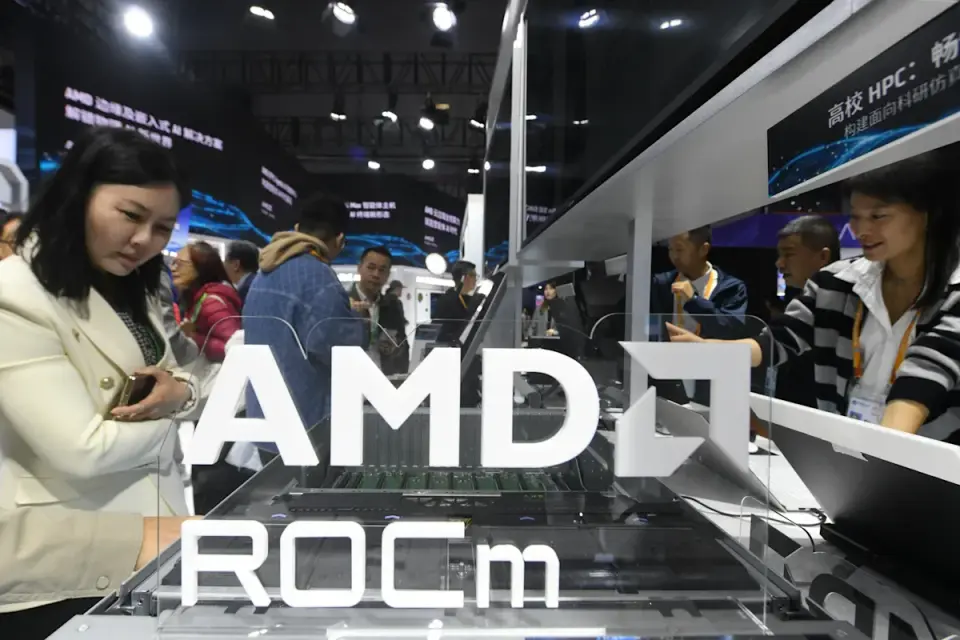
US semiconductor and AI infrastructure stocks declined sharply on Monday following new export restrictions and leadership changes at Nvidia. AMD and Broadcom fell 5% and 4%, respectively, while the PHLX Semiconductor Index dropped over 4%. AI cloud providers CoreWeave and Nebius also saw significant losses, with CoreWeave falling more than 8% initially. The sell-off was driven by US Commerce Department rules requiring licenses for advanced chip exports to five Asian and South American nations, as well as reports of multiple US Justice Department investigations into Nvidia and its partners.
Key points
- The US Commerce Department issued a new rule requiring licenses for advanced semiconductor exports to Indonesia, Malaysia, Singapore, Thailand, and Brazil to prevent circumvention of AI chip restrictions.
- Nvidia CEO Jensen Huang's exit as chief executive triggered a ripple effect across the AI trade, contributing to the decline in Nvidia-backed CoreWeave and other infrastructure providers.
- Reports indicate multiple US Justice Department investigations are underway, targeting Nvidia, AI infrastructure procurement firm Megaspeed, and server maker Supermicro.
- CoreWeave, in which Nvidia holds more than 10% ownership, faced heightened scrutiny after reports that Huang had an affair with a woman US intelligence believes is a Chinese spy.
- The PHLX Semiconductor Index fell more than 4%, though it remains up 41% year-to-date, while memory chipmakers Micron and SK Hynix dropped 6% and 5%, respectively.
Background
This volatility follows a period of intense scrutiny on AI spending and supply chain costs. In October, neocloud stocks like CoreWeave and Nebius experienced sharp declines due to consolidation fears, with Gartner predicting 80% of such firms will fail by 2030. Additionally, recent earnings reports from Apple and TSMC highlighted margin pressures from memory chip shortages and market jitters over AI capital expenditure, despite strong demand.
How outlets are covering it
Yahoo Finance emphasizes the broad market impact of the new export controls and the legal scrutiny surrounding Nvidia and its partners, noting the specific drop in CoreWeave and Nebius. In contrast, Futu highlights a potential long-term positive for AMD, citing that Anthropic's Claude completed chip adaptation in three days, which could challenge Nvidia's CUDA software dominance. Futu frames the recent price drop as a potential opportunity for investors, noting that 90% of analysts maintain a 'Strong Buy' rating for AMD despite the short-term volatility.
Why it matters
The combination of tighter export controls and legal investigations signals a shift in the regulatory landscape for AI hardware. Investors are now weighing the risk of geopolitical restrictions and corporate governance issues against the potential for alternative chip ecosystems to gain market share. This event underscores the increasing fragility of the AI supply chain and the sensitivity of infrastructure stocks to leadership and policy changes.
What to watch
Markets will monitor the pace of AI data center orders and capital expenditure to see if the recent sell-off is a correction or a trend reversal. Investors will also watch for updates on the US Justice Department investigations and whether Anthropic's successful AMD chip adaptation translates into concrete procurement gains for the chipmaker.
- AMD, Broadcom stocks sink on tighter US chip rules, CoreWeave and Nebius shares drop Yahoo Finance
- Why AMD Stock Was Sliding Today The Motley Fool
- AMD, Intel and Nvidia Fall as AI Chip Selloff Continues TradingView
- AMD Stock Is Falling Monday: What's Going On? Benzinga
- Options Rent Collection | Claude completes AMD chip adaptation in three days, challenging CUDA barriers! Is AMD's pullback an opportunity to position oneself? 富途牛牛
Want the full story? Read the original reporting
Read on Yahoo Finance