
Oates Defends Nolan Against Wilson’s ‘Crude’ Odyssey Critique
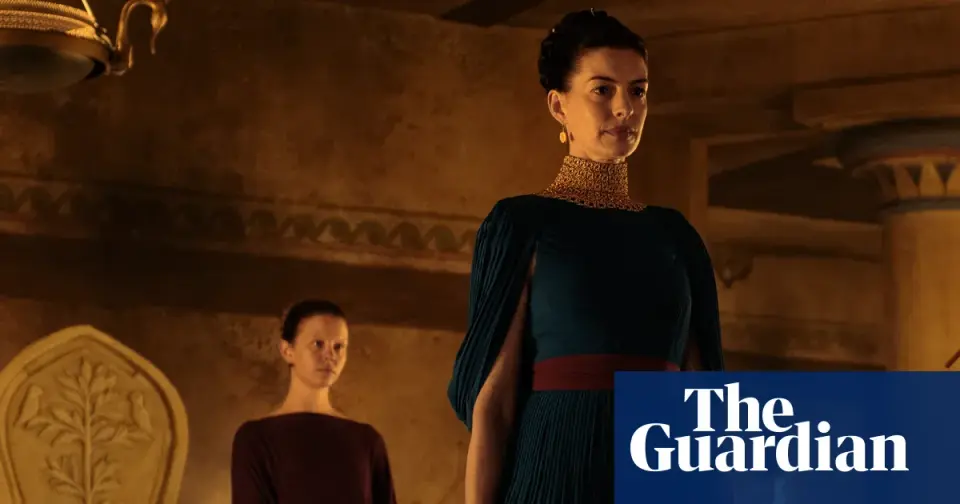
Novelist Joyce Carol Oates has publicly defended Christopher Nolan’s film The Odyssey against sharp criticism from classicist Emily Wilson. Oates criticized Wilson’s tone in a London Review of Books essay, calling it 'crude' and lacking collegiality. While Wilson argued the film lacks emotional depth and character motivation, Oates defended Nolan’s interpretation, noting that Wilson’s own translation inspired the film’s opening line. The dispute has intensified online, with Wilson acknowledging the film’s visual spectacle but maintaining that the script is poorly written. Box office figures show the film has earned $683 million globally, while sales of Wilson’s translation have surged 1,560% in the UK.
Key points
- Joyce Carol Oates criticized Emily Wilson’s review of The Odyssey, accusing her of using 'crude language' and failing to treat Nolan’s work with respect.
- Emily Wilson argued in the London Review of Books that Nolan’s film lacks psychological and ethical depth, describing the writing as 'abysmal' and the characters as underdeveloped.
- Wilson noted that Nolan cited her 2017 translation of Homer’s Odyssey, specifically the line 'Tell me about a complicated man,' but she expressed shame at the final script.
- The Guardian reports that The Odyssey has grossed $683 million globally, while UK searches for the Iliad rose 1,560% following the film's release.
- Oates previously compared Nolan’s film unfavorably to a 1997 TV adaptation but ultimately defended Nolan against Wilson’s specific attacks.
Background
This dispute follows earlier coverage where Oates initially criticized the film but later pivoted to defend Nolan against Wilson’s viral critique. Previous articles noted that Oates argued translations are subjective and that Wilson’s dismissive tone was inappropriate for a scholar. The current conflict highlights the tension between academic literary analysis and commercial filmmaking, particularly regarding the adaptation of classical texts.
How outlets are covering it
The Guardian and NPR present the core conflict: Oates defending Nolan against Wilson’s harsh critique. Wilson’s London Review of Books essay, detailed in the secondary source, emphasizes the film’s lack of character motivation and 'abysmal' writing, while acknowledging its visual spectacle. Slate Magazine offers a counter-perspective, arguing that Wilson’s critique is 'baffling' and that she misunderstood the film’s thematic elements, such as the role of the gods and the Trojan Horse subplot. Slate suggests Wilson’s review was overliteral and failed to engage with the film on its own terms, contrasting with Oates’s defense of Nolan’s creative freedom. All sources agree that the film has been a commercial success, but they diverge sharply on the quality of the adaptation and the appropriateness of Wilson’s tone.
Why it matters
The controversy highlights the ongoing debate over how classical texts should be adapted for modern audiences. It underscores the tension between academic rigor and commercial spectacle, as well as the impact of public criticism on cultural products. The surge in sales of Wilson’s translation and the film’s box office success demonstrate the public's continued interest in Homer’s work, despite the critical divide. The dispute also raises questions about the role of translators and scholars in shaping public perception of adaptations, and the potential for public figures to influence cultural discourse through social media and public statements.
What to watch
The Guardian has contacted Wilson for comment, but no response has been reported. The film is predicted to follow Oppenheimer’s success at the Oscars next March. Wilson is working on a new translation of The Odyssey and a collection of essays, Crossing the Wine-Dark Sea, which is set to release in September. The public discourse is likely to continue as the film’s awards campaign progresses and as new interpretations of Homer’s work emerge.
- ‘The crude language of Maga folks’: Joyce Carol Oates criticises Emily Wilson’s attack on Nolan’s Odyssey The Guardian
- Emily Wilson · An Uncomplicated Man London Review of Books
- 'Odyssey' translator Emily Wilson says Nolan shouldn't have written the movie himself npr.org
- As a Classicist, I’ve Defended Emily Wilson’s Odyssey Translation. I Can’t Defend Her Review of Nolan’s Movie. Slate Magazine
- Homer, Hollywood, And College Admissions Yahoo
Want the full story? Read the original reporting
Read on The Guardian