
Scholar Uncovers 1,700-Year-Old Odyssey Fragment in Dutch Library
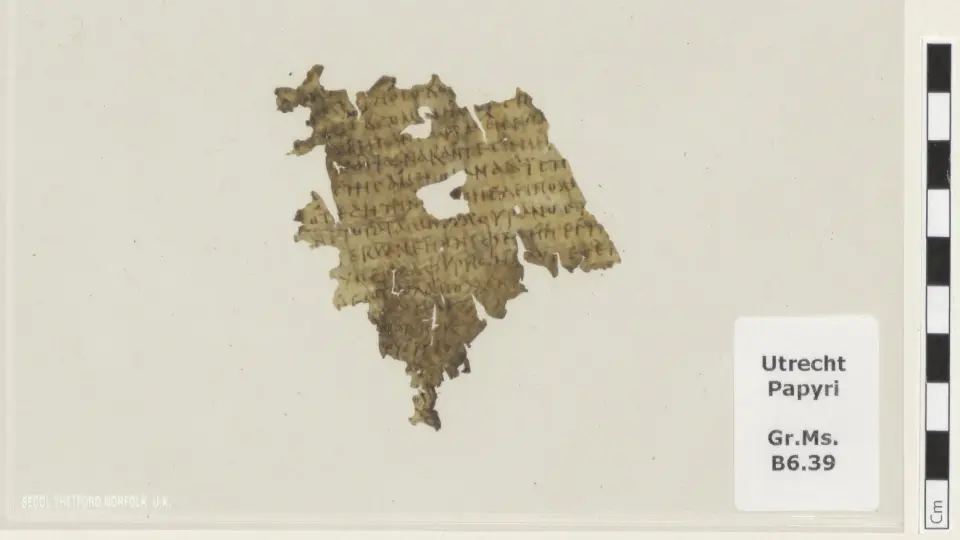
A 1,700-year-old fragment of Homer’s 'Odyssey' was identified in a Dutch university library. The parchment, dating to approximately A.D. 300, was found by a researcher studying early Christian manuscripts. It contains verses from Book 12, describing the death of Odysseus’s crew after they ate the sun god’s cattle. This is the second unexpected discovery of a Homeric epic fragment this year.
Key points
- Mark de Kreij, a professor at Radboud University, identified the fragment while reviewing a collection of early Christian manuscripts purchased by Utrecht University in the mid-20th century.
- The fragment measures approximately 6.6 by 7.7 centimeters and is made of parchment, not papyrus.
- It contains verses from Book 12 of the 'Odyssey,' specifically the passage where Odysseus’s men kill and eat the sacred cattle of Helios, leading to their destruction by Zeus.
- The fragment is estimated to date from around A.D. 300 and likely originated from a pocket edition of the epic owned by someone in Egypt’s Faiyum oasis.
- Utrecht University announced the discovery in September 2026, though de Kreij reportedly found the item approximately two years prior.
Background
This discovery follows a similar find earlier in 2026, when archaeologists in Egypt uncovered papyrus fragments of the 'Iliad' inside a Roman-era mummy. Both epics were composed in the late eighth or early seventh century B.C. The 'Odyssey' details the ten-year journey of Odysseus back to Ithaca after the Trojan War. The archive contains no related background on this specific story, as previous coverage focused on unrelated events such as wildfires in Spokane.
How outlets are covering it
Live Science and CBS News both confirm the discovery by Mark de Kreij and the dating to A.D. 300. Live Science emphasizes the fragment’s origin from a pocket edition produced in Egypt, while CBS News notes that researchers initially mistook the item for a 7th-century document before de Kreij recognized the Greek text. DutchNews.nl highlights that the fragment was found among manuscripts belonging to a German scientist, adding a layer of provenance not detailed in the other outlets. All sources agree that the fragment is one of only about 30 such pieces known worldwide, underscoring its rarity. The outlets differ slightly in their emphasis: Live Science focuses on the narrative content of the verses, while CBS News and DutchNews.nl focus on the physical characteristics and the timeline of the discovery.
Why it matters
The discovery provides a rare physical link to the transmission of classical texts in the early Christian era. Finding a fragment of the 'Odyssey' in a collection of early Christian manuscripts suggests that pagan literature was still being copied and read in Egypt during the 3rd century A.D. The rarity of such fragments, with only about 30 known worldwide, makes this find significant for scholars studying the history of Greek literature and its preservation in the ancient world.
What to watch
Utrecht University is expected to further analyze the fragment to confirm its dating and provenance. Researchers may also examine the physical condition of the parchment, which is described as discolored with moisture stains, to determine its preservation history. The discovery may prompt a review of other items in the university’s collection to identify additional overlooked classical texts.
- 1,700-year-old fragment of the 'Odyssey' discovered in Dutch library Live Science
- 1,700-year-old fragment of "Odyssey" discovered between pages of a library book CBS News
- 1,700-year-old fragment of Homer's Odyssey found in Utrecht University library NL Times
- Scrap of 1700-year-old copy of The Odyssey washes up in Utrecht DutchNews.nl
- Small 1,700-year-old fragment of Odyssey found tucked in Dutch library book Yahoo
Want the full story? Read the original reporting
Read on Live Science