
Emily Wilson’s Second Essay Deepens Critique of Nolan’s 'Odyssey' Amid Box Office and Book Sales Surge
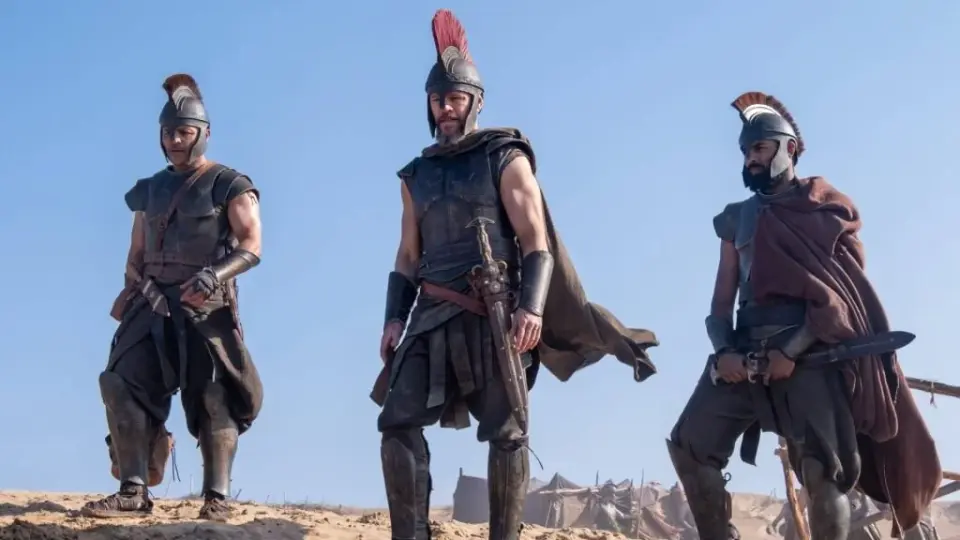
Emily Wilson, translator of the 2017 'The Odyssey,' published a second critical essay in The Atlantic, calling Christopher Nolan's film 'emotionally empty.' While the movie remains a box office phenomenon, Wilson argues it lacks the ethical depth of Homer's original. Meanwhile, the film has triggered a massive surge in book sales, with Wilson's translation becoming a bestseller.
Key points
- Wilson's new essay in The Atlantic, titled 'A Trojan Horse Is Supposed To Have Humans Inside It,' argues Nolan's film prioritizes mechanical spectacle over human emotion.
- The film has earned $922 million globally and $405 million domestically, with audiences giving it an 'A' CinemaScore.
- Sales of Homer's 'The Odyssey' have surged, with Wilson's translation selling over 1 million copies and driving a 76% increase in US print sales.
- Wilson criticized Nolan for filming in disputed Western Sahara without Indigenous consent, linking this to the film's ethical themes.
- The 70 mm IMAX format has created a scarcity-driven cultural phenomenon, with tickets selling out rapidly in major cities.
Background
This controversy follows Wilson's initial review in the London Review of Books, which she described as a 'portentous declaration.' The film's release in July 2026 sparked a nationwide 'Homer fever,' with bookstores and libraries reporting unprecedented demand. Previous coverage noted Nolan's practical approach to filming the Trojan Horse scene, which Wilson now critiques as a distraction from the narrative's core themes.
How outlets are covering it
AV Club and Variety highlight Wilson's second essay as a 'tightening' of her initial arguments, noting she removed glib asides but maintained her core critique that the film is 'visually stunning, emotionally empty.' Variety emphasizes the backlash from author Joyce Carol Oates, who accused Wilson of speaking in 'crude language.' Vox focuses on the cultural phenomenon of 70 mm IMAX screenings, framing the scarcity as 'social currency.' The Guardian and Publishers Weekly data emphasize the positive impact on book sales, with Barnes & Noble CEO James Daunt calling Homer the current best-selling author. While critics like Wilson and Mary Beard argue the film lacks depth, the commercial success and renewed interest in the source material suggest a complex reception.
Why it matters
The dispute between a celebrated translator and a major director highlights the tension between artistic interpretation and commercial spectacle. It also demonstrates the power of blockbuster films to drive cultural engagement with classic literature, turning a 2,700-year-old poem into a modern bestseller and sparking debates about ethical filmmaking and the value of 'truthful' art in an era of misinformation.
What to watch
Wilson may continue her critique, potentially applying similar scrutiny to other blockbusters like 'Spider-Man: Brand New Day.' The book sales surge is expected to last another two to three months before normalizing. The film's global box office is approaching $1 billion, and its cultural impact on public reading habits will likely be a subject of ongoing analysis in the literary and film communities.
- Great Translator/Filmmaker War Of 2026 deepens as Emily Wilson takes second swing at The Odyssey A.V. Club
- ‘The Odyssey’ Translator Emily Wilson Doubles Down Against Nolan’s ‘Emotionally Empty’ Movie: ‘We Need Art That Is Truthful’ About the ‘Necessity of Compassion’ Variety
- The FOMO of not seeing The Odyssey in 70 mm IMAX vox.com
- Nolan’s film could make The Odyssey the most sought-after book in the US The Guardian
- As a Classicist, I’ve Defended Emily Wilson’s Odyssey Translation. I Can’t Defend Her Review of Nolan’s Movie. Slate
Want the full story? Read the original reporting
Read on A.V. Club