
Idaho Confirms First Chronic Wasting Disease Case in North-Central Game Unit 13
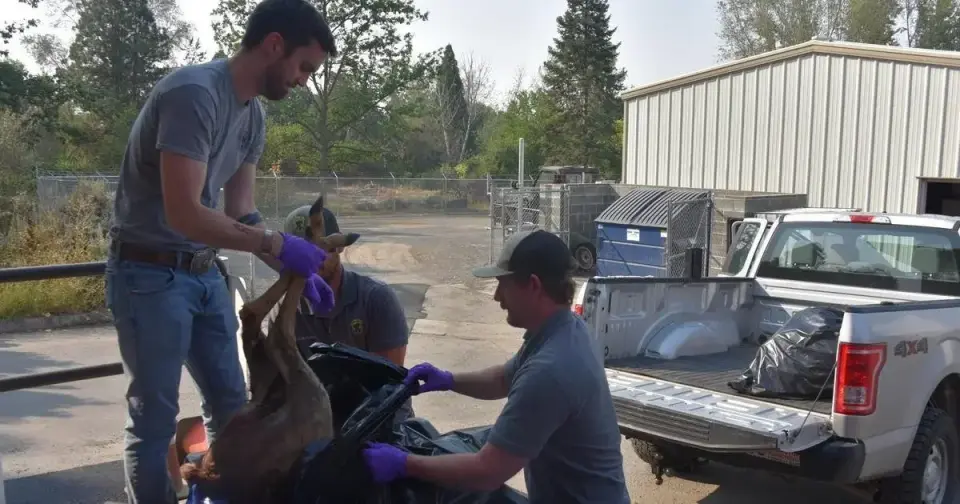
Idaho Fish & Game confirmed the first detection of Chronic Wasting Disease in Game Management Unit 13, a mule deer buck near the Oregon border. The department has tested over 3,500 animals this year and urges the public to report dead or sick wildlife to monitor the incurable prion disease.
Key points
- A mule deer buck harvested in Idaho Game Management Unit 13 tested positive for Chronic Wasting Disease, marking the first detection in that specific unit.
- The detection occurred near the Oregon border, approximately half a mile from a previous detection in adjacent Unit 18, expanding the known range of the disease outside five previously affected units.
- Idaho Fish & Game has tested more than 3,500 deer and elk for CWD so far this year, with the department prioritizing low prevalence rates to maintain healthy big game populations.
- Officials emphasize that CWD is a fatal, incurable prion disease that persists in the environment for decades, making eradication impossible and surveillance critical for management.
- The department and Idaho Fish and Game Commission will review the new detection to adjust their annual CWD management strategy, which typically evolves as new data emerges.
Background
Chronic Wasting Disease is a transmissible spongiform encephalopathy caused by misfolded prion proteins, affecting deer, elk, and moose. It is always fatal and cannot be eradicated because prions remain in the environment for decades. Recent archive entries indicate a broader trend of CWD expansion across the United States, with new detections confirmed in Georgia and New York in late November 2026. In Washington state, a recent grant of nearly $200,000 from the USDA aims to expand testing capacity and strengthen surveillance in Washington and California, reflecting regional efforts to understand the disease's spread.
Why it matters
The detection in Unit 13 expands the geographic footprint of Chronic Wasting Disease in Idaho, signaling potential risks to local big game populations. As an incurable disease that persists in the environment, its spread necessitates ongoing surveillance and management adjustments to protect healthy wildlife and potentially mitigate risks to human health, given ongoing scientific debates about transmission.
What to watch
Idaho Fish & Game and the Idaho Fish and Game Commission will consider the new detection in their overall CWD management strategy, which typically changes annually as new information becomes available. The department is urging the public to continue supporting surveillance by reporting road-killed deer and elk, animals found dead, and those exhibiting unusual behavior. Additionally, the Washington Animal Disease Diagnostic Laboratory is set to utilize a new USDA grant to expand testing capacity and hire seasonal staff to strengthen surveillance in the region.
Want the full story? Read the original reporting
Read on Capital Press