
New Study Decodes Wernicke’s Area Role in Speech Production
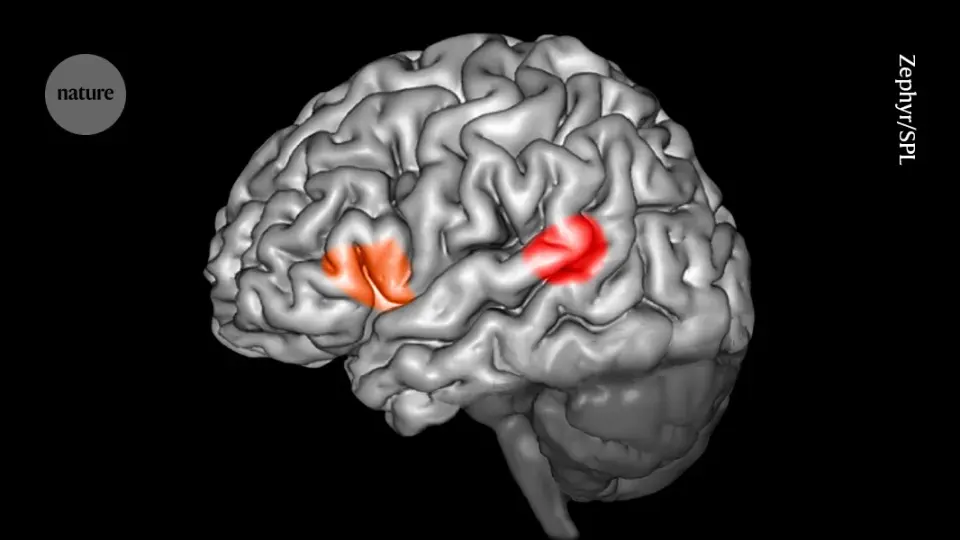
A new study published in Science resolves a century-old neuroscience puzzle by showing that Wernicke’s area, traditionally viewed only as a center for speech comprehension, actively plans speech production. Researchers at UC San Francisco found that a specific subregion generates abstract word blueprints a quarter-second before speaking, overturning the classic model that separated language comprehension from production.
Key points
- UC San Francisco researchers led by neurosurgeon Edward Chang found that the left posterior superior temporal gyrus (lpSTG), a subregion of Wernicke’s area, activates approximately 250 milliseconds before speech begins.
- This region encodes abstract word features such as length, syllable count, and lexical frequency, rather than individual sounds or motor movements, creating a structural blueprint for upcoming words.
- The findings resolve a long-standing clinical paradox: why damage to Wernicke’s area often impairs both speech comprehension and the ability to retrieve and produce words.
- In proof-of-concept tests, brain-computer interfaces successfully decoded both intended and heard speech from the lpSTG in two participants with severe paralysis, offering a new target for restoring communication.
- The study suggests that speech comprehension and production are deeply intertwined processes within the same neural circuit, rather than separate anatomical systems as previously taught.
Background
For over 150 years, neuroscience textbooks have divided language processing into two distinct systems: Wernicke’s area in the temporal lobe for comprehension and Broca’s area in the frontal lobe for production. This model, based on 1870s observations by Carl Wernicke and Paul Broca, failed to explain why patients with Wernicke’s area damage often struggle to speak, not just understand language. Recent advancements in high-resolution intracranial recordings have allowed researchers to observe neural activity at millisecond resolution, revealing that Wernicke’s area plays a direct role in planning speech before it is executed by motor areas. This finding aligns with earlier research on brain-computer interfaces, which have shown that decoding signals from different brain regions can restore communication for individuals with paralysis or aphasia.
How outlets are covering it
Both Nature and Neuroscience News highlight the significance of the study in overturning the traditional model of language processing. Nature emphasizes the resolution of a century-old puzzle and the potential for new brain-computer interface targets, while Neuroscience News provides more detail on the specific neural mechanisms, such as the encoding of abstract word features and the coexistence of listening and speaking neurons. Both sources agree on the practical implications for restoring speech in paralyzed individuals and the broader implications for understanding language acquisition and autism research.
Why it matters
This research fundamentally changes our understanding of how the brain processes language, suggesting that comprehension and production are not separate but deeply integrated processes. This has significant implications for treating language disorders, developing brain-computer interfaces, and understanding conditions like autism. By identifying a new neural target for speech production, the study opens up new possibilities for restoring communication in individuals who have lost the ability to speak due to paralysis or other neurological conditions.
What to watch
Researchers will likely explore the implications of these findings for treating language disorders and developing new brain-computer interface technologies. Further studies may investigate why Broca’s area exists if the temporal lobe performs the main work of speech planning, and whether the lpSTG is unique to humans or shared with other primates. Additionally, clinical trials may test the effectiveness of decoding speech from the lpSTG in patients with aphasia or paralysis, potentially leading to new treatments for communication impairments.
- Brain area’s mysterious role in speech decoded at last Nature
- Brain Speech Hub Builds a "Blueprint" Before We Speak Neuroscience News
- Generative Brain Models Will Arrive in 12 Months | UCSF|MTS finance.biggo.com
Want the full story? Read the original reporting
Read on Nature