
Michigan DNR Launches Heat Map to Track Widespread EHD Deer Deaths
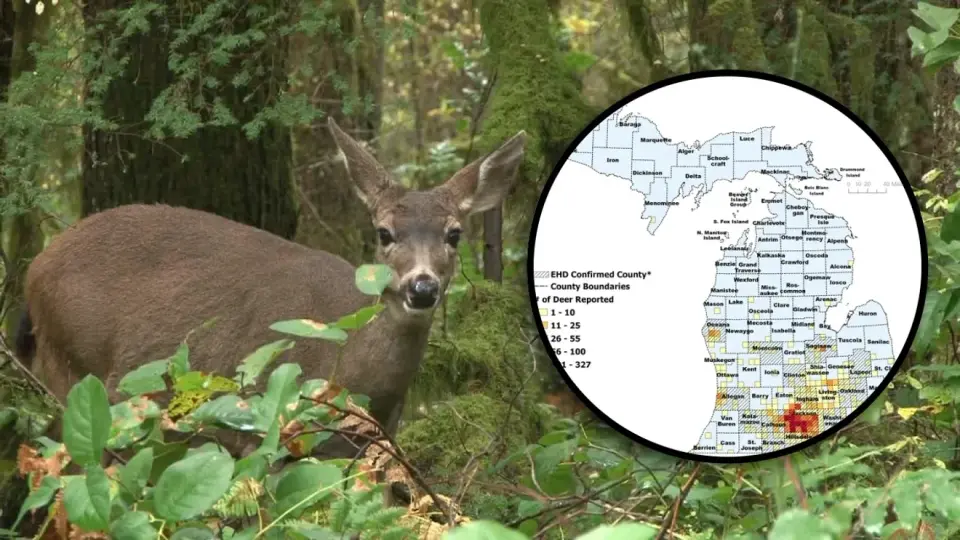
The Michigan Department of Natural Resources (DNR) released a new public heat map on October 29 to track Epizootic Hemorrhagic Disease (EHD) in white-tailed deer. The map, updated weekly, highlights township-level reports and laboratory-confirmed cases across the state. Jackson County is currently the most affected area, with hundreds of reported deaths. The disease, spread by biting midges, causes rapid internal bleeding and death in deer, typically peaking in the fall before frost kills the insects. While EHD poses no risk to humans or pets, it has caused significant local herd losses, prompting concerns among hunters. The DNR relies on voluntary reports from the public to monitor the outbreak, as laboratory confirmation requires tissue samples collected within 16 hours of death.
Key points
- The Michigan DNR launched a new heat map on October 29 to provide transparency on EHD activity, showing both reported cases and laboratory-confirmed infections at the township level.
- Jackson County is the hardest-hit area, with 11 townships reporting over 56 dead deer and six townships exceeding 101 fatalities; Ingham County has reported cases in all 16 of its townships.
- EHD has been laboratory-confirmed in 15 Michigan counties in 2026, including Washtenaw, Lenawee, and Oakland, with the majority of cases concentrated in Mid-Michigan.
- The disease is transmitted by biting midges and causes sudden, severe symptoms in deer, including internal bleeding, high fevers, and death within 36 hours of initial signs.
- The DNR emphasizes that confirmed cases likely undercount actual deaths because testing requires carcass collection within 16 hours, and the outbreak is expected to end with the first frost.
Background
EHD has been present in Michigan since 2006, with significant outbreaks occurring in 2012 and 2025. The 2026 outbreak is comparable in scale to previous years, with 15 counties confirmed in 2026 versus 16 in 2025. Regional outbreaks in Wisconsin and Minnesota have also been reported, with Wisconsin setting a record for deer deaths in 2026. Climate change is cited as a factor in the northward spread of midges, which thrive in warm, wet springs followed by dry summers.
How outlets are covering it
Outlets agree on the severity of the outbreak and the utility of the new map. WPBN and WILX highlight the frustration among hunters and the lack of preventive measures, with WILX noting that recovery may take years. The Lansing State Journal provides detailed county-level data, emphasizing that while local impacts are severe, not all deer will die. The Sun Times News focuses on the confirmation of cases in Washtenaw and Lenawee counties, reassuring the public that the disease does not affect humans or pets. All sources stress the importance of voluntary reporting through the DNR's Eyes in the Field program.
Why it matters
The EHD outbreak impacts local deer populations and hunting opportunities, causing economic and emotional distress for hunters who invest time and resources in their properties. The new map helps hunters make informed decisions about where to hunt and manage their expectations. Additionally, the outbreak highlights the broader implications of climate change on wildlife health and the need for robust surveillance systems to monitor emerging diseases.
What to watch
The DNR plans to update the heat map approximately weekly while the outbreak remains active. The disease is expected to subside with the first frost, which kills the midges that transmit the virus. Hunters are encouraged to continue reporting suspected cases to aid in surveillance and testing. The DNR will continue to monitor the impact on deer populations and provide updates on recovery efforts.
- Michigan DNR launches public heat map to help track suspected EHD cases in deer WPBN
- DNR maps deer fatalities from viral disease. See where hot spots are Lansing State Journal
- Where is deadly EHD affecting deer in Michigan? New map shows reports MLive.com
- Fatal EHD outbreak in deer confirmed in at least 15 Michigan counties WILX
- Deer Disease Confirmed in Washtenaw County as DNR Releases New Map The Sun Times News
Want the full story? Read the original reporting
Read on WPBN