
Necropsy confirms bird flu, not rat poison, killed Big Bear eagle Jackie
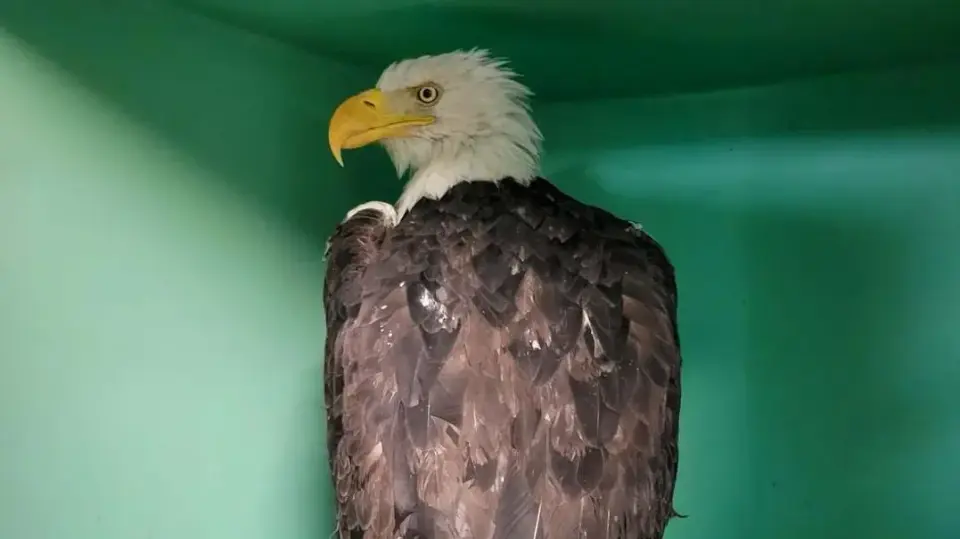
Jackie, the famous bald eagle from Big Bear Lake, died on August 10, 2026, from highly pathogenic avian influenza (HPAI). A necropsy revealed the virus caused severe stomach ulcers, leading to internal bleeding and secondary bacterial infections. Although rat poison was detected, it was not the primary cause of death. Her remains were cremated to prevent virus spread, while her mate, Shadow, remains healthy in Big Bear.
Key points
- Jackie died on August 10, 2026, after a weeks-long illness that confounded veterinarians.
- The necropsy, performed by the San Diego Zoo Wildlife Alliance, identified HPAI as the primary underlying cause of her decline.
- The virus caused an uncommon presentation, resulting in a severe stomach ulcer, persistent internal bleeding, anemia, and bacterial sepsis.
- Toxicology tests detected brodifacoum (rat poison) in her liver, but officials ruled it out as the primary cause due to a lack of uncontrolled bleeding.
- Jackie’s remains were cremated by the U.S. Fish and Wildlife Service’s National Eagle Repository to prevent the transmission of HPAI.
- Her mate, Shadow, and their eaglets, Sandy and Luna, show no signs of illness and remain in Big Bear Valley.
Background
Jackie, hatched in 2012, became a global sensation after a webcam installed by a U.S. Forest Service employee broadcast her life in Big Bear Valley. She and her mate, Shadow, were the first adult eagles to stay year-round in the area. Her death sparked widespread mourning, leading to memorial events and a state resolution proclaiming September 4 as California Wildlife Day.
How outlets are covering it
All sources agree that HPAI was the primary cause of death. The California Department of Fish and Wildlife and San Diego Zoo Wildlife Alliance emphasized the complex, interconnected nature of her illness, including chronic gizzard disease and secondary infections. The Los Angeles Times highlighted the controversy surrounding the cremation of her remains, noting that some fans had argued for taxidermy preservation instead. CBS News focused on the timeline of her rescue and treatment, noting she was found weak on the shoreline in July. USA Today provided background on her early life and the origins of the livestream.
Why it matters
The case highlights the threat of HPAI to raptors and the importance of wildlife conservation. It also demonstrates the public's deep connection to individual animals and the role of technology in wildlife monitoring. The findings may inform future care and treatment of other eagles and wildlife affected by avian influenza.
What to watch
Wildlife officials will continue to monitor Shadow and the eaglets for any signs of illness. The findings from the necropsy may be used to improve the diagnosis and treatment of HPAI in other birds. There may be ongoing discussions about the handling of eagle remains and public engagement in wildlife conservation.
- Jackie the bald eagle's mysterious cause of death revealed USA Today
- CDFW News | Necropsy Provides New Information About Beloved Bald Eagle Known as Jackie California Department of Fish and Wildlife (.gov)
- Cause of death for Jackie the bald eagle revealed; avian icon has been cremated Los Angeles Times
- Big Bear bald eagle Jackie's cause of death revealed CBS News
- Jackie the bald eagle's cause of death revealed WTHR
Want the full story? Read the original reporting
Read on USA Today