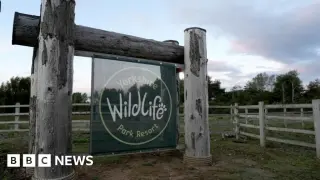
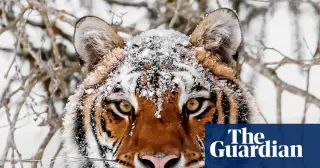
A man died after entering a tiger enclosure at Yorkshire Wildlife Park on Saturday, leading to the park's closure for the weekend. The tiger remained uninjured, and authorities are investigating the incident.
Colossal Biosciences is using AI and gene editing to revive extinct species like the dire wolf and woolly mammoth, aiming to apply these technologies to human healthcare and climate change mitigation.
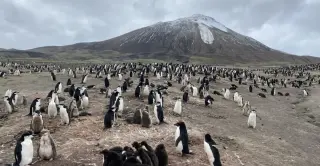
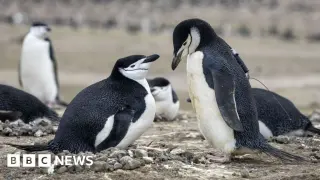
A new study reveals that the chinstrap penguin population on Zavodovski Island, previously the world’s largest colony, has plummeted by 63% since 2011. This collapse, attributed to climate-driven warming and shifting krill food sources, has caused the island to lose its title to Cape Adare. While macaroni penguins have thrived due to dietary flexibility, scientists warn that the rapid decline of chinstraps threatens broader Antarctic ecosystem stability and may warrant endangered species status.
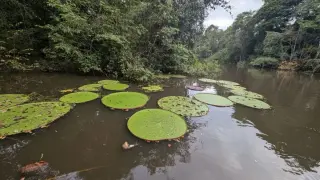
A chance Instagram photo of a plant in Colombia’s Inírida River led to the formal identification of Victoria colombiana, a new species of giant waterlily. Discovered by a team from the Royal Botanic Gardens, Kew, the plant is critically endangered with only 30 to 50 individuals known in the wild. The discovery highlights the value of combining social media, satellite imagery, and indigenous knowledge in modern botanical research.
A new review of over 70 studies reveals that 'bright spots'—ecosystems thriving despite pressure—share common traits: local action, community ability, and supportive architecture. This framework helps conservationists learn from success rather than just focusing on decline.
A casual Instagram photo posted by Jeremiah Harris in 2021 led scientists to discover a new species of giant waterlily, Victoria colombiana, in Colombia. The plant, which can grow up to three meters wide, was found in the Inírida region and is now considered critically endangered, with only 30 to 50 individuals remaining in the wild. The discovery highlights the importance of social media and indigenous knowledge in modern botanical research.
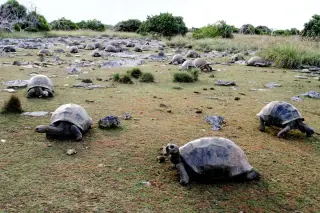
A landmark survey by the Seychelles Islands Foundation and the University of Exeter reveals that the Aldabra giant tortoise population has reached approximately 180,000 individuals, a significant increase from the 100,000 estimated in the late 1990s. This figure, based on data collected between 2018 and 2022, represents the highest count ever recorded for the species and highlights a major success in long-term conservation efforts. Despite this growth, researchers warn that climate change, invasive species, and rising sea levels pose ongoing threats to the population's stability.
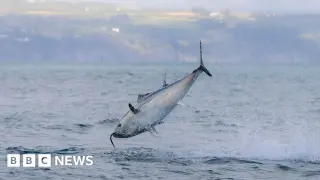
The 2026 Living Planet Report reveals a 73% average decline in monitored global wildlife populations since 1970. However, it highlights significant recoveries in bluefin tuna, tigers, and green sea turtles, framing conservation as a viable path to recovery despite ongoing systemic pressures.
Recent research highlights unexpected animal capabilities, including orcas avoiding pilot whales, elephants using name-like vocalizations, and bumblebees surviving underwater. These findings challenge previous assumptions about animal intelligence and resilience.
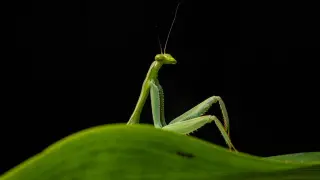
The 2026 Nikon Comedy Wildlife Awards have released their finalists, selected from a record 10,000 submissions across 112 countries. The shortlist includes 47 images and nine videos, featuring humorous shots of a mantis, an orangutan, and brown bears. Winners will be announced on December 8 in London, with the top prize being a safari in Kenya's Maasai Mara.
The World Wildlife Fund's 2026 Living Planet Report reveals a 73% average decline in monitored wildlife populations since 1970, with freshwater species suffering the most. However, the report highlights successful recoveries for tigers, green sea turtles, and bluefin tuna, proving that targeted conservation can reverse losses. Experts warn that without transforming food production systems, biodiversity collapse remains a threat to global economic stability.
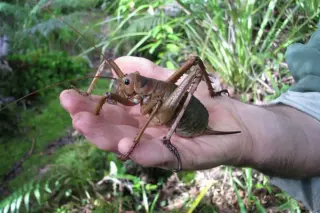
The wētāpunga, the world’s heaviest insect, has recovered from near-extinction in New Zealand following a 15-year breeding program that released over 11,000 individuals into the wild. Conservationists at Butterfly Creek and Auckland Zoo developed specialized feeding techniques to raise nymphs, leading to self-sustaining populations on predator-free islands. The species’ status has improved from 'Endangered' to 'Nationally Increasing,' with researchers now applying these methods to other threatened invertebrates.
Aerial surveys reveal a 63% decline in chinstrap penguins on Zavodovski Island since 2011, driven by warming oceans and shifting krill populations. The island has lost its status as the world's largest penguin colony to Cape Adare, while macaroni penguins thrive due to dietary flexibility.
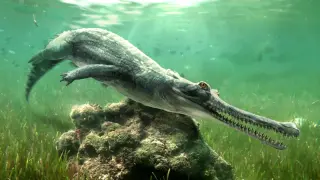
Researchers identified a new extinct crocodile species, Herugavialis cairensis, from fossils found in the limestone used to build the Great Sphinx. CT scans revealed distinct skull features that distinguish it from the false gharial, adding a new branch to the gavial family tree.
The 2026 Nikon Comedy Wildlife Photography Awards finalists have been revealed, featuring 47 images and nine videos selected from a record 10,000 submissions across 112 countries. The shortlist includes humorous scenes such as a giraffe appearing to wear a tree, a bear doing yoga, and a mantis posing on a leaf. Winners will be announced on December 8 in London, with the top prize being a safari in Kenya's Maasai Mara.