
Congo’s Ebola Crisis Worsens as Staff Shortages and Child Mortality Outpace Treatment Capacity
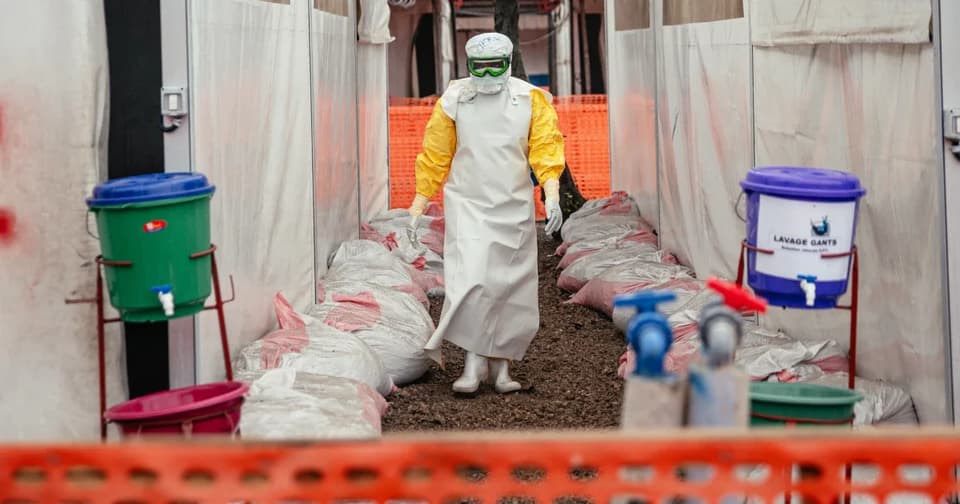
The Democratic Republic of Congo faces its largest Ebola outbreak on record, with 7,773 confirmed cases and 3,759 deaths. While cases dropped in Ituri, they surged 73% in North Kivu. A critical shortage of health workers, unpaid wages, and high child mortality rates are hindering containment efforts.
Key points
- The outbreak has spread to seven provinces, with North Kivu seeing a 73% case increase over three weeks, while Ituri and Haut-Uele saw declines of 26% and 15%, respectively.
- The WHO warns that a severe shortage of health workers is preventing the operation of new treatment centers, with one facility requiring approximately 300 staff members.
- Children under five face a case fatality rate exceeding 60%, compared to roughly 40% for adults, largely due to difficulties in detecting symptoms in young children.
- The International Organization for Migration (IOM) reports receiving less than one-third of its $110 million funding appeal, limiting surveillance along key travel routes.
- The current outbreak is on track to surpass the 2014-2016 West Africa crisis, which killed over 11,000 people, driven by insecurity and displacement.
Background
Since May 2026, the outbreak has been driven by the Bundibugyo virus, for which no licensed vaccine exists. Recent efforts have relied on the Ervebo vaccine under a compassionate-use program, with approximately 70,000 doses approved for frontline workers and clinical trials. Earlier reports indicated the outbreak had already surpassed 3,000 deaths by early September, with cross-border spillover fears rising in neighboring Central African Republic and South Sudan.
How outlets are covering it
The WHO emphasizes the 'human resources gap' as the primary barrier to containment, noting that while infrastructure is expanding, staffing levels are insufficient. In contrast, the IOM highlights the funding crisis, stating that only $29.6 million of the required $110 million has been received, which limits their ability to monitor population movements. While the WHO focuses on internal transmission patterns and child mortality, the IOM stresses the risk of cross-border spread through riverine corridors and displacement sites. All sources agree that the outbreak remains uncontrolled despite localized declines in some provinces.
Why it matters
The combination of a staff shortage, funding gaps, and high child mortality rates threatens to turn this outbreak into the deadliest in history. The inability to staff new treatment centers and the difficulty in detecting cases in young children could lead to further community transmission, potentially overwhelming the regional health system and spreading the virus to neighboring countries.
What to watch
The WHO and partners are prioritizing the decentralization of the response to rural villages in North Kivu to reduce referral times. The IOM is seeking additional funding to sustain surveillance along the Congo River and border points. Health authorities are continuing to verify payroll lists to resolve wage disputes among frontline workers, while monitoring the effectiveness of the Ervebo vaccine against the Bundibugyo strain.
- Congo is running short of health workers as Ebola remains out of control, WHO says NBC News
- DR Congo Ebola outbreak toll exceeds 3,700 deaths UN News
- IOM Chief Calls for Urgent Support as DRC Faces Largest Ebola Outbreak on Record International Organization for Migration
- DR Congo short of health workers as it battles 'out-of-control' Ebola outbreak Sky News
- Congo Ebola Outbreak Threatens More Neighbors, Africa CDC Says Bloomberg
Want the full story? Read the original reporting
Read on NBC News