Ebola Outbreak Could Beat All Records, Live Updates
The Ebola outbreak is expanding and could become the deadliest on record, with ongoing live updates tracking cases, deaths, and the international response.
All articles tagged with #who

The Ebola outbreak is expanding and could become the deadliest on record, with ongoing live updates tracking cases, deaths, and the international response.

The World Health Organization warns that the Ebola outbreak is spreading faster than containment efforts can keep up, prompting urgent calls for increased resources, vaccines, and coordinated international action to curb transmission, with live updates monitoring spread and responses.

The Ebola outbreak has risen to 220 deaths, with health officials warning that 11 countries are now at risk as authorities monitor the situation with ongoing live updates.

The World Health Organization warns that the Ebola outbreak in the Democratic Republic of Congo is outpacing response efforts, with about 220 suspected deaths, as attacks on health facilities in Ituri disrupt containment and burial practices fuel transmission; Uganda reports cases, and there is no approved vaccine for Bundibugro ebolavirus, prompting scaled-up but hampered operations in insecure areas.

Key US infectious-disease officials are barred from direct communication with the World Health Organization during outbreaks, forcing listening-only participation and routing follow-ups through the Department of Health and Human Services, as leadership vacancies loom at major health agencies. The restrictions come amid hantavirus and Ebola outbreaks and reflect a broader US retreat from global health forums, raising concerns about the speed and coordination of outbreak responses.

MSF urges that the Ebola outbreak in the Democratic Republic of Congo is stretching relief efforts due to resource shortages, with no approved vaccines or drugs yet; WHO has declared a public health emergency, and transport disruptions and conflict hinder response as over 200 deaths and around 850 suspected cases are reported, underscoring the need for faster case confirmation and improved discharge planning.
Dr. Deborah Birx says the United States is well-positioned to respond to Africa’s Ebola outbreak thanks to a deep bench of experts and ongoing interagency efforts, even with vacancies at the CDC, FDA, and surgeon general; she notes that a rapid deployment of assets is underway and that detection delays can skew case trends, while suggesting that past U.S. withdrawals from WHO and aid cuts may not significantly undermine the response.

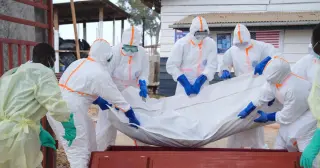
Three Congo Red Cross volunteers from Mongbwalu died after likely contracting Ebola during a March dead-body management mission; the outbreak, which began in Congo, has spread to Uganda, with Uganda reporting five confirmed cases as health authorities and international partners mobilize a response under the WHO emergency declaration.


The CDC has ordered targeted entry restrictions for travelers from the DRC, Uganda, and South Sudan and will route eligible arrivals through Dulles Airport for screening, with additional checks at Atlanta and Houston; green card holders are temporarily barred. While officials say these measures bolster containment, experts warn broad travel bans can hinder surveillance, healthcare worker movement, and aid, and WHO generally opposes blanket restrictions. The risk to the US remains low but dynamic, underscoring the need for ongoing surveillance, testing, and rapid response if cases appear.

Ebola in DR Congo’s Ituri province has risen to roughly 750 cases and 177 deaths, making it the third-largest outbreak on record and spreading rapidly; WHO has raised national risk to very high as authorities race to scale detection, isolation, and contact tracing amid conflict and weak health systems.

The WHO has raised the Ebola threat level in the Democratic Republic of the Congo to very high as suspected cases climb to around 750 with 177 deaths, driven by rapid spread in Ituri. The Bundibugyo strain has no vaccine or treatment. The outbreak has seen distrust and an attack on a treatment centre, threatening the response; while detection improves, officials warn the outbreak is not under control and resources are stretched. Trials are being prepared for an antiviral drug, obeldesivir.

The Ebola outbreak has killed 177 people, a number the WHO director-general says is deeply worrisome as health officials push intensified surveillance, vaccination, and international aid in ongoing live updates.

The World Health Organization raised the Ebola outbreak risk in the Democratic Republic of Congo from high to very high, with 82 confirmed cases and 7 deaths among about 750 suspected cases. The outbreak involves the Bundibugyo strain, for which there is no proven vaccine. Oxford University is developing a vaccine using the AstraZeneca platform, with Serum Institute of India lined up to mass-produce if approved, and a separate Bundibugyo vaccine in early development that could take 6–9 months to test. Globally the risk remains low, but the region faces high risk and is hampered by insecurity and distrust, including violence at a hospital and challenges around safe burials.

The World Health Organization has elevated the global risk level of the Ebola outbreak to very high as cases surge and the virus appears to be spreading rapidly beyond initial epicenters, triggering intensified surveillance, cross-border coordination, and accelerated funding and response efforts.