
Spinal Imaging Masks Guillain-Barré Diagnosis in Post-Fall Patient
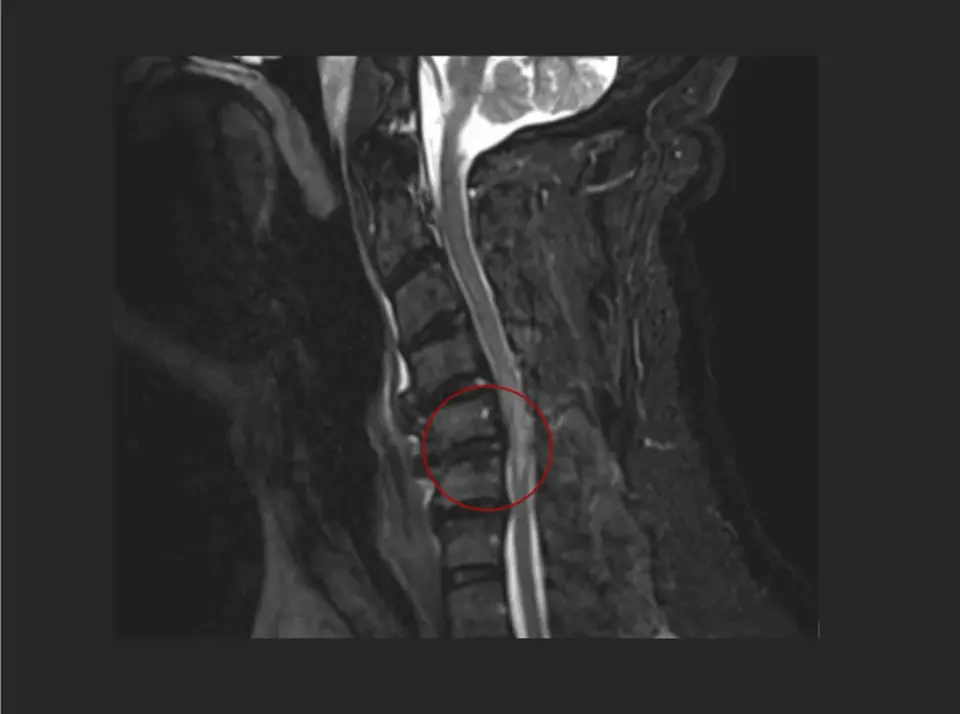
A 55-year-old man with pre-existing cervical and lumbar spinal stenosis was initially misdiagnosed with acute spinal cord compression after a fall. His progressive weakness and areflexia, however, pointed to Guillain-Barré syndrome (GBS), confirmed by cerebrospinal fluid analysis and nerve conduction studies. Treatment with plasmapheresis led to significant recovery, highlighting the difficulty of distinguishing GBS from spinal pathology when imaging shows degenerative changes.
Key points
- The patient, a 55-year-old male with type 2 diabetes, presented with sudden lower-extremity weakness and bladder incontinence after a fall.
- Initial MRI revealed significant C5-C6 spinal stenosis and cord compression, leading to an initial admission under neurosurgical care for suspected myelopathy.
- Clinical progression included generalized areflexia, respiratory deterioration, and upper limb weakness, which did not align with the spinal imaging findings.
- Diagnostic confirmation came from cerebrospinal fluid analysis showing albuminocytologic dissociation and nerve conduction studies revealing severe sensorimotor axonal polyneuropathy.
- The patient underwent plasmapheresis and subsequent rehabilitation, resulting in significant neurological and functional improvement.
Background
This case report underscores the diagnostic complexity of neurological conditions that overlap with pre-existing spinal degenerative diseases. While recent coverage has highlighted the challenges in diagnosing complex regional pain syndrome and the impact of spinal cysts on mobility, this instance focuses on the peripheral nervous system. The difficulty in distinguishing central spinal cord issues from peripheral autoimmune reactions like GBS remains a critical clinical hurdle, particularly when imaging provides a plausible but incorrect explanation for acute symptoms. The case emphasizes the necessity of serial neurological examinations and specific laboratory tests to avoid misdiagnosis in patients with known spinal pathology.
Why it matters
Accurate differentiation between Guillain-Barré syndrome and cervical myelopathy is crucial for timely and appropriate treatment. Misdiagnosis can delay life-saving interventions like plasmapheresis, potentially leading to permanent disability or respiratory failure. This case illustrates that clinicians must look beyond initial imaging findings when clinical progression suggests a peripheral neuropathy, especially in patients with concurrent infections or pre-existing spinal conditions.
What to watch
The patient is expected to continue rehabilitation to regain full functional independence. The case report serves as a reminder for medical professionals to maintain a high index of suspicion for GBS in patients with acute weakness, even when spinal imaging reveals significant degenerative changes that might otherwise explain the symptoms.
Want the full story? Read the original reporting
Read on Cureus