
CDC Data Shows Record Kindergarten Vaccine Exemptions Amid Measles Surge
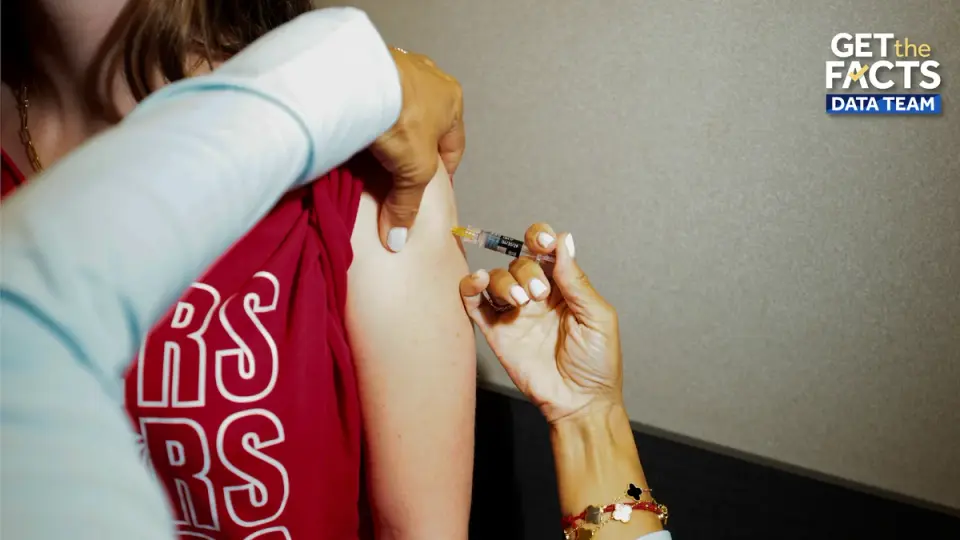
CDC data for the 2025-2026 school year reveals a record 4.2% of US kindergartners have at least one vaccine exemption, driven largely by nonmedical reasons. This decline coincides with a surge in measles cases and a new executive order by President Trump that seeks to alter federal vaccine guidelines, though state-level mandates remain largely unchanged.
Key points
- The Centers for Disease Control and Prevention (CDC) reported that 4.2% of kindergartners had an exemption for at least one required vaccine in the 2025-2026 school year, the highest rate on record.
- Approximately 155,000 to 157,000 new schoolchildren lacked full coverage for at least one state-mandated vaccine, a figure nearly 20,000 higher than the previous year.
- The MMR (measles, mumps, and rubella) vaccination rate dropped slightly to 92.4%, leaving about 280,000 kindergartners unvaccinated against measles, well below the 95% threshold required for herd immunity.
- Nonmedical exemptions, including religious and personal beliefs, were the primary driver of the increase, with 23 to 24 states reporting exemption rates of 5% or higher.
- President Trump signed an executive order last week aiming to reshape federal vaccine guidelines, including separating the MMR vaccine into three individual shots, but states retain authority over school requirements.
- Measles cases in the US have reached a 35-year high, with July 2026 cases surpassing the total for all of 2025, raising concerns about further outbreaks in under-vaccinated communities.
Background
This development follows a years-long trend of declining vaccination rates and rising exemptions, exacerbated by public health challenges since the COVID-19 pandemic. Previous archive coverage noted that measles cases in 2026 have already exceeded totals from the entire 2000-2024 period, with significant outbreaks in states like South Carolina and Minnesota. The current data highlights a continued erosion of trust in vaccine schedules, particularly as federal leadership moves to decouple from traditional CDC recommendations.
How outlets are covering it
CNN emphasizes the political tension, noting that while the Trump administration’s executive order aims to 'maximize parental choices,' state health departments like Texas and Maine have stated that federal recommendations do not change their local requirements. CNN highlights that only four states (California, Connecticut, Maine, and New York) do not allow nonmedical exemptions. KATV focuses on the local impact in Arkansas, where officials report rising exemptions despite stable vaccination rates, with experts urging parents to consult healthcare providers rather than rely on online information. Axios points out that while polling shows vaccines remain popular, the administration’s efforts to upend longstanding policies could further erode trust, with analysts predicting legal challenges to the new vaccine schedule. VCVB provides the baseline data, noting that 42 of 46 states with available data saw an increase in nonmedical exemptions.
Why it matters
The record-high exemption rates and declining vaccination coverage threaten to undermine herd immunity, increasing the risk of widespread outbreaks of vaccine-preventable diseases like measles. The disconnect between federal policy changes and state-level enforcement creates uncertainty for parents and public health officials, potentially leading to fragmented vaccine coverage and heightened disease transmission in communities with lower immunization rates.
What to watch
States are currently reviewing the new executive order, but many have indicated no immediate changes to their laws. Legal challenges to the federal vaccine schedule are expected, as noted by Capital Alpha Partners. State legislatures, many of which will not reconvene until January, may face pressure to adjust exemption laws, while courts could intervene in states like West Virginia and Mississippi regarding religious exemptions. Public health experts will continue to monitor measles case clusters and vaccination rates to assess the impact of the new federal guidelines.
- Vaccination exemption rates for US kindergartners reach record high WCVB
- Record share of kindergartners missed required vaccines last year as Trump executive order takes aim at state mandates CNN
- Arkansas sees rise in school vaccine exemptions as measles spreads KATV
- Kindergarten vaccine exemptions rose in 2025-2026: CDC Axios
- More U.S. Parents Opting Children Out of Vaccine Requirements, C.D.C. Reports The New York Times
Want the full story? Read the original reporting
Read on WCVB