
ABCA1 Cholesterol Transporter Identified as Key Driver of Parkinson’s Neurodegeneration
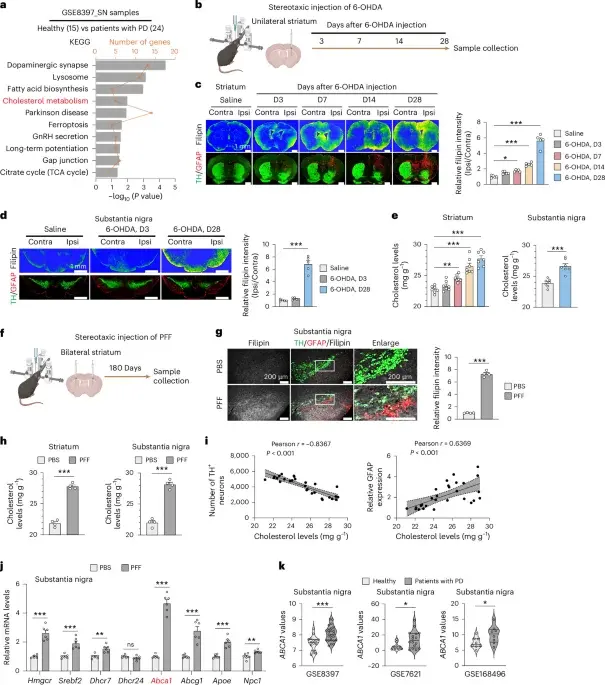
A new study in Nature Neuroscience identifies the ATP-binding cassette transporter A1 (ABCA1) as a critical regulator of cholesterol homeostasis in Parkinson’s disease (PD). Researchers found that ABCA1 expression is elevated in the substantia nigra of postmortem PD brains and mouse models. This elevation drives excessive cholesterol efflux from astrocytes, leading to cholesterol overload in neurons. In neurons, ABCA1 localizes to lysosomes, facilitating cholesterol import that causes accumulation, autophagy impairment, and alpha-synuclein pathology. Genetic silencing of ABCA1 in astrocytes or dopaminergic neurons reduced neurodegeneration and behavioral deficits in mice. Additionally, magnesium citrate, identified as an ABCA1 inhibitor, reduced dopaminergic neuronal loss in PD mouse models, suggesting ABCA1 inhibition as a potential disease-modifying strategy.
Key points
- ABCA1 expression is significantly higher in the substantia nigra of postmortem Parkinson’s disease brains and in PD mouse models, with specific alterations in nigral and striatal circuits.
- Astrocytic ABCA1 drives excessive cholesterol efflux, which promotes neuronal cholesterol overload and subsequent neurodegeneration.
- In neurons, ABCA1 localizes to lysosomes where it facilitates cholesterol import, leading to accumulation, impaired autophagy, and alpha-synuclein pathology.
- Genetic silencing of ABCA1 in either astrocytes or dopaminergic neurons attenuated neurodegeneration and behavioral deficits in vivo.
- Magnesium citrate was identified as an ABCA1 inhibitor that reduces dopaminergic neuronal loss in PD mouse models, supporting ABCA1 inhibition as a therapeutic strategy.
Background
This research builds on prior findings that cholesterol dysregulation is implicated in neurodegenerative diseases, including Alzheimer’s and Parkinson’s. Recent trials, such as the Phase 2b trial testing obicetrapib for Alzheimer’s prevention, and the Genentech acquisition of Alector’s brain-penetrant Parkinson’s drug, highlight the growing interest in targeting lipid metabolism and brain-specific pathways. While previous studies suggested statins might reduce dementia risk, efficacy in treating brain pathology has been limited, prompting the search for new targets like ABCA1.
Why it matters
Identifying ABCA1 as a key driver of cholesterol dysregulation in Parkinson’s disease offers a new potential target for disease-modifying therapies. If ABCA1 inhibition via agents like magnesium citrate proves effective in human trials, it could lead to treatments that slow or prevent neurodegeneration, addressing a major unmet need in Parkinson’s care.
What to watch
Researchers will likely move toward clinical trials to test ABCA1 inhibitors, such as magnesium citrate, in human patients with Parkinson’s disease. Further studies will be needed to confirm the efficacy and safety of ABCA1 inhibition as a disease-modifying strategy in humans.
Want the full story? Read the original reporting
Read on Nature