
Industry Ties and Brain Risks: New Data Complicates the Ultraprocessed Food Debate
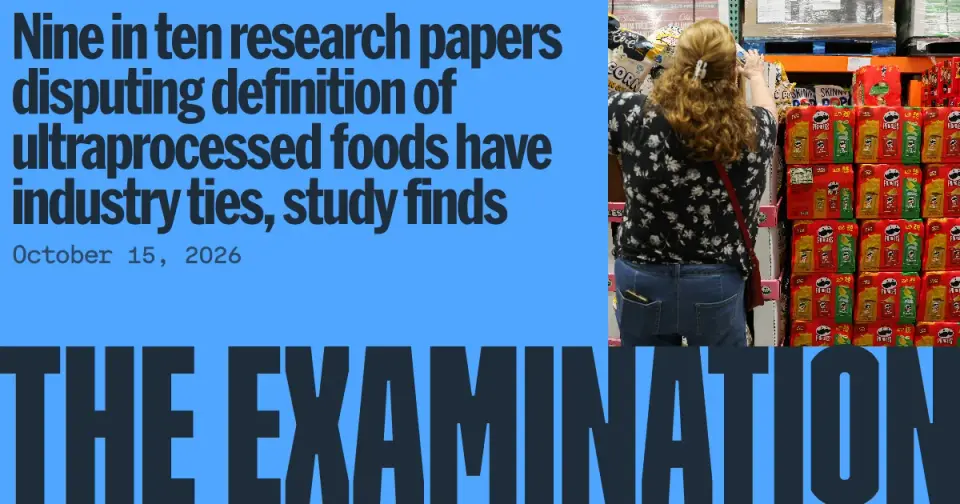
A new study finds that 91% of academic papers criticizing the NOVA food classification system have authors with financial ties to the food industry, raising concerns about biased scientific discourse. Simultaneously, a Canadian study links high consumption of ultraprocessed foods to a 40% increased risk of silent brain injuries in middle-aged adults, though it notes that cognitive tests showed no immediate decline. These findings occur as U.S. and Latin American policymakers struggle to define ultraprocessed foods for regulation, with industry groups arguing that current definitions are too broad and flawed.
Key points
- A review in the American Journal of Public Health found that 91% of papers criticizing the NOVA classification system had at least one author with financial ties to the food industry.
- Lead author Erica LaFata noted that over two-thirds of these authors failed to disclose their industry connections, despite journals often allowing self-determination of conflicts of interest.
- A separate study in JAMA Network Open found that Canadians consuming the most ultraprocessed food had 40% higher odds of vascular brain injuries, such as silent strokes, compared to those consuming the least.
- The Canadian study involved 8,783 middle-aged adults and found that while brain scans showed damage, memory and thinking test scores did not significantly differ across intake groups.
- U.S. Health and Human Services Secretary Robert F. Kennedy Jr.’s proposals to curb ultraprocessed foods are stalled in the White House due to concerns that the definition covers too much of the food supply.
- The Consumer Brands Association argues that NOVA-based definitions are fundamentally flawed, claiming they capture nearly 80% of the U.S. food supply and unfairly target beneficial items like whole-grain bread.
Background
The NOVA classification system, proposed by Brazilian epidemiologist Carlos Monteiro in 2009, remains the leading standard for defining food processing levels. Recent archive coverage highlights ongoing debates about the health impacts of these foods, including a 2026 study finding that processing level drives insulin responses regardless of nutritional content, and another finding no overall link between ultraprocessed foods and colorectal cancer risk, though specific types like processed meat show higher risks. These earlier findings underscore the complexity of regulating these products, as the current debate centers on whether the NOVA framework is scientifically robust enough to support broad public health interventions or if it unfairly categorizes diverse food items.
How outlets are covering it
The Examination and The Wall Street Journal emphasize the influence of industry funding on scientific critiques of the NOVA system, with The Examination highlighting that 91% of critical papers had industry-tied authors. In contrast, the Consumer Brands Association, as cited by The Examination, argues that NOVA definitions are 'fundamentally flawed' because they capture nearly 80% of the U.S. food supply. CHCH and StudyFinds focus on the health implications, with CHCH reporting on the Canadian study linking ultraprocessed food to brain damage, while StudyFinds notes that the study shows only an association, not causation, and that cognitive tests showed no immediate decline. Bloomberg, cited by The Examination, highlights the opposition from food industry groups in Latin America to the Pan American Health Organization’s embrace of the NOVA system. These differing emphases reflect a broader tension between public health advocates seeking clear definitions for regulation and industry groups arguing that current standards are too broad and scientifically unsound.
Why it matters
The findings suggest that industry-funded research may be skewing the scientific consensus on ultraprocessed foods, potentially delaying or weakening public health policies aimed at reducing their consumption. The Canadian study’s link between ultraprocessed food and silent brain injuries adds to the growing body of evidence on the health risks of these products, even if cognitive decline is not yet apparent. As policymakers in the U.S. and Latin America struggle to define ultraprocessed foods for regulation, the debate over the NOVA system’s validity could determine whether effective public health measures, such as label warnings or school meal restrictions, are implemented. The potential for industry influence to shape scientific discourse raises concerns about the transparency and objectivity of research in this area, which could have long-term implications for public health outcomes and regulatory frameworks.
What to watch
Policymakers in the U.S. and Latin America are expected to continue debating the definition of ultraprocessed foods, with the White House holding up a proposed definition due to concerns about its breadth. The Pan American Health Organization is likely to face continued opposition from food industry groups in Latin America. Researchers may conduct further studies to clarify the causal relationship between ultraprocessed food consumption and brain injuries, as the current Canadian study only shows an association. Journals and academic institutions may review their disclosure policies to ensure greater transparency regarding industry ties in research. Public health advocates may push for clearer definitions and regulations, while industry groups may continue to challenge the NOVA system’s validity. The outcome of these debates will likely influence the scope and effectiveness of public health measures aimed at reducing ultraprocessed food consumption.
- Nine in ten research papers disputing definition of ultraprocessed foods have industry ties, study finds The Examination
- McMaster research links ultra-processed foods to risk of brain damage CHCH
- The exact amount of crisps, biscuits and fizzy drinks daily that may raise stroke and brain injury risk by 40% The Sun
- Ultraprocessed Foods Linked To Silent Strokes, Hidden Brain Damage StudyFinds
Want the full story? Read the original reporting
Read on The Examination