
AI Analysis of Sleep ECGs Predicts 10-Year Heart Failure Risk
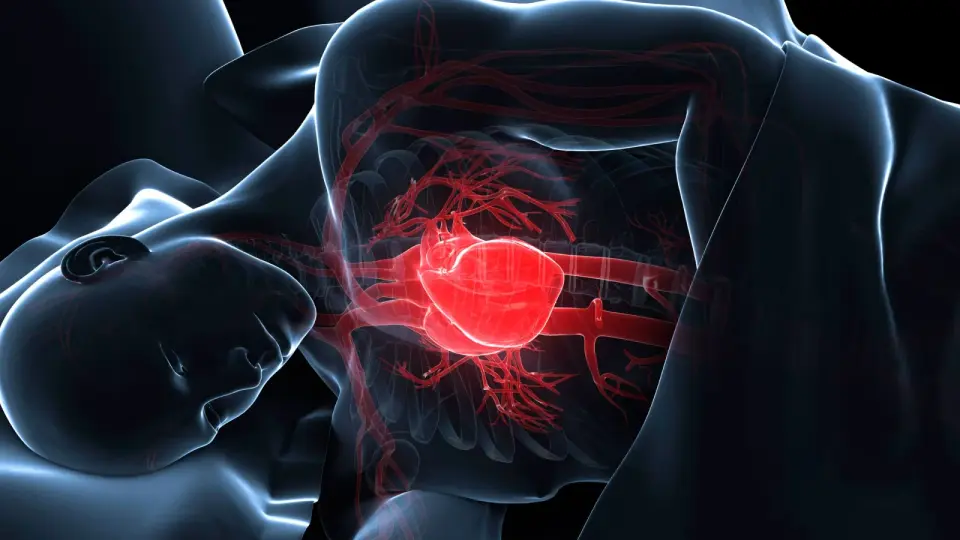
A new AI model can predict long-term cardiovascular risks, including heart failure and atrial fibrillation, using single-lead ECG data recorded during standard sleep studies. Published in the journal Sleep, the research demonstrates that analyzing heart activity during the lightest stage of sleep offers predictive value beyond traditional risk factors. The model, trained on data from nearly 16,000 patients, showed significant improvements in predicting outcomes for atrial fibrillation, heart failure, and mortality, though results for stroke and heart attack were less consistent. Researchers suggest this could integrate into routine polysomnography tests for early detection.
Key points
- A deep learning model trained on overnight ECG data from 15,809 patients at Massachusetts General Hospital can predict 10-year cardiovascular risks.
- The model was validated on two independent cohorts: 9,810 patients at Emory University Hospital and 12,576 at Beth Israel Deaconess Medical Center.
- Each standard deviation increase in the AI risk score was associated with a 103% to 172% higher risk of atrial fibrillation and a 69% to 133% higher risk of heart failure.
- The model improved prediction accuracy for heart failure by up to 9% and mortality by up to 7% when added to traditional risk factors.
- Heart activity during N1, the lightest stage of sleep, was identified as the most informative period for detecting subtle cardiac abnormalities.
Background
This development follows recent 2026 research linking nighttime light exposure to cardiac remodeling and earlier studies suggesting AI can extract predictive health signals from sleep data. While previous findings focused on environmental factors or general sleep patterns, this study specifically leverages existing ECG data from standard sleep diagnostics to forecast specific cardiovascular events.
How outlets are covering it
ScienceAlert and UA.NEWS emphasize the broad predictive power of the model across multiple outcomes, highlighting the potential for early intervention. Managed Healthcare Executive provides a more critical view, noting that while the model improves prediction for heart failure and atrial fibrillation, it did not significantly improve stroke or heart attack predictions. They also caution that outcomes were based on billing codes rather than clinical confirmation and that the patient population may not represent the general public. The Independent focuses on the accessibility of the method, noting that it requires only a single night of data and low-cost patches, potentially making it a scalable screening tool.
Why it matters
This research suggests that routine sleep studies, often used for diagnosing insomnia or sleep apnea, could serve as a non-invasive screening tool for cardiovascular disease. By identifying high-risk individuals years before symptoms appear, healthcare providers could intervene earlier, potentially reducing the burden of heart failure and stroke. However, further validation is needed to ensure the model's accuracy across diverse populations and to determine its cost-effectiveness in clinical settings.
What to watch
Researchers plan to make the model's code public for further testing in different patient groups. The next step is to evaluate whether integrating these AI scores into existing sleep study protocols improves clinical outcomes and reduces unnecessary testing. Clinical trials will be required to determine if the model can be reliably used as a standalone screening tool or if it should remain an adjunct to traditional risk assessments.
- The Way You Sleep Can Reveal Your Risk of Heart Failure Up to 10 Years in Advance ScienceAlert
- Heart data in sleep study predicts atrial fibrillation, heart failure years in advance Managed Healthcare Executive
- The simple sleep test that can predict heart disease risk years in advance The Independent
- In the US, AI assessed 10-year cardiac risks using overnight ECG — ScienceAlert UA.NEWS
- AI Technology Predicts Heart Disease Risks Years Before They Appear وكالة صدى نيوز
Want the full story? Read the original reporting
Read on ScienceAlert