
One-year-old becomes first patient to receive nitinol spring treatment for severe skull fusion
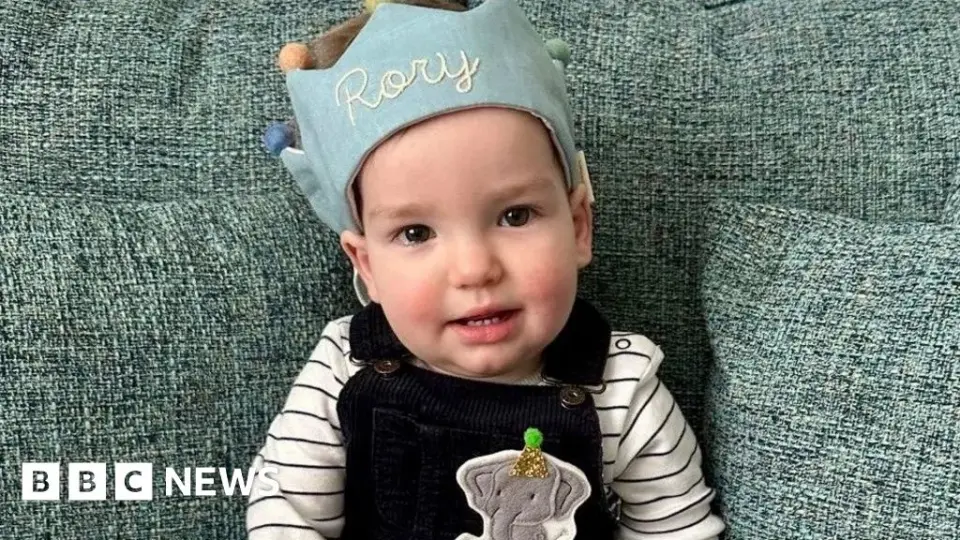
Rory Potter, a one-year-old boy from Derbyshire, is the first person in the world to undergo a new surgical procedure for severe sagittal craniosynostosis. The operation, performed at Great Ormond Street Hospital, involved inserting custom-designed 'super elastic' springs made from a nickel-titanium alloy to gradually reshape his skull. A year later, the child is developing normally, and medical experts say the new technology reduces the need for invasive surgery and lowers blood transfusion rates compared to traditional stainless steel methods.
Key points
- Rory Potter was diagnosed with severe sagittal craniosynostosis, a condition where the skull fuses before birth, shortly after his birth in April 2025.
- In September 2025, he underwent a 45-minute surgery at Great Ormond Street Hospital (GOSH) to have nitinol springs inserted into his skull.
- The springs, developed by GOSH and University College London (UCL), are made from a nickel-titanium alloy that allows for greater flexibility and natural adaptation to a growing skull.
- The procedure required only a one-night hospital stay, after which Rory returned home to his family in Chesterfield.
- One year post-operation, Rory is described by his mother as 'happy, cheeky, and full of energy,' hitting developmental milestones without visible signs of his previous condition.
- Experts state the new technology aims to reduce blood transfusion rates and avoid more invasive operations compared to traditional stainless steel springs used for the past two decades.
Background
This development follows a period of increased public attention on rare pediatric conditions and medical advancements, such as the recent coverage of a North Carolina teen’s critical condition from a rare brain-eating amoeba and the hospitalization of Perez Hilton. While those cases highlighted acute medical crises, this story focuses on a long-term research breakthrough in pediatric neurosurgery. The archive does not contain prior coverage of craniosynostosis treatments, but the current story highlights the evolution of surgical tools from stainless steel to nitinol alloys over the last two decades.
How outlets are covering it
Both the BBC and The Independent report on the same core event: Rory Potter’s successful surgery and the introduction of nitinol springs. The BBC provides detailed quotes from the family and surgeons, emphasizing the emotional relief and the technical advantages of the new material. The Independent’s source text is largely obscured by technical code, but its title confirms the 'world-first' nature of the treatment and the use of 'super-elastic springs.' There is no disagreement between the outlets; both highlight the collaboration between GOSH and UCL and the positive outcome for the patient. The BBC offers more depth on the parents' experience and the specific medical benefits, such as reduced blood loss, while The Independent’s visible metadata suggests a focus on the technological novelty.
Why it matters
This case marks a significant shift in pediatric neurosurgery, offering a less invasive and more adaptable treatment for craniosynostosis. By using nitinol, a material that adapts to a child’s growth, surgeons can potentially prevent the need for further operations and reduce complications like blood transfusions. This innovation could improve outcomes for children with severe skull fusion, setting a new standard for care in this field.
What to watch
Medical teams at GOSH and UCL will likely continue to monitor Rory’s development and gather data on the long-term effectiveness of nitinol springs. The success of this first case may lead to broader adoption of the technology for other patients with craniosynostosis. Researchers will also assess whether the reduced need for invasive surgery and lower blood transfusion rates translate into wider clinical benefits for children with similar conditions.
- World-first surgery for baby's rare skull condition BBC
- Baby Boy Born with Fused Skull Receives World’s First Surgery for Rare Childhood Condition People.com
- One-year-old given world-first treatment for rare skull condition Sky News
- Baby given world-first treatment involving ‘super-elastic springs’ to reshape skull The Independent
- Researcher helps develop ‘super elastic’ springs used in world-first baby surgery Durham University
Want the full story? Read the original reporting
Read on BBC