Tag

Medical Innovation

All articles tagged with #medical innovation

72-Year-Old Mechanic Survives Decades with Undiagnosed Five-Chamber Heart Defect
health13 days ago

72-Year-Old Mechanic Survives Decades with Undiagnosed Five-Chamber Heart Defect

Carlos Perez, a 72-year-old mechanic, was diagnosed with cor triatriatum, a rare congenital heart defect that splits an atrium into two, creating a five-chamber heart. Usually detected in infancy, Perez’s condition went unnoticed for decades due to a small gap in the membrane allowing blood flow. After experiencing atrial fibrillation in 2025, doctors in Miami performed a first-of-its-kind robotic surgery to remove the membrane, curing the defect and allowing Perez to return to an active lifestyle.

FibriLysins Outperform Vancomycin in Treating Staphylococcus aureus Device Infections
science-and-health25 days ago

FibriLysins Outperform Vancomycin in Treating Staphylococcus aureus Device Infections

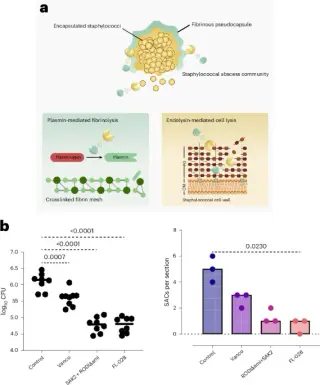
Researchers have developed FibriLysins, dual-action proteins that dismantle the fibrin structures protecting Staphylococcus aureus communities and kill the bacteria inside. In mouse models of device-associated infections, these proteins showed higher efficacy than the standard antibiotic vancomycin, offering a potential treatment for resistant infections.

Beyond CRISPR: New Tools Enable Large-Scale Gene Replacement
science1 month ago

Beyond CRISPR: New Tools Enable Large-Scale Gene Replacement

New gene-editing technologies are emerging to overcome the limitations of CRISPR-Cas9, specifically its inability to efficiently insert large DNA segments. Techniques like PASTE, evoCAST, and recombineering allow researchers to replace entire faulty genes or engineer complex cellular circuits, addressing diseases with multiple genetic variants. While these methods offer broader therapeutic potential, they face significant challenges in delivery efficiency and complexity. The global CRISPR market is projected to grow at 16% annually, driven by these advancements and expanding clinical trials.

AI-Assisted Diagnosis Saves Parkinson's Patient from Fatal Seizures
health1 month ago

AI-Assisted Diagnosis Saves Parkinson's Patient from Fatal Seizures

An NHS anaesthetist used Google's Gemini AI to identify a rare vitamin B6 deficiency in his mother, a Parkinson's patient suffering from continuous seizures. This discovery led to an intravenous supplement that stopped the seizures and restored her cognitive function. While the case highlights AI's potential in clinical settings, experts urge caution and emphasize the need for formal trials to validate the link between B6 deficiency and Parkinson's medications.

Chinese Researchers Develop 'Smart' Probiotic for Real-Time Diabetes Control
science-and-health2 months ago

Chinese Researchers Develop 'Smart' Probiotic for Real-Time Diabetes Control

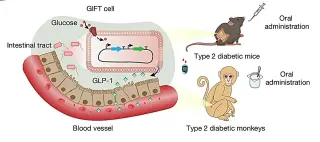
A research team from East China Normal University has developed an engineered probiotic, dubbed GIFT, that acts as a 'living drug' for diabetes management. Published in Nature on August 12, the study details how these bacteria, when taken orally, colonize the intestine and monitor blood glucose levels in real-time. If glucose spikes, the bacteria autonomously release the hormone GLP-1 to lower it, remaining inactive when levels are normal. This approach aims to replace fixed-dose medications with a responsive system. The therapy has shown efficacy in mice and non-human primates, improving lipid profiles and reducing complications, with human clinical trials planned soon.

One-year-old becomes first patient to receive nitinol spring treatment for severe skull fusion
health-and-science2 months ago

One-year-old becomes first patient to receive nitinol spring treatment for severe skull fusion

Rory Potter, a one-year-old boy from Derbyshire, is the first person in the world to undergo a new surgical procedure for severe sagittal craniosynostosis. The operation, performed at Great Ormond Street Hospital, involved inserting custom-designed 'super elastic' springs made from a nickel-titanium alloy to gradually reshape his skull. A year later, the child is developing normally, and medical experts say the new technology reduces the need for invasive surgery and lowers blood transfusion rates compared to traditional stainless steel methods.

AI ECG tool flags heart disease in seconds, potentially bypassing long scan waits
health-and-technology2 months ago

AI ECG tool flags heart disease in seconds, potentially bypassing long scan waits

A new AI system can detect signs of heart failure and valve disease from standard electrocardiograms in under two seconds, potentially accelerating diagnosis for patients who currently face months-long waits for echocardiograms. Presented at the European Society of Cardiology congress in Munich, the tool demonstrated high accuracy in a large US trial, identifying up to 81% of heart failure cases and 90% of valve disease cases. While it cannot provide a definitive diagnosis on its own, it aims to fast-track high-risk patients for confirmatory scans. The development builds on recent AI advancements in cardiology, such as using mammograms to assess heart risk, and highlights the growing role of AI in extracting hidden data from routine medical tests.

VR Games Replace Anesthesia for Pediatric Procedures
health3 months ago

VR Games Replace Anesthesia for Pediatric Procedures

Video games and virtual reality (VR) are emerging as critical tools in healthcare, particularly for reducing the need for anesthesia in children and accelerating scientific research. Recent studies show that VR games can distract children during minor surgeries and MRI scans, allowing them to remain still without sedation. Additionally, commercial multiplayer games are being repurposed to perform complex scientific tasks, such as DNA sequencing, by engaging millions of users in puzzle-solving activities that outperform traditional computational methods.

Focused Ultrasound Offers New Hope for Addiction Treatment, But Safety Concerns Linger
health-and-science3 months ago

Focused Ultrasound Offers New Hope for Addiction Treatment, But Safety Concerns Linger

A new noninvasive procedure using focused ultrasound is showing promise in treating substance use disorders by targeting the brain's reward center. While early trials report significant reductions in cravings, safety concerns and the lack of standardized protocols remain major hurdles. The technology is attracting interest from tech companies, but experts warn that it is not a standalone cure and requires ongoing behavioral support.

Seed-Sized Implant Offers Battery-Free Nerve Stimulation Without Surgery
health3 months ago

Seed-Sized Implant Offers Battery-Free Nerve Stimulation Without Surgery

Researchers at New York University Abu Dhabi and Cleveland Clinic Abu Dhabi have developed a seed-sized injectable device that wirelessly stimulates nerves to treat chronic pain and movement disorders. Published in Science Advances, the battery-free implant uses an external magnetic field to power electrodes, eliminating the need for surgery. Animal tests confirmed precise control over muscle movements, though long-term stability and anchoring remain challenges.

French-Swiss Team Tests AI-Powered Bra for Early Breast Cancer Detection
health-and-technology3 months ago

French-Swiss Team Tests AI-Powered Bra for Early Breast Cancer Detection

A French-Swiss research team is developing a 'smart bra' that uses thermal sensors and artificial intelligence to detect early signs of breast cancer. The device, known as PHI-BRA, monitors changes in breast tissue temperature and cell structure over 30 minutes. While not a replacement for mammograms, it aims to provide accessible screening between doctor visits. Clinical trials are currently underway, with consumer availability potentially arriving in three to four years.