
UCSF Study Maps 1,800 Protein Interactions to Unlock Autism Therapies
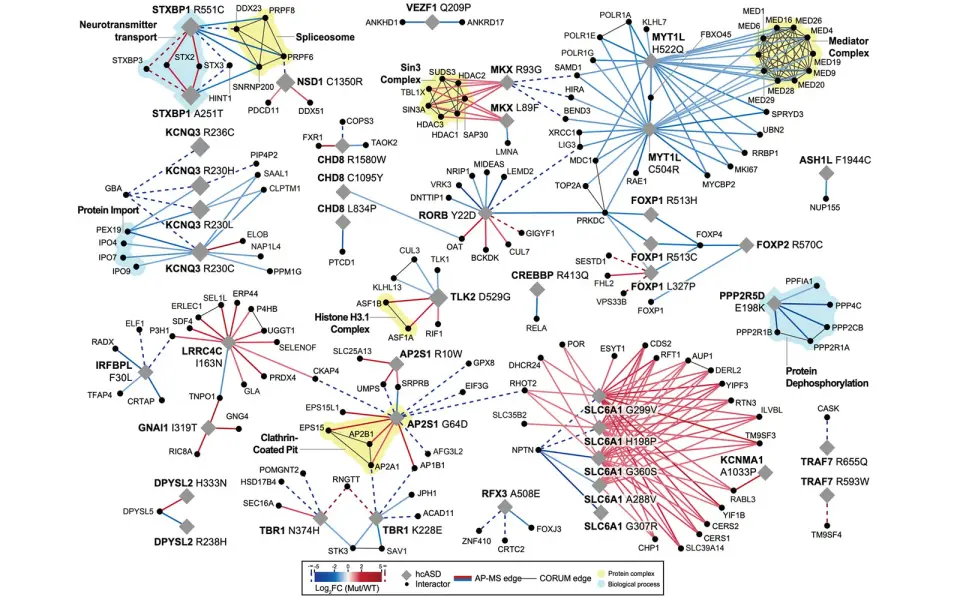
Researchers at the University of California, San Francisco have published the largest molecular map of autism to date, identifying over 1,800 protein-protein interactions linked to 100 risk genes. By using AI and lab-grown brain organoids, the study reveals that diverse genetic mutations converge on shared biological pathways, suggesting that future treatments could target these common molecular hubs rather than individual genes. While the findings offer a new blueprint for drug discovery, experts caution that translating these insights into clinical therapies will take time and may primarily benefit those with profound autism.
Key points
- The study mapped proteins encoded by 100 autism risk genes, identifying more than 1,800 interactions, 87% of which were previously unknown.
- Researchers used AlphaFold AI to prioritize mutations and tested them in lab-grown brain organoids to observe how they rewire neural development.
- The findings suggest that different genetic mutations disrupt the same protein complexes, allowing for potential treatments that target shared molecular hubs rather than individual genes.
- The approach is most relevant to the approximately 30% of people with profound autism who often have rare genetic mutations, though it may inform research for other conditions like schizophrenia and cancer.
- Three therapeutic programs are already underway based on these insights, but experts warn that clinical translation is a long process and the current map has limitations regarding neuronal specificity.
Background
This development follows a period of intense scrutiny regarding autism treatments, including a recent surge in leucovorin prescriptions following White House suggestions, which experts warned lacked rigorous evidence. Additionally, earlier studies on circuit-level therapies in mice highlighted the potential for rapid functional changes in brain activity, though those models did not address the complex genetic heterogeneity of autism. The current study aims to provide a more systematic biological foundation for treatment development, moving beyond symptom management to address underlying molecular mechanisms.
How outlets are covering it
Outlets generally agree on the significance of the study but differ in emphasis. CNN highlights the potential for targeted therapies and the use of AI, while also noting concerns from the Autism Science Foundation that federal policy may shift focus away from genetic research toward unproven injury models. Disability Scoop emphasizes the potential for a 'generation of novel drugs' and the impact on those with profound autism. The Transmitter provides a technical breakdown, noting that the study used human kidney cells to map interactions, which may not fully reflect neuronal networks, and highlights the complexity of gain-and-loss of function mechanisms. Experts like Dr. Andy Shih caution that clinical translation will take significant time, while others like Dr. Nevan Krogan express optimism about the 'watershed moment' for autism science.
Why it matters
This study shifts the paradigm of autism treatment from a fragmented approach targeting hundreds of individual genes to a unified strategy targeting shared protein complexes. By identifying common molecular hubs, it offers a potential path for developing drugs that could benefit a broader population of autistic individuals, particularly those with rare genetic variants. This could lead to more effective, precision-based therapies that address the underlying biology of the disorder rather than just managing symptoms.
What to watch
Researchers are moving into in-vitro neuronal systems to study protein interactions in more relevant cell types, with the ultimate goal of analyzing these networks in vivo. Three therapeutic programs are currently underway based on the insights from this map. However, significant time is required to translate these findings into safe and effective clinical applications. Additionally, the federal Interagency Autism Coordinating Committee is set to vote on a new strategic plan, which may influence the direction of future research funding.
- Study May Point Way To New Autism Treatments Disability Scoop
- Largest ever ‘map’ of autism may hold clues for new targeted therapies CNN
- Study of Brain Proteins Spurs Optimism for Autism Treatments The New York Times
- Autism-linked variants rewire protein networks The Transmitter
- Daily Dose: New autism research, Lindsay Clancy trial and postpartum psychosis and a breakthrough for heart failure patients WQAD
Want the full story? Read the original reporting
Read on Disability Scoop