Tag

Autism Spectrum Disorder

All articles tagged with #autism spectrum disorder

Study Links Autism Severity to Digestive Issues in Children
health1 day ago

Study Links Autism Severity to Digestive Issues in Children

Researchers at UTHealth Houston found that children with autism spectrum disorder (ASD) who exhibit more severe social and communication challenges are significantly more likely to experience severe gastrointestinal (GI) symptoms. Published in Nature, the study analyzed blood and stool samples from children aged 4 to 16, revealing that nearly two-thirds of participants had significant digestive issues. While the study confirmed a link between ASD severity and GI distress, it found no evidence that inflammation or 'leaky gut' mechanisms drive these symptoms. Instead, differences in gut bacterial composition and lower microbial diversity were observed, suggesting the gut-brain axis may operate through distinct pathways.

New Study Links Hundreds of Autism Genes via Shared Networks and Identifies ZFX as Key to Female Protection
science20 days ago

New Study Links Hundreds of Autism Genes via Shared Networks and Identifies ZFX as Key to Female Protection

Researchers at Boston Children's Hospital have identified a shared biological network connecting hundreds of autism-linked genes, explaining how diverse mutations lead to similar outcomes. The study also highlights the ZFX gene as a potential driver of the 'female protective effect,' which accounts for the higher prevalence of autism in males.

ZFX Gene Activity May Explain Female Protection Against Autism
science22 days ago

ZFX Gene Activity May Explain Female Protection Against Autism

Researchers at Boston Children’s Hospital have identified a molecular mechanism for the 'female protective effect' in autism. By analyzing human neural progenitor cells, they found that disrupting various autism-linked genes causes similar downstream changes in gene expression, a phenomenon termed 'transcriptomic convergence.' The study highlights the X-linked gene ZFX as a central regulator; because females express ZFX from both X chromosomes, they may have higher levels that buffer against mutations in other autism-related genes, potentially explaining why males are diagnosed three to four times more often.

New study links X-linked gene ZFX to autism’s female protective effect
science22 days ago

New study links X-linked gene ZFX to autism’s female protective effect

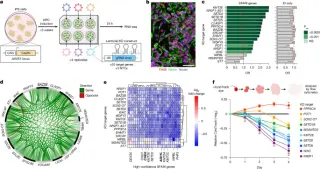
Researchers at Nature have identified a molecular mechanism for the 'female protective effect' in autism spectrum disorder (ASD). By analyzing human neural progenitor cells, the study found that disrupting 18 distinct ASD genes causes similar changes in gene expression, a phenomenon known as transcriptomic convergence. The team reconstructed a gene regulatory network to identify central drivers of this convergence, including CHD8 and REST. Crucially, they found that the X-linked transcription factor ZFX, which is expressed from both X chromosomes in females, acts as a key activator of many ASD genes. The higher expression of ZFX in female brains may buffer against damaging mutations, explaining why females require more genetic risk to manifest ASD than males.

Autism and Intellectual Disability Linked to Higher Parkinsonism Rates in Large US Study
health27 days ago

Autism and Intellectual Disability Linked to Higher Parkinsonism Rates in Large US Study

A massive analysis of nearly 57 million Americans aged 45 and older reveals that adults with autism or intellectual disabilities face significantly higher rates of parkinsonism compared to the general population. Published in the journal Autism, the study found that even after excluding patients taking antipsychotic medications, which can mimic Parkinson’s symptoms, the risk remained elevated. The highest prevalence was observed in individuals with both conditions. Researchers emphasize that these findings suggest a potential biological link rather than just a side effect of medication, urging clinicians to monitor motor skills in older autistic patients more closely to prevent misdiagnosis or delayed care.

MECP2 Regulatory Variants May Explain Why Autism Is Diagnosed More in Boys
health-and-science1 month ago

MECP2 Regulatory Variants May Explain Why Autism Is Diagnosed More in Boys

A new study published in The American Journal of Human Genetics suggests that subtle mutations in the regulatory regions of the MECP2 gene on the X chromosome may contribute to the higher prevalence of autism in males. Researchers found that females may be protected by a second X chromosome, while males, with only one, are more vulnerable to these regulatory changes. This finding offers a potential biological explanation for the four-to-one male-to-female diagnosis ratio.

Machine learning decodes microexon splicing to uncover rare autism-linked variants
science1 month ago

Machine learning decodes microexon splicing to uncover rare autism-linked variants

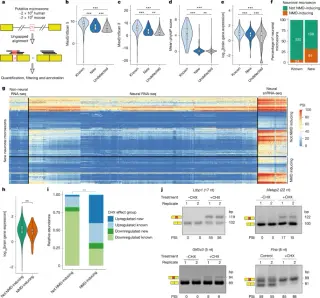
A new study identifies hundreds of previously unknown neuronal microexons and uses machine learning to define the regulatory code governing their splicing. This approach reveals rare genetic variants that disrupt microexon regulation, linking them to autism spectrum disorder in individuals without known genetic causes.

Japanese Study Links Autism and ADHD Traits to Distinct Social Cycles in Youth
health-and-science1 month ago

Japanese Study Links Autism and ADHD Traits to Distinct Social Cycles in Youth

A large Japanese longitudinal study reveals that autism and ADHD traits lead to different mental health outcomes through distinct social pathways. While autistic traits strongly predict peer difficulties and internalizing issues like anxiety, ADHD traits are linked to academic struggles and externalizing behaviors. The research highlights bidirectional cycles where social problems worsen neurodevelopmental traits over time, suggesting that early intervention in schools and families could break these self-reinforcing loops.

Neuroimaging Meta-Analysis Shows Opposite Brain Activity Patterns for Reward Processing in ADHD and Autism
health-and-science1 month ago

Neuroimaging Meta-Analysis Shows Opposite Brain Activity Patterns for Reward Processing in ADHD and Autism

A new meta-analysis of 29 brain imaging studies reveals that ADHD and autism spectrum disorder (ASD) involve opposite patterns of brain activity in the same deep brain regions when processing rewards. While ADHD is associated with heightened activity in the amygdala and putamen, ASD shows reduced activity in these areas. These divergent neural responses help explain why individuals with ADHD often struggle with impulse control due to over-sensitivity to immediate rewards, whereas those with ASD may exhibit reduced drive for social rewards. The findings, published in Molecular Psychiatry, provide a biological framework for understanding the distinct behavioral challenges associated with each condition, despite their frequent co-occurrence and overlapping symptoms.

Large US Study Confirms No Link Between MMR Vaccine Timing and Autism Diagnosis
health1 month ago

Large US Study Confirms No Link Between MMR Vaccine Timing and Autism Diagnosis

A new study analyzing over 2.5 million children in the United States found no association between receiving the MMR vaccine before age two and an increased risk of autism. Published in The Pediatric Infectious Disease Journal, the research used a precise age-anchored design to control for confounding variables. The findings reinforce previous large-scale studies that have consistently shown no causal link between the vaccine and autism spectrum disorder, despite persistent public concerns.

Placental Immune Failure in Males Linked to Autism Risk in New Mouse Study
science2 months ago

Placental Immune Failure in Males Linked to Autism Risk in New Mouse Study

A new study from Cold Spring Harbor Laboratory identifies a specific placental mechanism that may explain why autism spectrum disorder (ASD) disproportionately affects males. Researchers found that maternal immune activation during a critical 24-hour window at embryonic day 12.5 in mice causes developmental abnormalities exclusively in male fetuses. This vulnerability stems from damage to spongiotrophoblasts, specialized placental cells that maintain immune tolerance between mother and fetus. The findings suggest that male embryos may express unique proteins that trigger adverse maternal immune responses, while female fetuses possess intrinsic protective mechanisms that preserve placental integrity. This research shifts the focus from the brain to the placental interface as a primary gateway for neurodevelopmental risk.

Autism Linked to 14-Year Life Expectancy Gap, Driven by Preventable Causes
health2 months ago

Autism Linked to 14-Year Life Expectancy Gap, Driven by Preventable Causes

A new study finds that autistic Medicaid beneficiaries have a life expectancy of 64.9 years, 13.8 years less than the general U.S. population. Influenza, pneumonia, and drowning are the leading causes of excess death, but researchers emphasize that these outcomes are largely preventable through better primary care, social support, and vaccination.

New Data Reveals 14-Year Life Expectancy Gap for Autistic Americans
health2 months ago

New Data Reveals 14-Year Life Expectancy Gap for Autistic Americans

A study analyzing Medicaid records finds that people with autism have a life expectancy at birth of 64.9 years, which is 13.8 years lower than the general US population. The gap is driven largely by preventable causes of death, including influenza, pneumonia, and malnutrition, highlighting a need for improved primary care and community-based services.

New Study Identifies 36 High-Impact Genes Linking OCD, Tics, and Autism
science2 months ago

New Study Identifies 36 High-Impact Genes Linking OCD, Tics, and Autism

Researchers at Rutgers University have identified 36 genes that significantly increase the risk of obsessive-compulsive disorder (OCD) and chronic tic disorders (CTDs), such as Tourette syndrome. Published in Nature Neuroscience, the study analyzed exome data from nearly 4,000 individuals, including over 2,400 parent-child trios. The findings reveal that 30 of these genes are shared between OCD and CTD, confirming substantial genetic overlap. The identified genes carry large effects, potentially increasing risk by up to 210-fold. The study also links these conditions to autism spectrum disorder and schizophrenia, highlighting dysfunction in the cortico-striato-thalamo-cortical brain circuit. This expansion of known risk genes from four to 36 offers new targets for developing tailored therapies.