
Huberman’s 30-Second Breathing Technique Targets Early Morning Wake-Ups
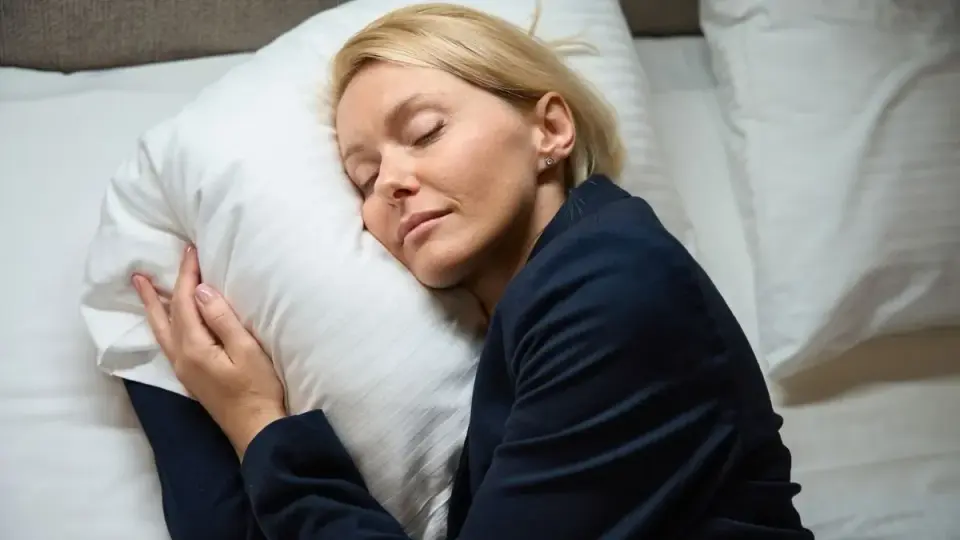
A Woman’s World article details a 30-second breathing technique attributed to neuroscientist Andrew Huberman, claimed to help readers who wake at 3 AM fall back asleep. The method involves slow, controlled breathing to lower arousal levels. While the article presents this as a quick fix for fragmented sleep, it lacks independent clinical validation in the provided text.
Key points
- The article highlights a specific 30-second breathing exercise recommended by Andrew Huberman for individuals who wake up during the night, particularly around 3 AM.
- The technique is described as a 'hack' to help users return to sleep after involuntary wake-ups, focusing on physiological regulation rather than environmental changes.
- The source is a single wellness publication, Woman’s World, which frames the advice as a practical solution for sleep fragmentation without citing specific studies or medical trials in the provided text.
- The article does not provide details on the specific breathing pattern (e.g., inhale/exhale ratios) or the scientific mechanism behind the claim, relying instead on the authority of the named expert.
Background
Recent coverage emphasizes that consistent wake times and morning light exposure are critical for stabilizing circadian rhythms, as noted in August and September 2026 reports. Experts have also warned that waking during deep slow-wave sleep (N3) causes significant sleep inertia, making it difficult to return to sleep. While previous articles focused on behavioral adjustments like blackout blinds and consistent schedules, this new report introduces a physiological intervention (breathing) for acute night-time wake-ups, complementing broader sleep hygiene strategies.
Why it matters
For individuals suffering from sleep fragmentation, particularly those waking in the middle of the night, this technique offers a non-pharmacological, immediate response strategy. It addresses the common frustration of being unable to fall back asleep after a brief wake-up, potentially reducing the anxiety associated with sleep loss. However, without clinical data, its efficacy remains anecdotal.
What to watch
Readers may experiment with the described breathing technique to see if it helps them return to sleep after night-time wake-ups. Further research or expert commentary may be needed to validate the specific physiological effects of this 30-second exercise on sleep onset latency.
Want the full story? Read the original reporting
Read on Woman's World