
CDC Hiring Crisis Leaves Dozens of Funded Public Health Programs Idle
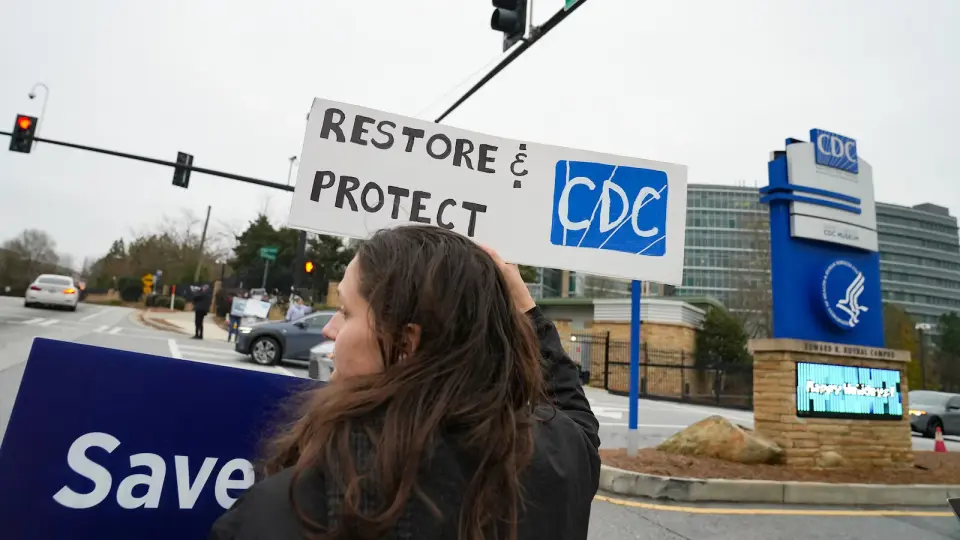
The Centers for Disease Control and Prevention (CDC) is failing to replace staff lost to Department of Government Efficiency (DOGE) cuts, leaving roughly 50 federally funded programs without adequate personnel. While the CDC has hired 95 new employees since January 2026, this number represents only 16.5% of the staff previously laid off. In contrast, other health agencies like the FDA and CMS have recovered a larger percentage of their workforce. This staffing shortage has created 'zombie' programs that remain funded but inactive, impacting critical areas such as sickle cell data collection, epilepsy management, and maternal health surveillance. Health experts warn that the loss of institutional memory and data infrastructure is eroding the nation’s ability to detect and respond to public health threats.
Key points
- The CDC has posted 147 job announcements and hired 95 new staff between January and July 2026, which is only 16.5% of the employees lost to DOGE reductions.
- Other health agencies have higher recovery rates: NIH has hired 34% of lost staff, the FDA 39%, and CMS 131.7%.
- Approximately 50 CDC programs are classified as 'zombie' programs, meaning they are fully funded by Congress but lack the staff to execute their mandates.
- The Office of Smoking and Health, with a $246 million budget, is on hold or relying on contractors while full-time employees are on paid administrative leave.
- The sickle cell data collection program, which previously covered 16 states, is facing disruptions that hinder patient care in underserved communities.
- The Pregnancy Risk Assessment Monitoring System (PRAMS), part of the $113.5 million Safe Motherhood/Infant Health initiative, is also impacted by staffing shortages.
Background
This situation follows the 2025 DOGE cuts that reduced the CDC workforce by 30%. Previous coverage noted that the FDA also struggled to rebuild its workforce after similar cuts, with former commissioners warning that institutional knowledge loss would take years to recover. Additionally, recent measles outbreaks in the US have highlighted gaps in CDC reporting and surveillance capabilities, with cases exceeding 4,000 in 2026. The current hiring lag exacerbates concerns about the agency’s ability to monitor and respond to emerging health threats.
How outlets are covering it
ABC News and the American Federation of Government Employees (AFGE) emphasize the severe staffing deficit at the CDC, highlighting the disparity between new hires and lost employees. They focus on the immediate impact on specific programs like sickle cell and maternal health, citing concrete examples of 'zombie' programs. In contrast, the Department of Health and Human Services (HHS) maintains that the CDC is strategically hiring and aligning its workforce with priorities, while other agencies like CMS and FDA are expanding access and approving new treatments. InSight+ provides a broader systemic perspective, arguing that the dismantling of institutional memory and surveillance capabilities weakens the entire public health 'immune system,' with potential global consequences for disease control and international health cooperation.
Why it matters
The CDC’s inability to staff critical programs threatens the accuracy and timeliness of public health data, which is essential for detecting outbreaks and guiding policy. Programs like sickle cell data collection and maternal health surveillance are vital for underserved communities, and their disruption could lead to increased morbidity and mortality. The loss of institutional memory and expertise may have long-term consequences for the nation’s ability to respond to future health crises, potentially affecting global health security as well.
What to watch
The CDC is expected to continue its hiring efforts, but the pace remains slow compared to other agencies. Congress may need to intervene to ensure that funded programs are adequately staffed. Health experts and unions are likely to continue advocating for the restoration of full staffing levels and the protection of institutional knowledge. The impact on public health outcomes, particularly in underserved communities, will be closely monitored in the coming months.
- CDC lags in hiring behind other health agencies after DOGE cuts, union says ABC News - Breaking News, Latest News and Videos
- How CDC staffing cuts could weaken US pandemic preparedness | Guest column Richmond Times-Dispatch
- America is dismantling its institutional immune system InSight+
Want the full story? Read the original reporting
Read on ABC News - Breaking News, Latest News and Videos