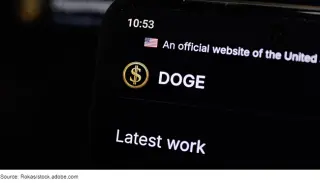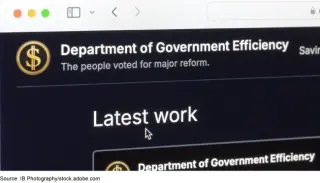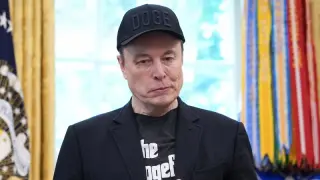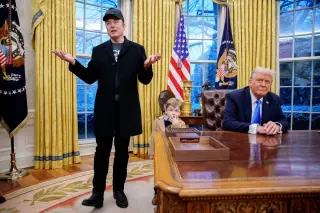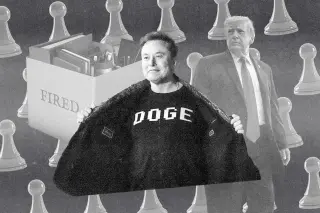
The DOGE department ends on July 4, 2026, wrapping up a costly cost-cutting push, while agencies move to hire back workers and fill vacancies—IRS gains authority to hire up to 8,000 fast-track staff and the State Department restaffs Foreign Service Officers—reflecting a shift from outsourcing to rebuilding the federal workforce.
Trump’s Department of Government Efficiency (DOGE), led by Elon Musk and briefly paired with Vivek Ramaswamy, promised sweeping cuts and smarter governance but delivered limited savings, caused widespread disruption, and has largely faded as an ongoing program with a sunset set for July 4, 2026; many veterans moved on and the effort’s legacy remains debated.
The Verge’s TC Sottek argues that Elon Musk’s SpaceX IPO could make him the world’s first trillionaire, but his actions—most notably the Trump-era DOGE-led cuts to USAID—have been deadly for global health, with models predicting hundreds of thousands of preventable deaths from malaria, tuberculosis, HIV, and Ebola. The piece accuses Musk of knowingly and gleefully undermining public health and civil society, highlights his racist rhetoric and anti-immigrant stances, and concludes that the world may need saving from his immense power and wealth.
A federal judge ruled that the Department of Government Efficiency’s cancellation of more than 1,400 National Endowment for the Humanities grants was unconstitutional, finding DOGE used ChatGPT to identify DEI-related material and revoked funding based on protected characteristics. The staff employed prompts like “Does this relate to DEI?” and used “Detection Codes” (e.g., BIPOC, Minorities, LGBTQ) to label grants as wasteful, effectively making AI the government’s instrument. The judge rejected the argument that ChatGPT’s role insulated DOGE from constitutional constraints, calling the use of AI a government action and ordering the grants restored on First Amendment and Fifth Amendment equal protection grounds, citing lack of statutory authority.
A federal court ruled that DOGE lacked statutory authority to terminate National Endowment for the Humanities grants and that using ChatGPT to label projects as 'DEI' was arbitrary and unconstitutional, finding the actions violated due process and amounted to viewpoint discrimination against disfavored ideas.
U.S. District Judge Colleen McMahon ruled that DOGE's 2025 termination of National Endowment for the Humanities grants to ACLS, AHA, and MLA was unlawful and unconstitutional, lacking statutory authority and violating First Amendment and equal-protection rights; the decision notes DOGE staff in their 20s with little humanities experience and that they used ChatGPT to justify DEI-based terminations without reviewing applications, and it blocks enforcement while the Authors Guild case proceeds.
A Manhattan federal judge ordered removal of online video depositions of two former DOGE employees after viral clips mocked them and spurred harassment; the deposition videos were posted by scholarly groups challenging grant cuts, raising First Amendment concerns, and the government argued the posts endangered witnesses. The judge directed the groups to claw back the videos and scheduled a hearing, with some outlets having already embedded the clips in coverage.
A whistleblower claims John Solly, a former DOGE member now at Leidos, stored sensitive SSA data on a thumb drive and sought to transfer it to a private-sector employer; Solly and Leidos deny the allegations, while SSA and related investigations examine DOGE’s data-sharing projects like NUMIDENT and EDEN 2.0.
A Social Security Administration inspector general is investigating a whistleblower claim that a former DOGE software engineer accessed two highly sensitive SSA databases containing data on more than 500 million Americans and planned to transfer it to a private employer, potentially via a thumb drive; Sen. Ron Wyden and other lawmakers are calling for a full public accounting as the Washington Post corroborates details of the allegation, amid ongoing DOGE-related security concerns.
The DOGE-driven downsizing purged hundreds of thousands of federal workers and contractors, shrinking the federal workforce by about 10% since January 2025 and leaving many with financial hardship, health challenges, and emotional strain. OthersPivoted to new careers, moved across the country (with significant cross‑state moves), joined local or state government roles, started volunteer work, or pursued advocacy, signaling a sweeping talent redistribution even as public service persists in new forms.
Federal court filings show Doge employees accessed and shared Social Security data via an unauthorized channel, including an encrypted file that may contain about 1,000 names and addresses; SSA learned of the breach in November and flagged potential Hatch Act violations, with referrals to investigators as lawmakers call for prosecutions in a lawsuit to block Doge from SSA access.
DOJ filings say DOGE staff inside the SSA accessed and potentially violated SSA policy by sharing data with affiliates and helping an outside advocacy group analyze voter rolls; the filing also alleges misrepresentations of access to personal data and a DOGE member signing a voter-data agreement. The revelations come amid ongoing battles over DOGE's role, whistleblower complaints, and federal data-security concerns.
The Justice Department disclosed that DOGE employees detailed to the Social Security Administration shared sensitive data via a nonsecure third-party server, contradicting prior SSA statements, amid whistleblower concerns and potential Hatch Act referrals, raising questions about data exposure and election-security implications.
The DOJ uncovers corrections to testimony about Elon Musk’s DOGE team at the Social Security Administration, showing two DOGE members may have exceeded approved data access, contacted an advocacy group aiming to overturn election results, and potentially used SSA data to match voter rolls. One member signed an agreement tied to this data use. A password-protected file containing about 1,000 private SSA records was copied on an email to Steve Davis, though it’s unclear if the data was accessed. DOGE allegedly used unapproved third-party servers (Cloudflare) to share data, contrary to SSA policy. SSA maintains DOGE never had access to SSA systems of record, but derived data may have been shared. The White House and SSA declined comment, and it remains unresolved whether any private information was actually accessed.
Federal court filings reveal that DOGE staff engaged with a political advocacy group on a 'Voter Data Agreement' to analyze voter rolls, with at least one DOGE employee signing the pact; the arrangement bypassed internal safeguards and used unapproved third‑party servers, raising privacy and legal concerns. The filing does not name the group, but True the Vote had publicly pressed DOGE to review voter rolls earlier. SSA says it has not proven that its data were shared, but the episode triggers a Hatch Act review amid ongoing litigation over DOGE’s access to SSA systems.